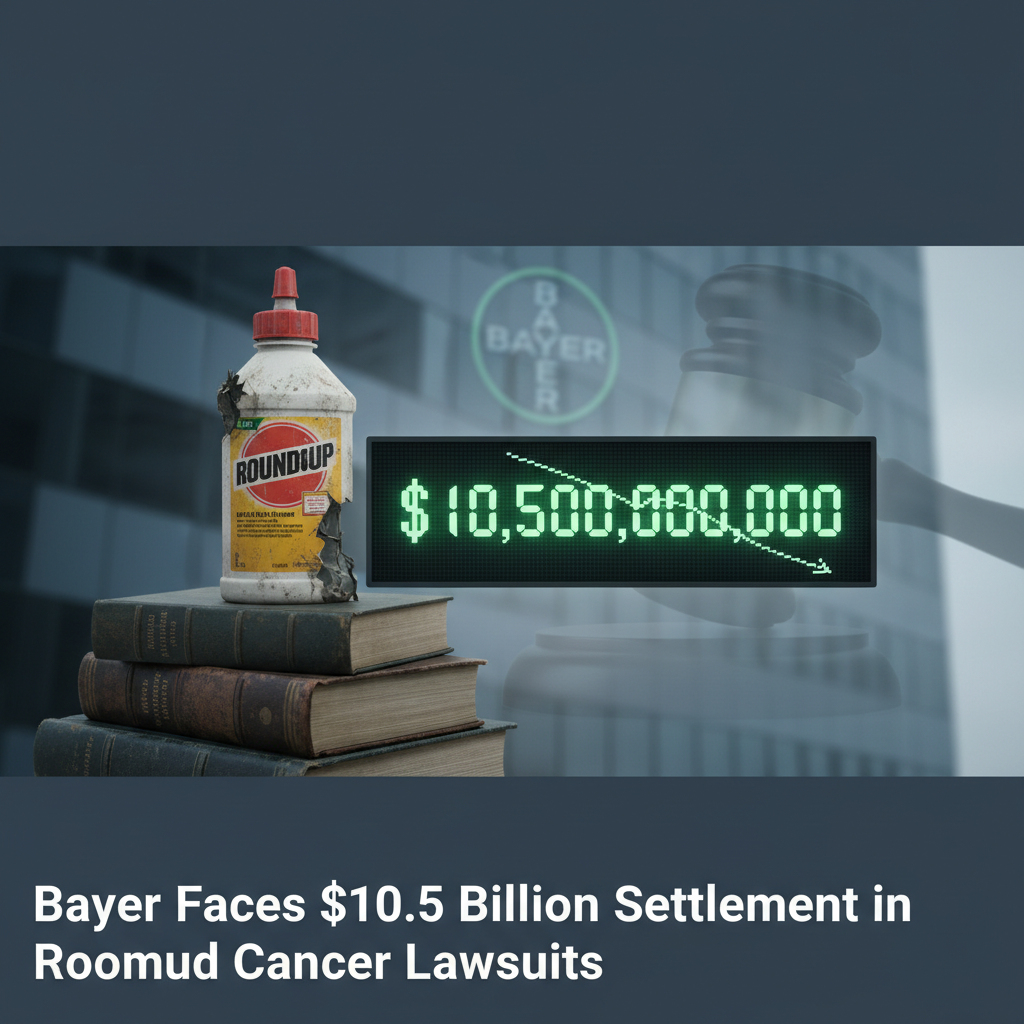
The news broke late, the kind of announcement that ripples through trading floors, even after the closing bell. Bayer AG, according to multiple reports, is planning to announce a $10.5 billion settlement. It’s a move aimed at resolving the mountain of cancer lawsuits connected to its Roundup weedkiller. The number itself, $10.5 billion, hangs in the air – a significant sum, particularly when you consider the already complex financial landscape.
This isn’t just about a single case; it’s about a wave of litigation. Thousands of plaintiffs have alleged that Roundup caused their cancers. And it’s been a long, drawn-out battle. The settlement, if finalized, would cover both current and future claims, a critical detail. The goal, as the company likely sees it, is to put a lid on this ongoing uncertainty. Uncertainty, of course, is the enemy of any publicly traded company.
The details, as always, are where the story truly lives. The settlement amount, while substantial, is still a reduction from earlier figures floated in discussions. The structure of the settlement, how the money gets dispersed, and over what timeframe, remains to be seen. A financial analyst from a major firm, speaking on condition of anonymity, mentioned the settlement is “a necessary step, though the market will watch closely how it impacts Bayer’s future profitability.”
It’s important to remember that this has been going on since 2018, when Bayer acquired Monsanto, the original maker of Roundup. That acquisition is, in retrospect, a pivotal moment. The legal challenges followed, and the company has been fighting them ever since. The stock price has, understandably, taken a hit over the years. Some analysts, in their reports, have noted the drag this litigation has placed on the company’s other investments.
The settlement, however, doesn’t mean the end of the story. It’s just one chapter closed. There are still many unknowns. Regulatory scrutiny, consumer reaction, and the long-term impact on Bayer’s reputation all remain. The legal landscape is always shifting, and the specifics of this settlement will dictate its true weight.
The $10.5 billion, if it holds, will be a critical figure. It represents a significant financial commitment to address these claims. A step, maybe a major one, towards resolving the legal challenges. Or maybe I’m misreading it.
In the end, it’s about the numbers, but it’s also about the human cost. The people affected, the families, the uncertainty they’ve faced. This settlement is an attempt to address that. And, as the market digests the news, the real implications will slowly come into view.
And that’s the thing, the market is always watching.
About the Author