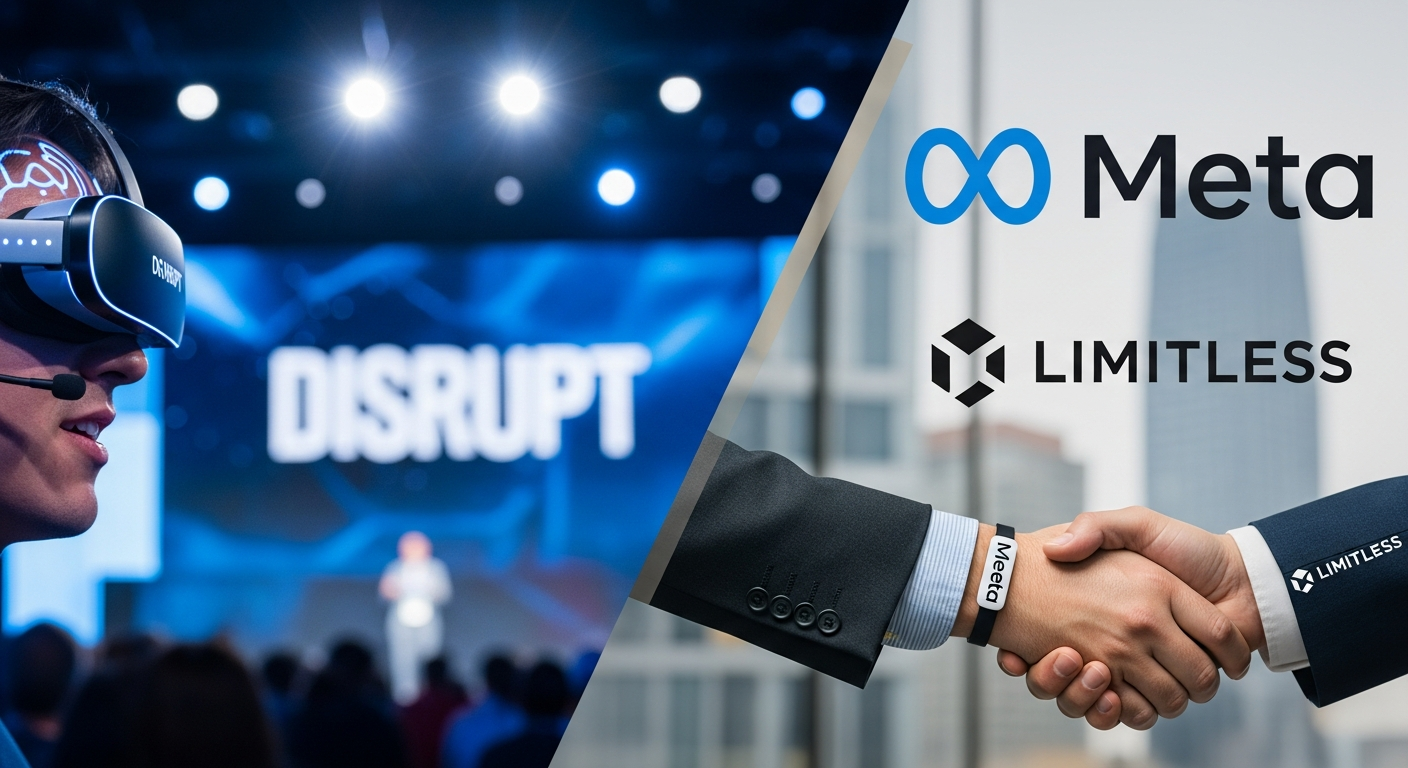
The hum of servers filled the air, a low thrum that vibrated through the floor of the Awear engineering lab. It was December 2025, and the team was poring over thermal tests for the latest iteration of their brain-sensing headband, the device that would soon capture the Battlefield 200 health stage pitch competition at TechCrunch Disrupt.
Awear’s technology, which focuses on stress management through real-time brainwave analysis, had caught the eye of investors and analysts alike. The core innovation? A sophisticated algorithm that could identify and respond to stress indicators before they manifested physically. It’s like a Fitbit, but for your brain, offering proactive intervention instead of reactive treatment.
“We’re talking about a paradigm shift,” said Dr. Anya Sharma, a neuroscientist and advisor to Awear. “Instead of waiting for burnout, we can now offer personalized interventions in real-time.”
Meanwhile, across the country, Meta made waves with its acquisition of Limitless, an AI device startup. Limitless shared Meta’s vision of integrating personal superintelligence into everyday life. The acquisition, announced on December 5, 2025, signaled a strategic pivot towards the burgeoning market of AI-powered wearables.
“Meta’s move is a clear signal,” commented Marcus Chen, an analyst at Forrester. “They’re betting big on the future of AI-driven personal assistants, and Limitless’s tech gives them a significant edge.” He added that the acquisition could be valued at upwards of $500 million, though neither company has confirmed a figure.
The deal came as the broader tech industry grappled with supply chain constraints and evolving export controls. SMIC, the leading Chinese chip manufacturer, faced restrictions that could impact the production of advanced AI hardware. This, in turn, affected the timelines of companies like Awear, which relied on specific chipsets for its devices. Or maybe that’s how the supply shock reads from here.
Back at the Awear lab, the engineers continued their work, focused on finalizing the headband’s design. The team was aiming for a 2026 launch, with projected sales of over $100 million in the first year. The pressure was on, but the potential was undeniable: a future where technology could proactively manage mental well-being, one brainwave at a time.
About the Author