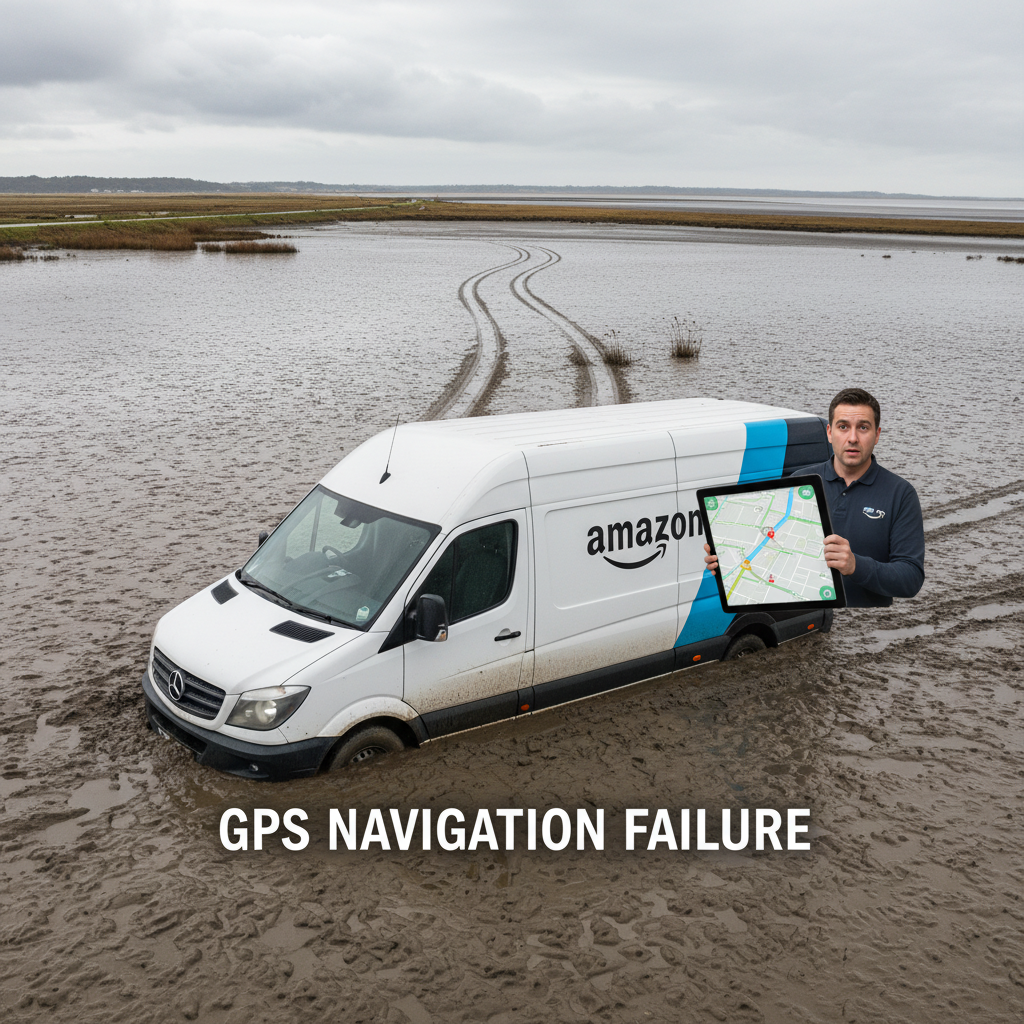
The Slack channel lit up with panicked pings. It was early, just after the U.K. coastguard had reported the incident. An Amazon delivery van, swallowed by the treacherous Broomway mudflats near Foulness Island, Essex. The culprit? A GPS navigation system that, apparently, hadn’t accounted for tides or the shifting sands.
It’s a scene that could easily play out in any tech company, a cautionary tale of over-reliance on technology. The irony wasn’t lost on the engineers. They knew the limitations of their systems, the inherent risks of blindly following digital directions. But the public? They often assume the tech is infallible.
The core problem: GPS, or Global Positioning System, relies on satellites. While accurate for many applications, it doesn’t account for real-time environmental changes. In this case, the GPS data, perhaps outdated or lacking specific local knowledge, directed the driver across the Broomway, a historic tidal path notorious for its quicksand-like conditions. “It’s a classic case of the digital world failing to account for the physical,” says Dr. Emily Carter, a transport analyst at the University of Cambridge. “These systems need to integrate real-time environmental data, and better driver education about the limitations of the technology.”
The incident is also a reminder of the supply chain’s human element. Amazon’s vast logistics network depends on the drivers, the vans, the last-mile delivery folks. Each of these steps, of course, is a point of potential failure. The GPS system is just one part of this complex system, but it’s a critical one.
The coastguard’s rescue operation, thankfully, was successful. The driver was unharmed, but the van was stuck. The Broomway, a historic path, is only passable at low tide, and even then, it’s dangerous. The incident could have been far worse.
The implications are far-reaching, extending beyond a single stranded van. It touches on the broader challenges of autonomous systems. As self-driving technology advances, these questions will only become more critical. How do you account for unpredictable environments? How do you balance the convenience of technology with the need for human oversight? The Amazon van incident serves as a stark reminder: technology is a tool, not a substitute for common sense or local knowledge. And that’s a lesson everyone, from tech developers to delivery drivers, needs to remember.
About the Author