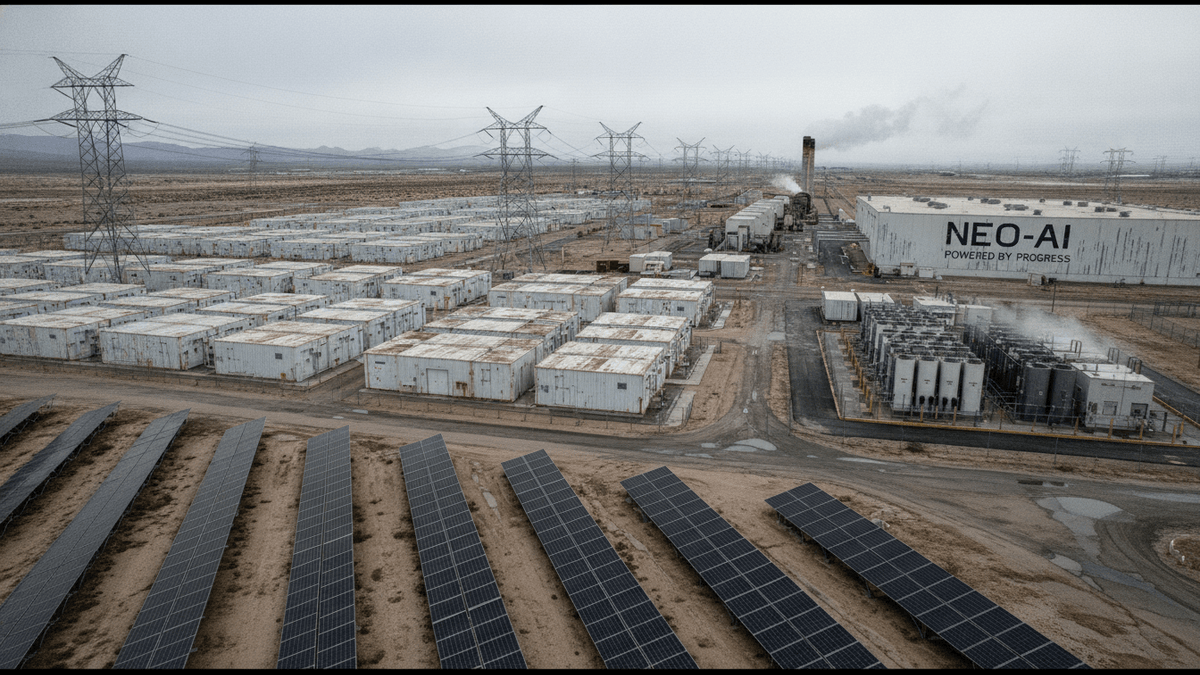
AI data center, solar field, battery storage, and gas-fired power plant under overcast sky
The booming artificial intelligence industry, a key driver for global investment and the Korean stock market’s semiconductor sector, is facing a critical bottleneck: energy supply. The sheer power demands of AI development and adoption are rapidly outstripping existing energy infrastructure, posing a significant challenge to the industry’s sustained growth.
Consider the scale: data center power consumption is projected to skyrocket to 220 gigawatts globally by 2030, a staggering six-fold increase from 2020 levels. This explosive growth rate far exceeds the energy industry’s typical long lead times for new capacity, leading to potential delays in crucial data center construction and, by extension, AI innovation.
The search for stable and sustainable power has led to a complex array of options, each with its own set of hurdles. Traditional grid connections are often insufficient or face lengthy approval processes. Gas-fired generation, while readily available, carries high costs and, more critically, conflicts directly with the carbon-neutral goals increasingly adopted by major AI development companies. Renewable sources like solar and wind offer clean power but struggle with intermittency, requiring robust storage solutions that are still evolving.
Even advanced nuclear options, such as small modular reactors (SMRs), face significant development and deployment timelines. Fuel cells, particularly those powered by hydrogen, show promise for cleaner energy, but the infrastructure for clean hydrogen production and distribution is still nascent.
In response to these challenges, companies, particularly those observed in the U.S., are adopting hybrid energy approaches. This typically involves combining intermittent renewable energy sources with battery storage, supplemented by auxiliary power from less efficient gas generation. The strategic shift also includes a gradual integration of clean hydrogen into fuel cell technologies, aiming for a more sustainable long-term solution.
The takeaway for founders and investors is clear: the future of AI isn’t just about algorithms and chips; it’s fundamentally tied to power. Stable, sustainable, and scalable energy supply isn’t merely a logistical concern—it’s a strategic imperative that will dictate the short-term trajectory and long-term viability of the entire artificial intelligence ecosystem.
About the Author