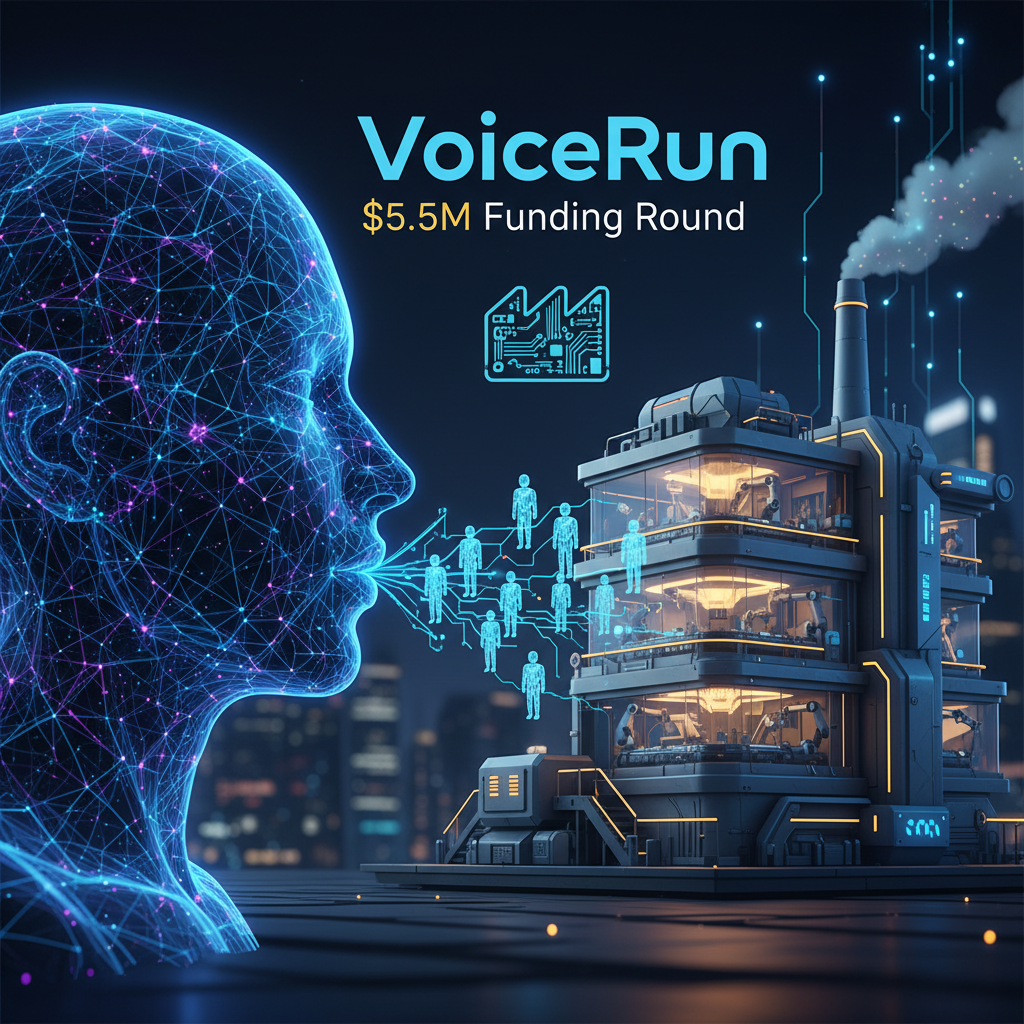
The hum of servers filled the air as the VoiceRun engineering team huddled around a monitor, reviewing thermal tests. It was January 14, 2026, and the pressure was on. The startup, focused on creating advanced voice agents, had just announced a $5.5 million funding round led by FlyBridge, and the clock was ticking.
“We’re not just building software; we’re building a factory,” said CEO Anya Sharma during a later analyst call. “A factory that can churn out sophisticated voice agents at scale.” The goal: to dominate a market that, according to Gartner, would be worth over $20 billion by 2028.
The core of VoiceRun’s strategy involves a proprietary AI model that can be customized for various applications, from customer service to healthcare. The model’s architecture is designed to handle complex natural language processing tasks efficiently, leveraging a combination of GPUs and specialized AI accelerators. Engineers were particularly focused on optimizing inference speeds, which would directly impact the user experience. Faster response times meant happier users and a competitive edge.
“The market is demanding more than just chatbots,” noted Sarah Chen, an analyst at Forrester. “Companies want voice agents that can understand context, handle nuanced queries, and even anticipate user needs.” This demand is driving rapid innovation, and VoiceRun aims to be at the forefront.
One of the key challenges, however, is the supply chain. The availability of high-performance GPUs, essential for training and running complex AI models, remains a bottleneck. Export controls and domestic procurement policies add another layer of complexity. VoiceRun’s engineers had to constantly balance performance requirements with the realities of component availability. It’s a constant juggling act.
The funding will be used to scale up operations, expand the engineering team, and refine the voice agent platform. Sharma’s team plans to release its first major product update by Q3 2026. This release will include enhanced features such as improved speech recognition, sentiment analysis, and the ability to integrate with a wider range of third-party applications.
The company also faces competition from established tech giants and smaller startups. But VoiceRun’s focus on a “voice agent factory” approach, with a modular and scalable platform, could give it a significant advantage. It’s a bet on the future of AI, and the engineers in that server room are working hard to make it a reality.
The team is also exploring partnerships with hardware manufacturers to secure a stable supply of AI accelerators. The goal is to build a robust and reliable infrastructure that can support the rapid growth they anticipate. Or maybe that’s how the supply shock reads from here.
About the Author