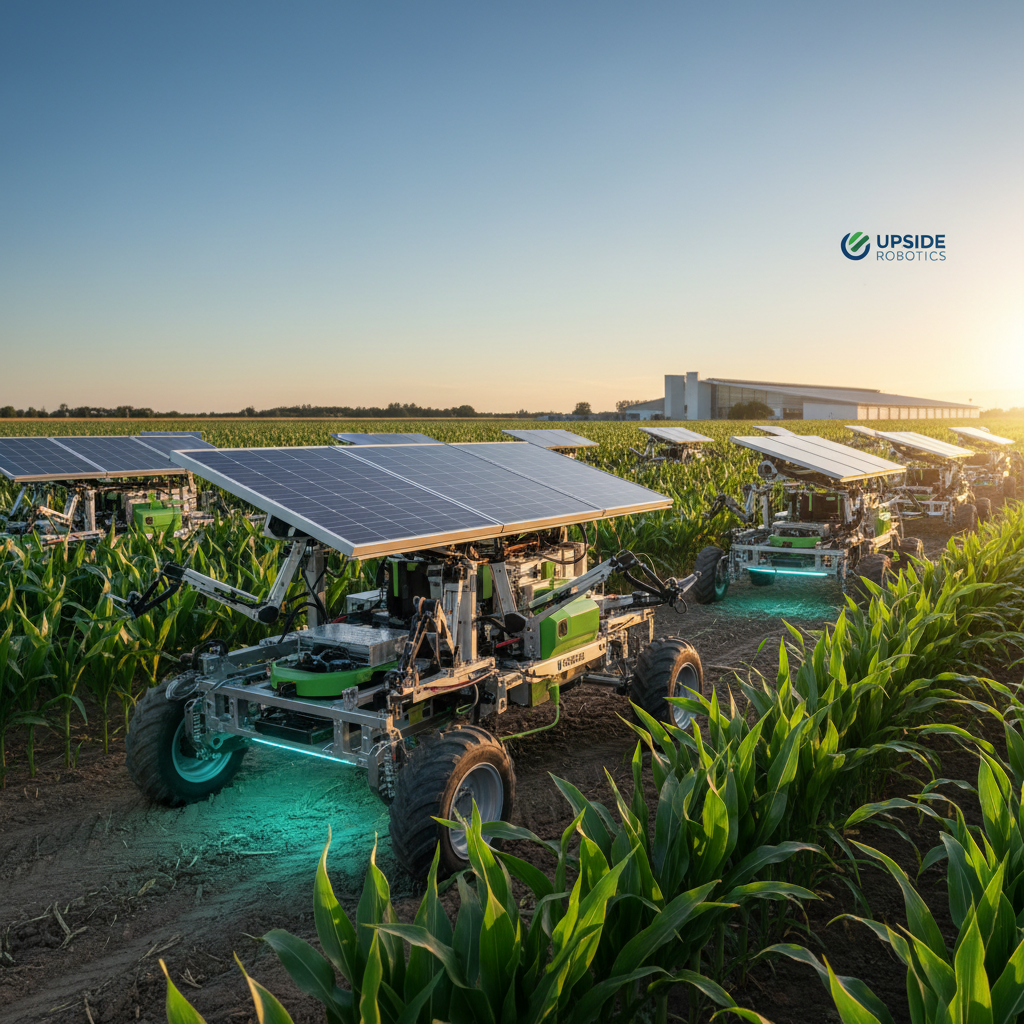
The hum of the solar panels filled the Upside Robotics lab, a low thrum that punctuated the focused silence. Engineers hunched over monitors, reviewing thermal tests on the latest prototype: a compact, agile robot designed to navigate cornfields with precision. It was early February 2026, and the pressure was on. Upside Robotics was gearing up for its first large-scale deployment.
The core innovation is elegant. These robots, powered entirely by the sun, autonomously roam cornfields, precisely applying fertilizer only where needed. This targeted approach promises to slash fertilizer use by an impressive 70%, as stated in a recent TechCrunch article. The implications are significant, not just for farmers looking to reduce costs, but for the environment as well. Reduced fertilizer use translates directly to less runoff, minimizing the pollution that plagues waterways.
“We’re talking about a fundamental shift,” says Dr. Anya Sharma, an agricultural robotics analyst at the Lilly School of AgTech. “Precision agriculture has been a buzzword for years, but Upside Robotics has the potential to make it a reality at scale.” She added in a recent interview, “Their focus on solar power is particularly smart, reducing operational costs and improving sustainability credentials.”
The technology itself is a blend of cutting-edge and practical. Each robot is equipped with advanced sensors and AI-powered image recognition, allowing it to identify and target specific plants. The robot’s onboard systems determine the precise amount of fertilizer needed, dispensing it with surgical accuracy. This level of precision minimizes waste and maximizes efficiency. The robots are designed to operate around the clock, drawing power from the sun, and are built to withstand the rigors of the field.
The company, founded in 2023, is betting big on the 2026 growing season. Their initial rollout targets corn farmers in the Midwest, an area that consumes massive amounts of fertilizer. And the potential market is enormous. According to a recent report from JPMorgan, the market for agricultural robots is projected to reach $12 billion by 2030, with a compound annual growth rate of 18%. But scaling up won’t be easy. The supply chain for specialized components, particularly the high-efficiency solar panels and the sophisticated sensors, could present challenges.
The engineering team is currently focused on optimizing the robot’s navigation system. The goal is to ensure that the robots can operate reliably in varying field conditions. Also, the team is working on the durability of the robots, to ensure the robots can withstand the tough conditions in the field. The team hopes that the robots will be able to handle the rough terrain and the changing weather conditions.
The future looks promising. Upside Robotics’ autonomous robots represent a significant step forward in sustainable agriculture. The company is poised to revolutionize farming practices, one solar-powered robot at a time.
About the Author