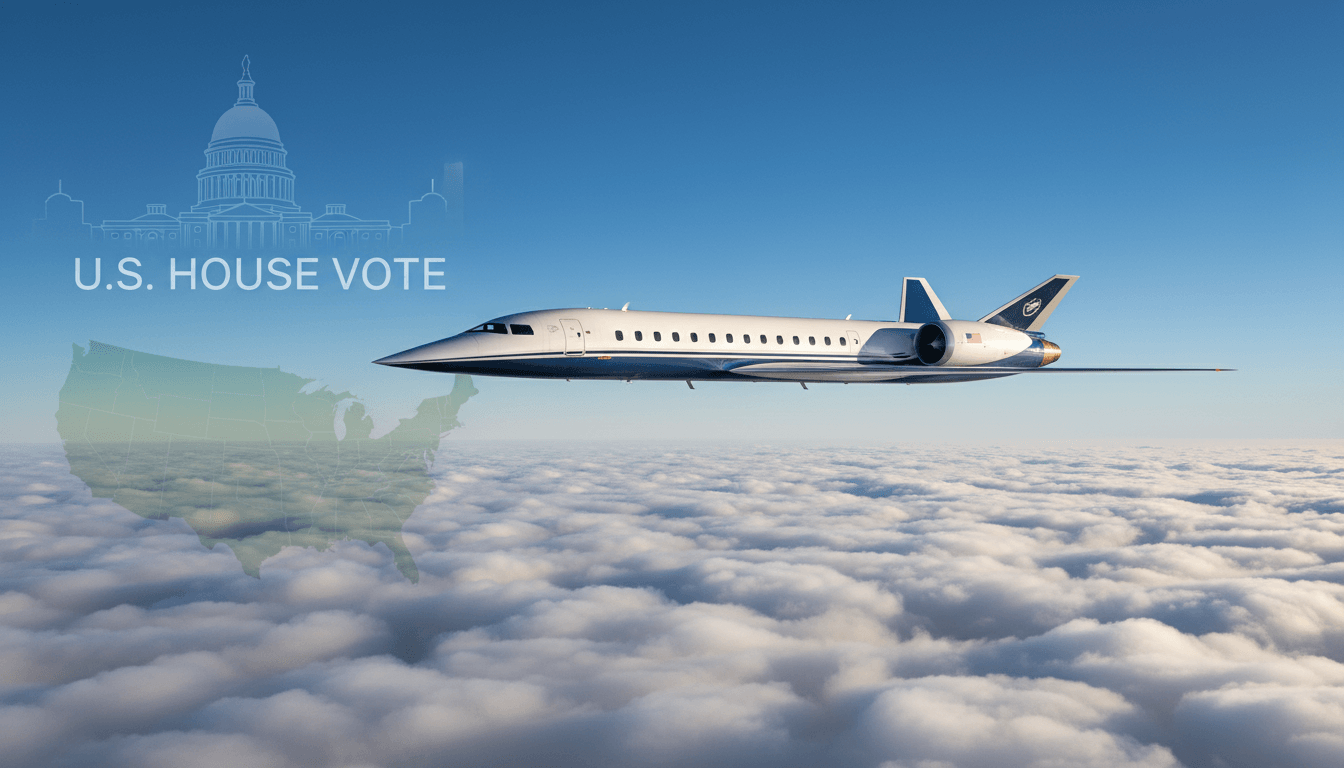
Supersonic jet flying over clouds with U.S. government symbols.
U.S. air travel could soon enter a new era as the House of Representatives recently voted to lift a decades-old ban on supersonic passenger flights. This decision, pending Senate approval, could bring back commercial flights that travel faster than the speed of sound.
The House voted overwhelmingly to pass the bill, led by Rep. Troy Nehls (R-Texas), which directs the Federal Aviation Administration (FAA) to update its regulations within a year to accommodate passenger flights exceeding Mach 1. The crucial stipulation is that these flights must not generate noise pollution detectable on the ground.
Supersonic passenger flights over land were initially prohibited by the FAA in 1973 due to noise concerns. No American-owned airlines have manufactured such aircraft since then. Nehls, who chairs the House Transportation Committee’s aviation subcommittee, emphasized that the bill aims to ensure the U.S. remains competitive in aviation innovation.
Boom Supersonic, a company advocating for the bill, stated that civil supersonic flight can be safe, efficient, and quiet. The company views the bipartisan vote as a step toward overturning outdated regulations and enabling faster flights.
This legislative effort follows an executive order issued by President Donald Trump last year, intended to reverse what the White House described as overly restrictive regulations. The Concorde airliner, operated by British and French companies, previously offered trans-Atlantic supersonic flights for 27 years until 2003, when it was retired due to high costs and a fatal accident in 2000.
About the Author