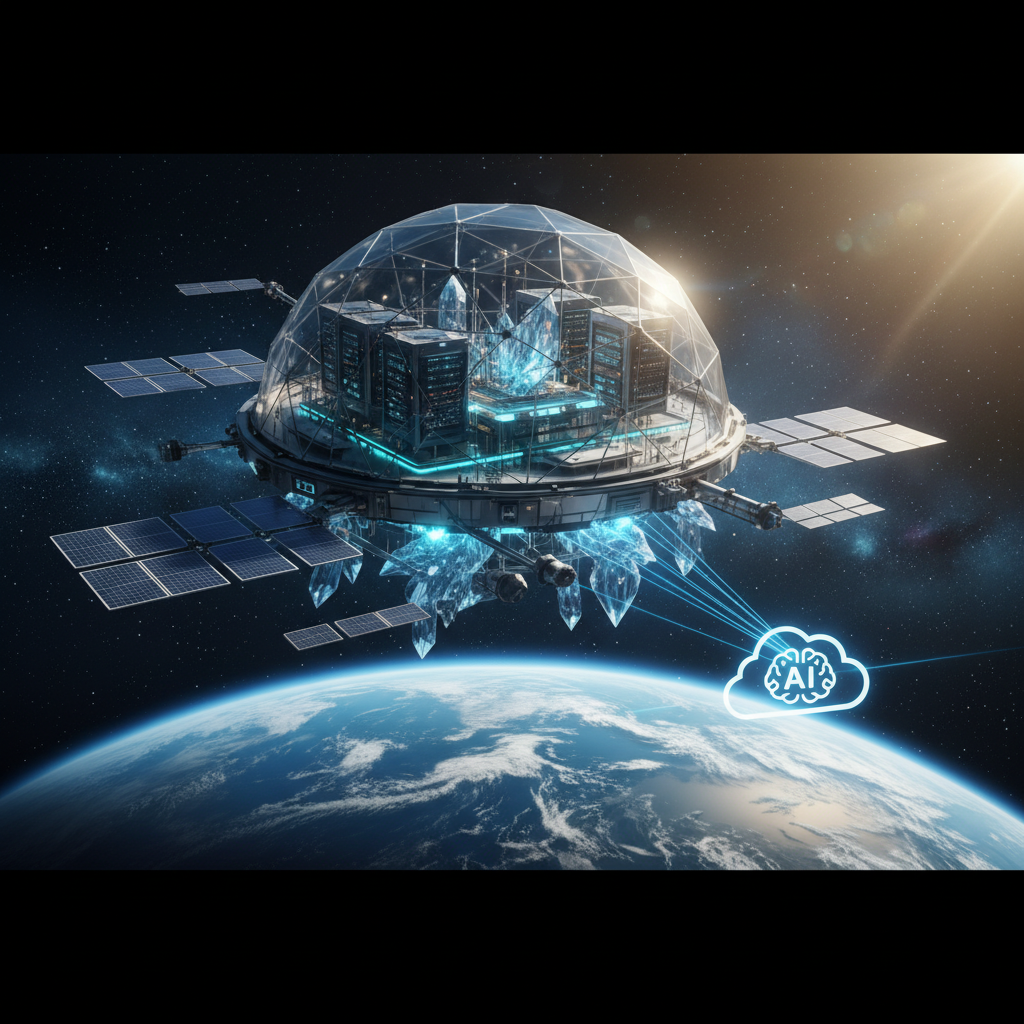
The hum of servers fills the air, a constant thrum that’s almost a physical presence. Inside a nondescript building in Silicon Valley, engineers at a stealth startup are running thermal tests on prototype processors. Their goal: to optimize performance under the extreme conditions of outer space.
The impetus? Artificial intelligence. Or, more precisely, the insatiable energy appetite of AI. Training large language models (LLMs) like GPT-4 demands massive computational power, and that power requires, well, power. Data centers, the physical hubs of the digital world, are struggling to keep up. According to a recent report by the International Energy Agency, global data center energy consumption could double by 2026. This is where space data centers come in.
“It’s not just about finding more energy; it’s about finding a more sustainable and secure location,” says Dr. Anya Sharma, a leading analyst at Deutsche Bank, specializing in space infrastructure. She points out that space offers several advantages: access to abundant solar energy, the avoidance of terrestrial threats like storms and cyberattacks, and the potential to significantly reduce the environmental footprint of computing. Or maybe that’s how the supply shock reads from here.
The concept isn’t science fiction. Several companies are already exploring the feasibility of orbiting data centers. The challenges are considerable, from the initial cost of launching infrastructure to the complexities of maintaining and cooling servers in the vacuum of space. But the potential rewards are immense. Imagine a world where AI training is shielded from power outages, and where the environmental impact of computing is minimized. It’s a compelling vision.
One key player is SpaceCore, a company that has been quietly developing its technology for the past three years. Their roadmap includes the launch of their first operational data center by late 2027, with the capacity to handle up to 500 petaflops of computing power. This is ambitious, especially considering the current supply-chain bottlenecks. The global chip shortage, exacerbated by geopolitical tensions and export controls, is a major hurdle. SMIC, China’s largest chip manufacturer, is facing significant restrictions, while TSMC in Taiwan struggles to meet global demand. These constraints are forcing companies to become more resourceful, looking for alternative suppliers and innovative cooling solutions.
Engineers are reviewing the latest thermal tests. The data streams across multiple monitors. A senior engineer points out a small anomaly in the temperature readings. “We need to adjust the heat dissipation on the M300 prototype,” she says, her voice calm despite the pressure. The M300 is SpaceCore’s next-generation processor, slated for launch in 2026. It promises a 40% increase in performance over the current model, the M100. The team is aiming for a power usage effectiveness (PUE) of 1.1, a significant improvement over terrestrial data centers, which often have PUEs of 1.5 or higher.
But it’s not just about the technology. The market is also responding. Venture capital firms are showing increased interest in space-based infrastructure. Analysts forecast that the space data center market could reach $10 billion by 2030, driven by the exponential growth of AI and the need for sustainable computing solutions. However, the regulatory landscape remains uncertain. Export controls, particularly those targeting advanced semiconductors, could significantly impact the development and deployment of space data centers. Policymakers are grappling with how to balance national security concerns with the need to foster innovation in this rapidly evolving field.
The future of AI may well be written in the stars, a vision of sustainability, security, and boundless computation. The engineers in that nondescript building know it. They are busy building it.
About the Author