The hum of servers filled the air, a constant thrumming presence in the SkildAI engineering lab. It was December 7th, 2025, and engineers were huddled around monitors, running thermal tests on the latest iteration of the company’s robotics foundation model. The air crackled with the energy of a team on the cusp of something big.
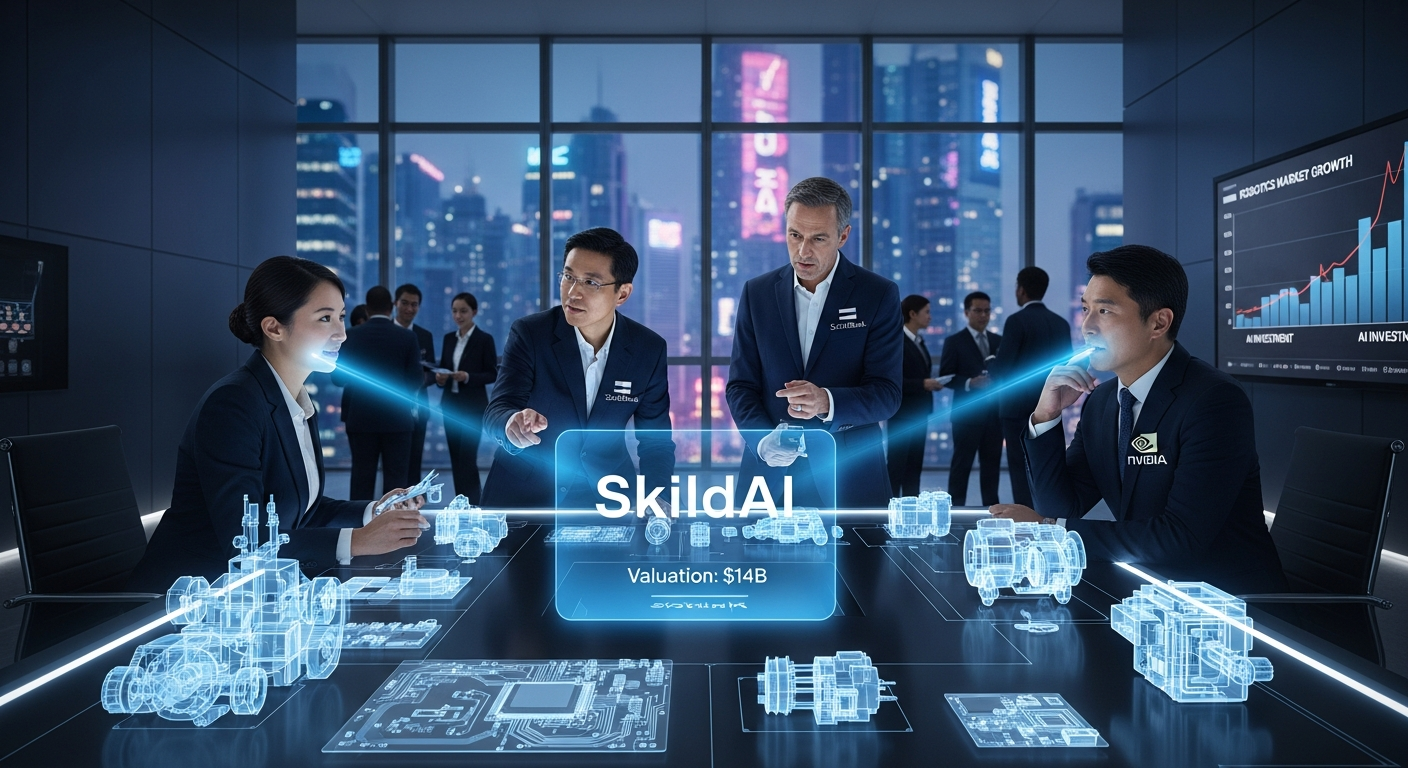
Word on the street, or rather, across the interwebs, was that SoftBank and Nvidia were circling, reportedly in talks to inject a massive round of funding into SkildAI. The rumored valuation? A cool $14 billion, nearly tripling the company’s worth. This comes as demand for advanced robotics solutions is exploding, with analysts at Deutsche Bank predicting a 30% annual growth rate in the sector through 2030.
SkildAI is attempting to build a hardware-agnostic foundation model for robots, which, in theory, can be customized for a wide range of applications. Think of it as the Android of robotics, a common operating system that can run on various hardware platforms. This is a crucial distinction, as it frees developers from being locked into specific chip architectures or manufacturers. “The goal is to create a truly versatile AI that can adapt to any robotic platform,” explained Dr. Anya Sharma, SkildAI’s lead AI architect, in a recent company blog post. The implications are huge: faster development cycles, lower costs, and a wider range of potential applications.
The funding, if finalized, would be a major vote of confidence in SkildAI’s vision. Nvidia, in particular, has a vested interest, given its dominance in the GPU market, which is crucial for training and running complex AI models. But the deal isn’t done yet. Sources close to the situation say that export controls and domestic procurement policies are playing a role, with Beijing’s appetite for advanced robotics technology a key factor. The situation is complicated, but one thing is clear: the race to build the future of robotics is on.
“We’re seeing a fundamental shift,” said Mark Johnson, a robotics analyst at JPMorgan. “Companies are no longer just building robots; they’re building the AI that powers them. The hardware is important, of course, but the software is where the real value lies.” Johnson points to the challenges faced by companies like Boston Dynamics, which has been hampered by supply-chain issues and the difficulty of scaling production. Building a hardware-agnostic model could sidestep some of these problems, or maybe that’s how the supply shock reads from here.
The potential for SkildAI is undeniable. The company’s roadmap includes plans for the M300 model by late 2026, promising a significant leap in performance and versatility. Meanwhile, supply-chain constraints and manufacturing bottlenecks at TSMC and even SMIC (the Semiconductor Manufacturing International Corporation) present real-world hurdles. Even with a fresh infusion of capital, scaling production will be a challenge. The deal with SoftBank and Nvidia would be a game-changer, but the devil is always in the details.
The conference call went silent for a beat. The engineers in the lab continued their work, the low hum a steady counterpoint to the high-stakes negotiations taking place elsewhere. The future of robotics, it seemed, was being built one line of code, one thermal test, one funding round at a time. The implications of this are huge: faster development cycles, lower costs, and a wider range of potential applications.
About the Author