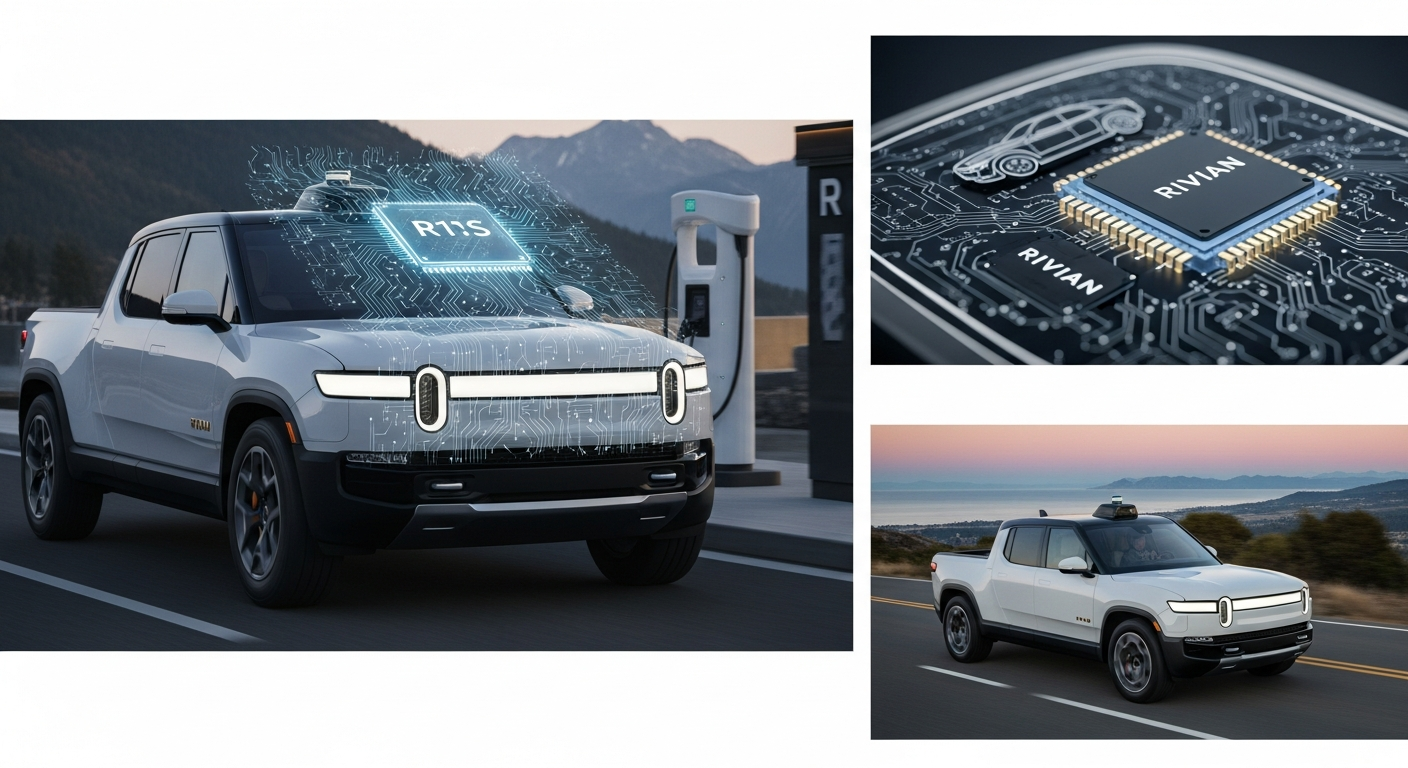
The hum of servers filled the air, a low thrum that vibrated through the floor of Rivian’s Palo Alto engineering lab. Engineers, faces illuminated by the glow of multiple monitors, were huddled around a table, reviewing thermal test data. The air hung thick with the smell of coffee and the quiet intensity of a team on the verge of a breakthrough. Or, at least, that’s the impression one gets from the latest announcement: Rivian’s new autonomy chip, designed to power hands-free driving across 3.5 million miles of roads, starting early 2026.
This isn’t just a software upgrade; it’s a hardware play. The company is taking control of its self-driving destiny. The new chip, the specifics of which are still under wraps, is slated to be the heart of a subscription service, offering hands-free driving capabilities. The plan, which Rivian hopes will distinguish it from competitors, has been in the works for a while.
“This is a significant step,” says Stephanie Atkinson, CEO of Compass Intelligence, pointing out the move towards vertical integration. “Rivian is not just building cars; they’re building the brains of the car.” She added that this strategic shift could give Rivian a competitive edge, especially in a market where software and data are increasingly valuable assets. The details of the chip’s design, its manufacturing partners, and the specific performance metrics remain closely guarded. However, the company’s roadmap suggests a multi-stage rollout, with incremental improvements expected in subsequent years.
The move is a direct response to the evolving demands of the electric vehicle market, where consumers are increasingly expecting advanced driver-assistance systems (ADAS). While details are scarce, the chip is expected to be more powerful and efficient than previous generations, potentially reducing reliance on external suppliers. This is a crucial move, especially given the ongoing supply chain disruptions and the intense competition for advanced semiconductors. The company aims to have the hands-free driving available by early 2026, which is an aggressive timeline, given the complexities of regulatory approvals and real-world testing.
The implications are significant. Rivian is not just aiming to catch up; it is trying to leapfrog. The company is betting that this chip will allow it to offer a superior driving experience, potentially attracting customers and boosting sales. The success of this strategy hinges on several factors, including the chip’s performance, the reliability of the software, and the ability to navigate the complex regulatory landscape. The announcement comes at a time when the automotive industry is undergoing a massive transformation, with companies racing to develop self-driving technologies.
What happens next? The market will be watching closely.
About the Author