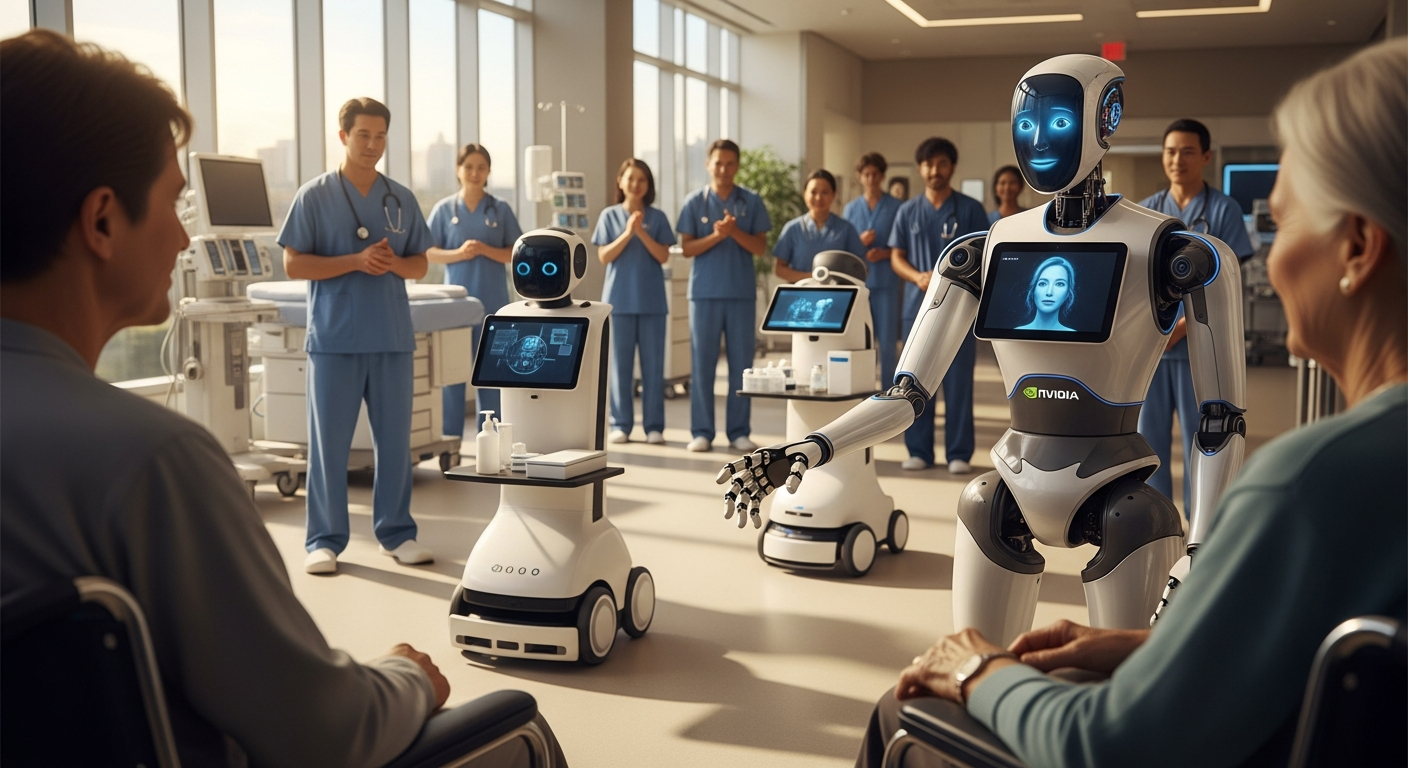
The fluorescent lights of the Mayo Clinic in Rochester, Minnesota, hummed, reflecting off the polished floors. But something new is here. It’s not just the whir of machines, it’s the quiet efficiency of AI, now a constant presence.
Nvidia, the tech giant known for its graphics cards, is quietly transforming hospitals. They’re deploying AI-powered robots and voice assistants to tackle the healthcare worker shortage. It’s a shift that goes beyond replacing staff; it’s about augmenting them, freeing up doctors and nurses from repetitive tasks. Imagine a surgeon, hands steady, guided by AI analysis of a scan, or a voice assistant handling paperwork, allowing nurses more time with patients.
The core of this transformation lies in Nvidia’s powerful AI tools. These systems can analyze complex medical images with remarkable speed and accuracy, assisting in diagnoses and treatment planning. They can also automate tasks like scheduling and billing, which is essential, given the staffing crisis. The promise is to improve patient care and reduce the burden on healthcare professionals.
This isn’t a distant future. It’s happening now. Nvidia is working with several healthcare companies, deploying these AI solutions in hospitals across the country. While specific numbers are hard to come by, the trend is clear: AI is no longer a futuristic concept in healthcare; it’s a present-day reality.
“We are seeing a significant increase in demand for AI solutions in healthcare,” says a company spokesperson. “Hospitals are recognizing the potential to improve efficiency and patient outcomes.”
One can imagine the impact: fewer errors, faster diagnoses, and more time for doctors and nurses to focus on what matters most — their patients. The sterile environment of a hospital, once a place of solely human interaction, is now interwoven with the silent intelligence of machines.
About the Author