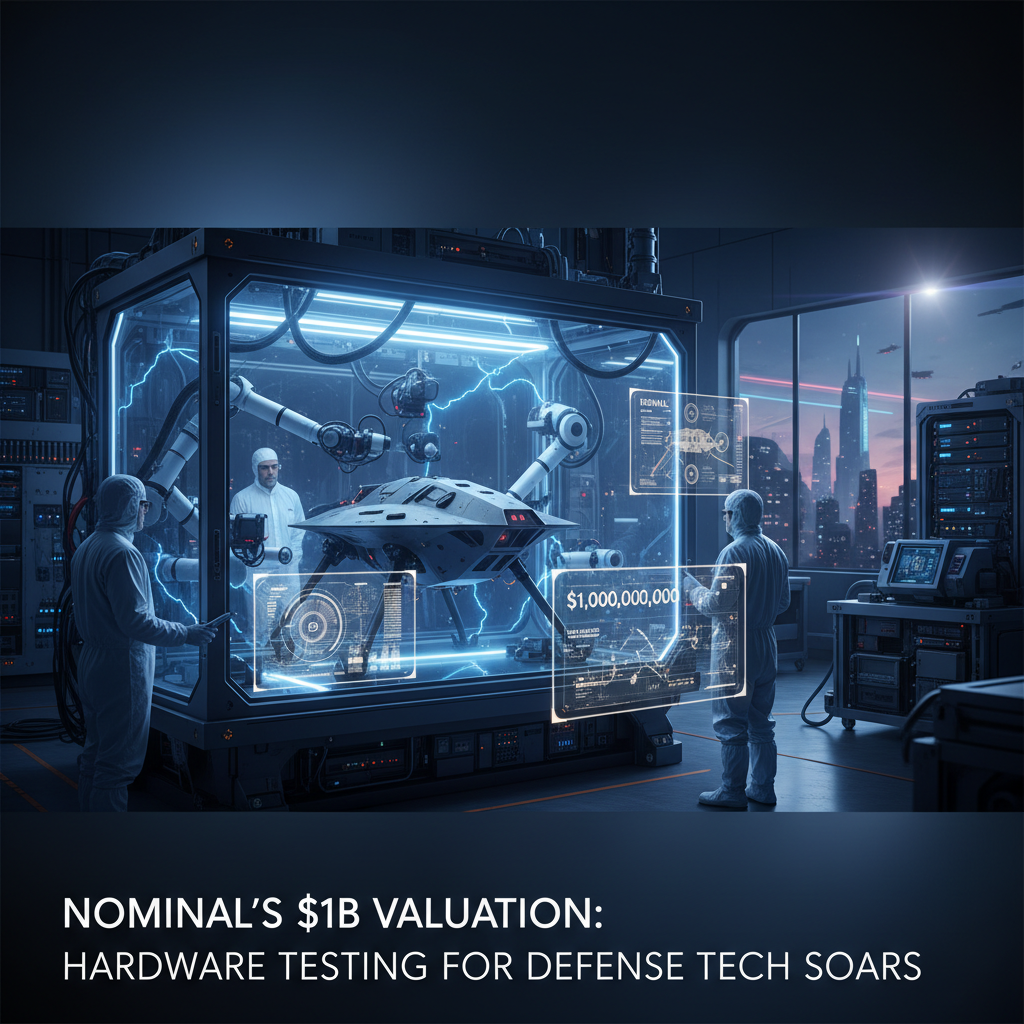
The hum of the thermal chamber filled the lab. Engineers at a defense tech firm, eyes glued to monitors, watched the stress tests. Today’s focus: a new generation of microchips, designed for next-gen radar systems. They were running through Nominal’s testing suite, a system that’s become a critical part of the supply chain.
It’s March 2026, and the industry is abuzz. Nominal, the hardware testing startup, just hit a $1 billion valuation. That valuation came hot on the heels of a $155 million fundraising round, led by Founders Fund. The funding, in a preemptive deal, is a clear bet on the rapid growth of defense tech and the increasing need for rigorous hardware validation.
“Nominal’s rise reflects a fundamental shift,” says tech analyst Sarah Chen, speaking from a recent industry conference. “As chip complexity grows, the need for precise, reliable testing becomes paramount. This is a must-have, not a nice-to-have.”
Nominal provides crucial services for companies developing advanced hardware. Their systems put chips through extreme conditions – temperature swings, vibration, and radiation – to ensure they meet stringent performance and reliability standards. This is particularly important for defense applications, where failure isn’t an option. The company’s growth trajectory reflects this demand, as well as the constraints of a global supply chain where every component must be verified. Or maybe that’s how the supply shock reads from here.
The company’s roadmap includes plans for expanding its testing capabilities, including advanced analysis of chip performance under various stress conditions. The focus will be on validating the next generation of semiconductors. The goal is clear: to ensure the reliability of hardware used in defense, aerospace, and other critical sectors.
“We’re seeing a significant increase in demand,” noted a Nominal spokesperson, speaking via a company press release. “Our testing solutions are designed to address the challenges of modern hardware development, supporting our clients from the design phase to the production line.”
The implications of Nominal’s success reach far beyond the company itself. It highlights the growing importance of hardware validation in a world where technology is increasingly intertwined with national security. The future of Nominal, and the industry it supports, is looking bright.
About the Author