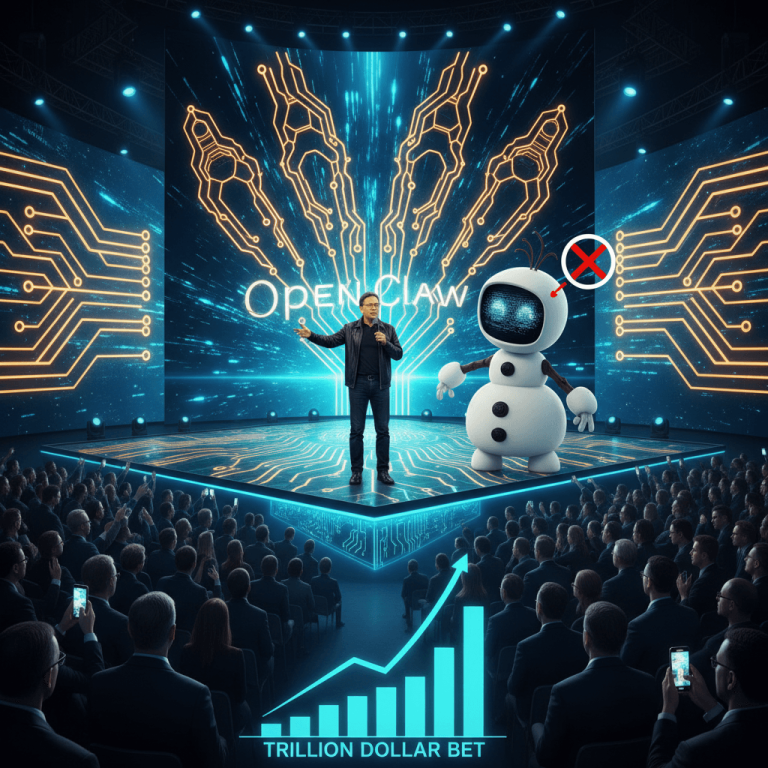
The weight of $38 trillion. That’s the figure hanging over the United States, a debt so vast it’s almost impossible to comprehend. Elon Musk, never one to shy from big ideas, has a solution: artificial intelligence and robotics. He claims these technologies are the *only* things that can pull the U.S. back from the brink, predicting significant economic shifts within three years, according to a recent Fox Business report.
It’s a bold statement, typical of Musk. But is it grounded in reality, or is it another chapter in the ongoing saga of tech’s promises? The idea isn’t entirely new. Automation has been touted as an economic game-changer for years, with proponents pointing to increased efficiency and productivity. AI, in particular, is seen as a force that could reshape industries, from manufacturing to finance. Musk’s bet is that these technologies can generate enough wealth to offset the staggering debt.
Consider the scale: the U.S. national debt surpassed $30 trillion in early 2022, and has only continued to climb. The interest payments alone are a significant burden. The country’s economic health, and by extension, the world’s, is tied to this number. Musk’s argument implicitly suggests that AI and robotics can do more than just improve efficiency; they can create entirely new forms of wealth generation, or perhaps, drastically reduce costs.
“AI and robotics are the only things that can solve the massive US debt crisis,” Musk reportedly stated. The precise context of this statement is key. Was it a casual remark, or a carefully considered prediction? The details matter. Musk’s companies, like Tesla and SpaceX, are heavily invested in both AI and robotics. His perspective is, understandably, colored by his own business interests.
The implications are far-reaching. If Musk is right, we’re on the cusp of a dramatic economic transformation. Industries could be reshaped, jobs could be lost and created in ways we can’t fully predict, and the very fabric of society could be altered. The timeline, “within three years,” adds another layer of intrigue. It’s a short window, a pressure cooker for innovation and adaptation.
But the path is not without its challenges. The development of AI and robotics is complex and expensive. The ethical considerations are profound. Job displacement is a very real concern. And the economic benefits, even if they materialize, may not be evenly distributed. There are many skeptics.
The question remains: Can machines truly solve a problem rooted in human decisions, political realities, and global economics? Perhaps the answer lies not in a single solution, but in a complex interplay of innovation, policy, and societal adaptation. It is a future that we are all, willingly or not, building together.
About the Author