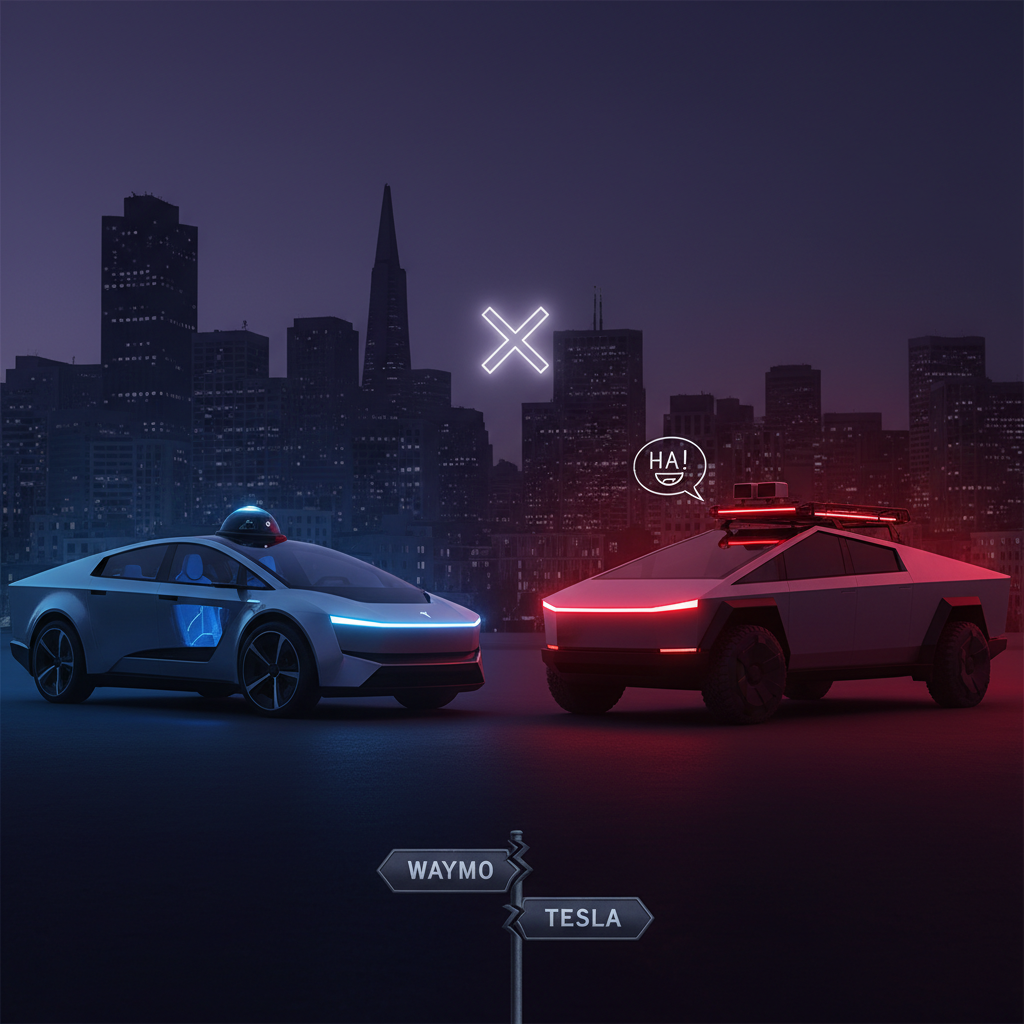
The Slack channel lit up—a cascade of frustrated emojis and clipped sentences. It was late afternoon on October 26th, and the San Francisco power grid had hiccuped, plunging parts of the city into darkness. For the Tesla Autopilot team, this wasn’t just a nuisance; it was a potential PR opportunity. Elon Musk, ever the provocateur, didn’t disappoint. A tweet went out, a pointed jab at Waymo, whose self-driving cars had reportedly ground to a halt at intersections. Meanwhile, Musk claimed, Tesla’s robotaxis were unaffected.
The timing was perfect, or maybe perfectly cynical. The blackout, affecting an estimated 80,000 customers, exposed a vulnerability in Waymo’s system. Their vehicles, reliant on a robust infrastructure, were apparently stymied by the lack of power and the resulting traffic signal failures. Tesla, on the other hand, with its more aggressive approach to autonomy, seemed to have weathered the storm, or so Musk implied.
“It’s a classic case of different philosophies,” noted Stephanie Jones, an analyst at Guidehouse Insights, in a call the next morning. “Waymo built for perfection, Tesla for scale. One prioritizes avoiding all failure modes; the other accepts a higher risk profile.” That risk profile, of course, includes the potential for incidents, and the need for constant software updates. Tesla’s approach, fueled by its massive data collection from millions of vehicles, allows for rapid iteration. Waymo, with its more cautious approach, relies on extensive simulation and testing, a method that can be slower to adapt to real-world anomalies like a citywide blackout. Or, as one engineer put it, “Waymo’s cars are like a really cautious driver. They don’t know what to do when the lights go out.”
The implications are significant. The robotaxi market is projected to be worth trillions in the coming decade, with companies like Waymo and Tesla vying for dominance. Tesla, with its existing fleet and aggressive rollout plans, aims to launch a fully autonomous robotaxi service by the end of 2024, a timeline that some analysts consider ambitious. Waymo, meanwhile, has been operating a limited commercial service in Phoenix and San Francisco, but is expanding cautiously, focusing on safety and reliability. The San Francisco blackout incident, while a minor blip, served as a stark reminder of the challenges ahead.
The core difference boils down to the technology itself. Tesla’s system relies on cameras and neural networks, processing vast amounts of data to make real-time decisions. Waymo leans heavily on lidar, a technology that uses lasers to create a 3D map of the environment. Each approach has its strengths and weaknesses. Cameras are susceptible to weather conditions, while lidar can be expensive and complex. The power outage highlighted the different approaches’ resilience. Tesla’s reliance on readily available components and software updates may have given it an edge. Or maybe that’s how the supply shock reads from here.
The competitive landscape is brutal. Each company is racing to improve its technology, scale its operations, and secure regulatory approval. The San Francisco blackout was a snapshot of that rivalry, a moment when the strengths and weaknesses of each approach were laid bare, and when Elon Musk, as always, was ready to capitalize. The incident, however, is a reminder that the path to full autonomy is paved with challenges, setbacks, and a healthy dose of technological one-upmanship.
About the Author