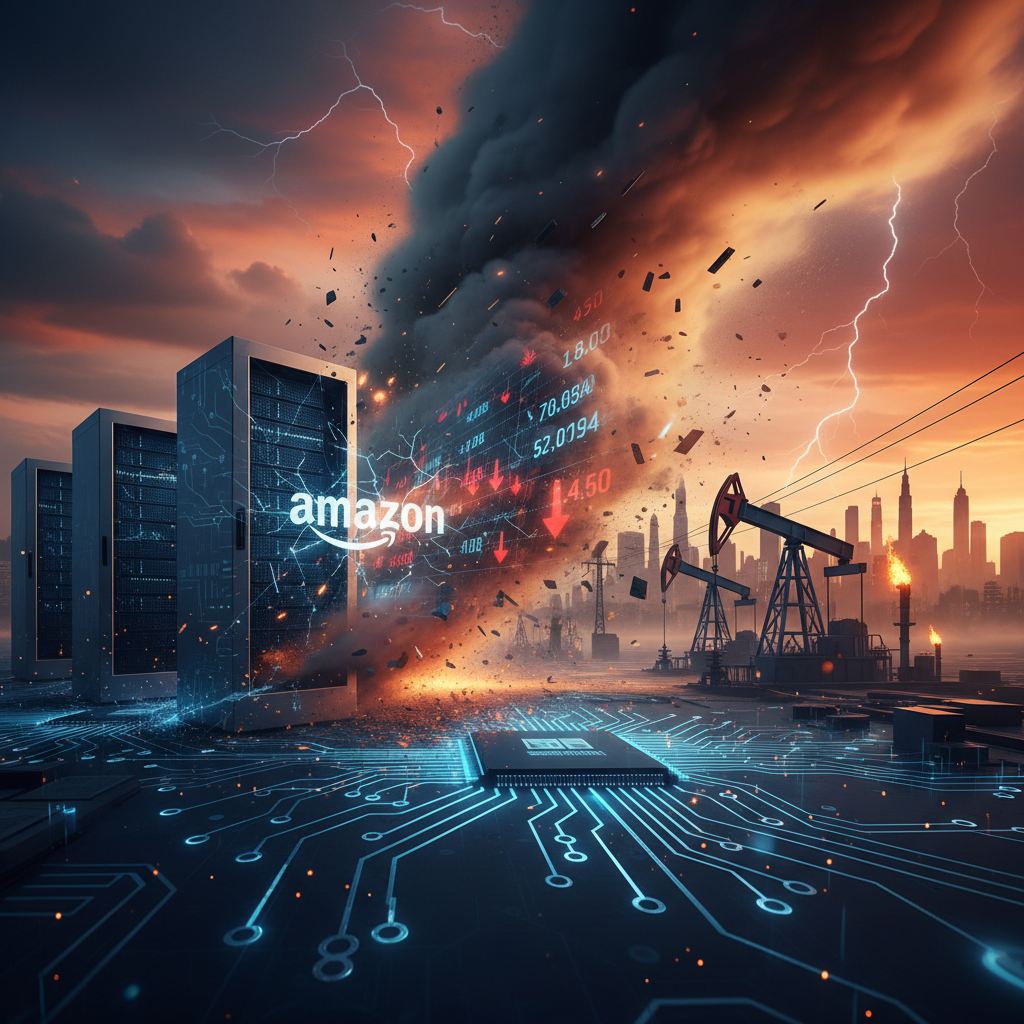
The Slack channel lit up with a red alert. “Critical: Data center offline,” it read, followed by a string of frantic pings. It was Tuesday, March 3, 2026, and the engineering team at Amazon Web Services (AWS) was staring down the barrel of a rapidly unfolding crisis. Drone strikes, reportedly targeting infrastructure in the United Arab Emirates and near Bahrain, had caused significant damage. Initial reports suggested that the strikes had taken out several key nodes, disrupting operations and forcing customers to scramble for backup plans.
Meanwhile, on trading floors, the Dow Jones Industrial Average was already in freefall. Market analysts at Deutsche Bank were quick to point out the obvious: rising oil prices, fueled by the escalating tensions, were stoking fears of inflation and potential disruptions to global trade. “The situation is volatile,” one analyst noted, “and the knock-on effects for tech companies, particularly those with significant Middle East exposure, could be severe.”
The immediate concern for AWS was the operational impact. Data centers, the backbone of modern cloud computing, are massive, complex facilities. They rely on redundant systems, backup generators, and sophisticated cooling mechanisms to maintain uptime. But drone strikes, as the team quickly realized, could bypass many of these safeguards. The strikes were not only a physical threat, but also a digital one. Data integrity, network stability, and service availability were all now at risk. Engineers began the grim work of assessing the damage, rerouting traffic, and attempting to restore services. The hum of servers, usually a constant background noise, was punctuated by the staccato of urgent commands and the clatter of keyboards.
“We’re looking at a potential outage impacting a significant percentage of our Middle East customer base,” a senior AWS executive reportedly told a crisis call. The company had invested heavily in the region, with data centers serving a growing number of businesses and government entities. The financial implications were significant. One source estimated that even a short-term outage could cost AWS tens of millions of dollars. The longer-term impact, however, was harder to gauge. Would clients lose confidence in the security of AWS’s infrastructure? Would this incident accelerate the trend toward localized cloud solutions, or maybe that’s how the supply shock reads from here?
The incident also highlighted the geopolitical risks inherent in global tech operations. With the world increasingly reliant on cloud computing, any disruption to this infrastructure could have far-reaching consequences. The supply chain was already strained, with shortages of critical components like GPUs and memory chips. Export controls and domestic procurement policies further complicated the situation. SMIC, the Chinese chip manufacturer, was facing increasing scrutiny, while TSMC, the Taiwanese giant, was struggling to meet soaring demand. The confluence of these factors created a perfect storm.
The AWS situation was a stark reminder of the interconnectedness of the global economy. As the dust settled, analysts and investors alike were left wondering what the next shock would be. The market’s reaction, the damaged data centers, and the rising oil prices were only the beginning. The world watched and waited, the hum of servers a constant reminder of the fragility of the digital age.
About the Author