Microsoft AI Chief: Only Biological Beings Can Be Conscious
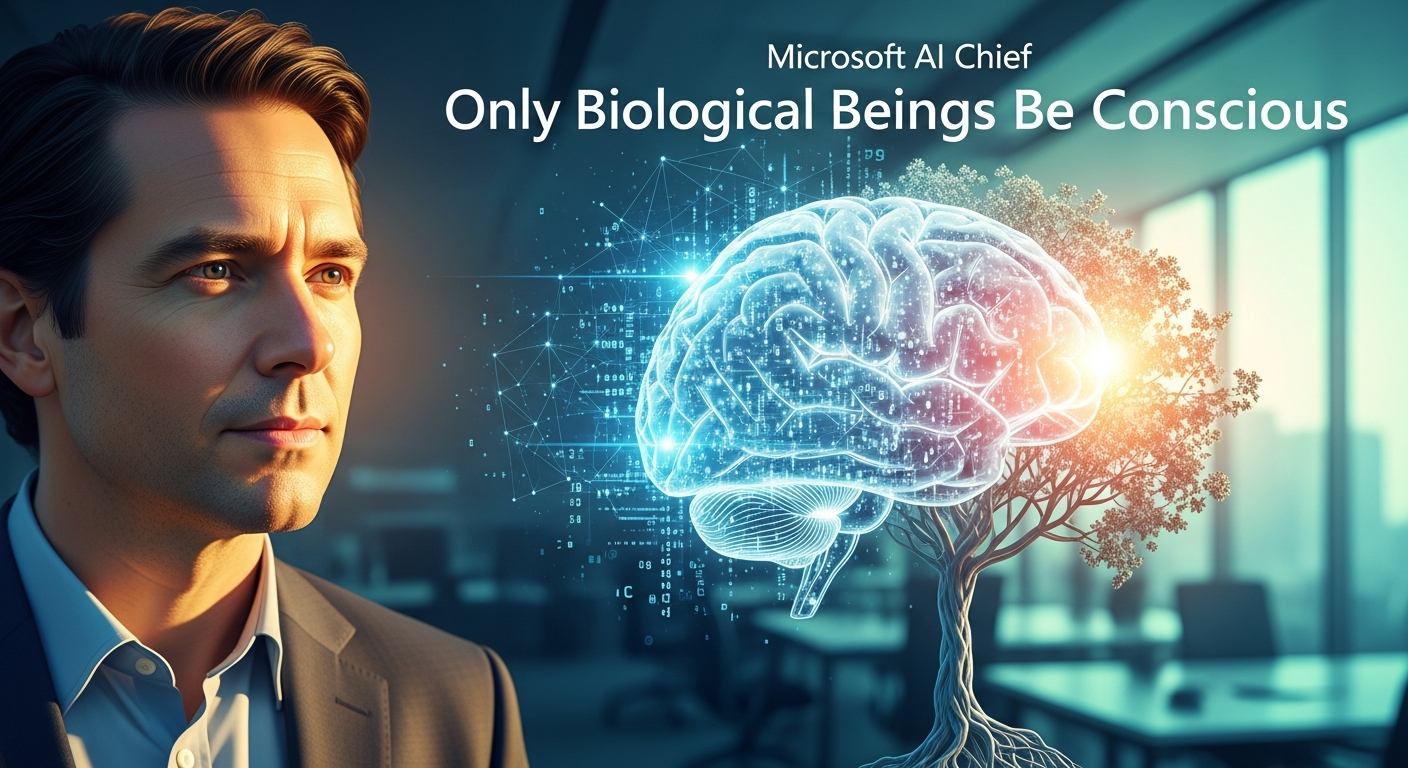
In a recent statement, Microsoft‘s Mustafa Suleyman, a prominent voice in the tech industry, shared his perspective on the capabilities of artificial intelligence. According to a report published on CNBC on November 2, 2025, Suleyman believes that only biological beings are capable of achieving consciousness. This viewpoint is a significant contribution to the ongoing conversation about the future of AI and its potential.
The Core Argument
Suleyman‘s assertion centers around the fundamental differences between biological systems and the current state of AI. While AI has made remarkable strides in various fields, from image recognition to natural language processing, the Microsoft executive suggests that these advancements do not equate to consciousness. His argument implies that there is a fundamental distinction between the ability to process information and the capacity to experience the world in a subjective and aware manner.
Implications for the Future of AI
This perspective has significant implications for the development and deployment of AI. If consciousness is indeed limited to biological entities, it could influence the direction of AI research and the ethical considerations surrounding its use. The focus might shift towards creating AI systems that are effective tools rather than entities with subjective experiences. This perspective also touches upon AI ethics, raising questions about the rights and responsibilities associated with advanced AI systems.
A Broader Perspective
The views of Mustafa Suleyman, as reported by CNBC, contribute to the wider discussion on the nature of consciousness and the potential of AI. While the field continues to evolve, the debate on whether machines can truly be conscious remains a central question. Understanding the nuances of this debate is crucial for anyone interested in the future of technology and its impact on society.
Source: CNBC
About the Author