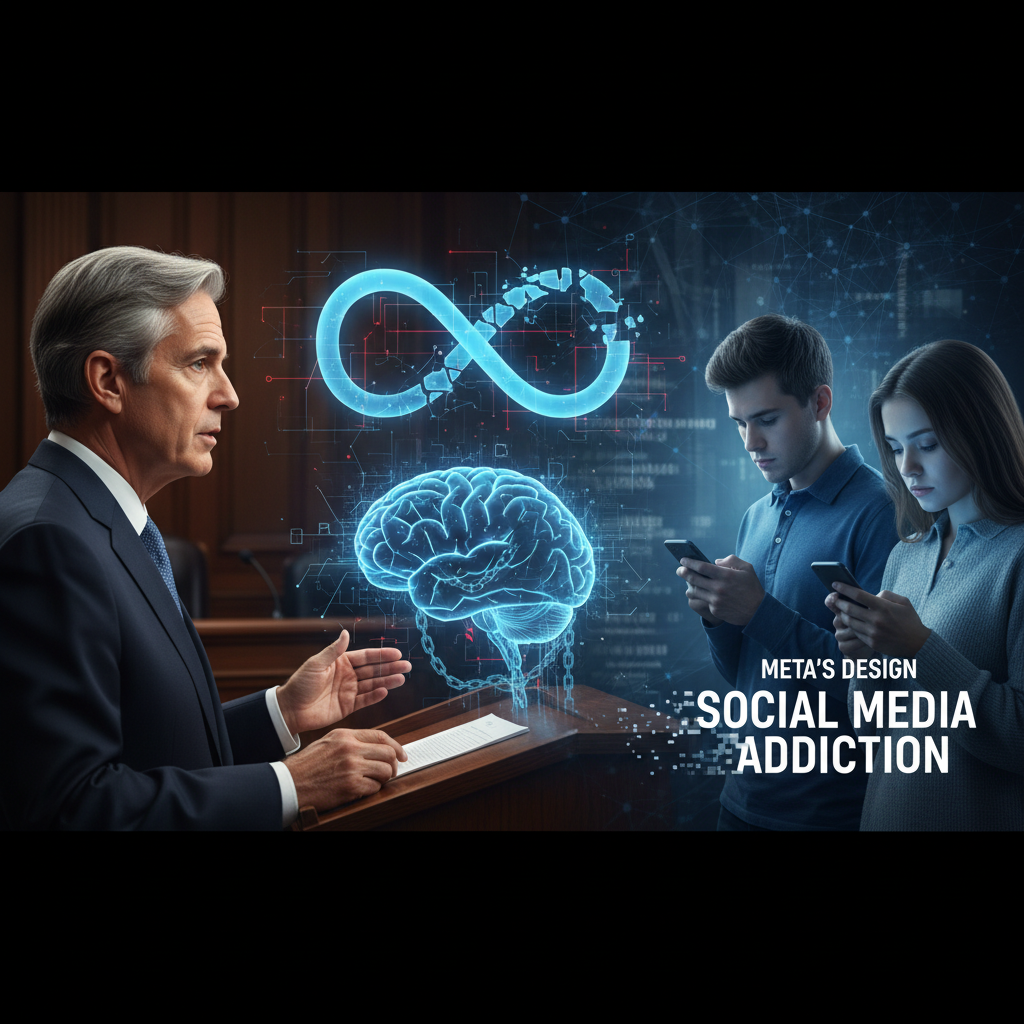
The fluorescent lights of the courtroom hummed, a stark contrast to the glowing screens that were the subject of the day’s testimony. Dr. Jonathan Singer, a Stanford psychiatrist, took the stand in a New Mexico lawsuit against Meta, the parent company of Facebook and Instagram. His task: to explain how these platforms, so ubiquitous in modern life, are designed to hook users, particularly the young and vulnerable.
The core of Dr. Singer’s argument centered on the addictive nature of the platforms’ design. Features like infinite scrolling, push notifications, and algorithms that curate content to maximize engagement were presented as deliberate strategies. According to court documents, these features exploit the brain’s reward system, creating a cycle of compulsive use. It’s a design, Singer argued, that mirrors the addictive properties of substances.
This isn’t just about abstract concepts. The lawsuit, filed in New Mexico, focuses on the impact of these features on young people. The state’s case suggests that Meta knew about the potential harms and, instead of mitigating them, doubled down on engagement-maximizing tactics.
An analyst at Forrester, speaking on condition of anonymity, noted that “Meta’s user growth, especially among younger demographics, is slowing. The company is under increasing pressure to maintain its revenue streams.” This pressure, the analyst suggested, could be a driving force behind the continued emphasis on engagement, even in the face of mounting criticism. The company’s Q3 2023 earnings report showed a slight dip in daily active users among the 18-24 age group, a trend that could be seen as a bellwether of larger problems.
The courtroom atmosphere was heavy with implications. The lawsuit in New Mexico is not an isolated incident. Similar legal challenges are emerging across the country, as policymakers and regulators grapple with the societal impact of social media. The focus is not only on Meta; other tech giants like TikTok and X (formerly Twitter) are also facing scrutiny over their design choices and their effects on mental health.
The testimony from Dr. Singer served as a stark reminder of the human cost of these technologies. It is a story of how the quest for profits can collide with the well-being of users, a narrative that is likely to continue unfolding in courtrooms and boardrooms for the foreseeable future.
About the Author