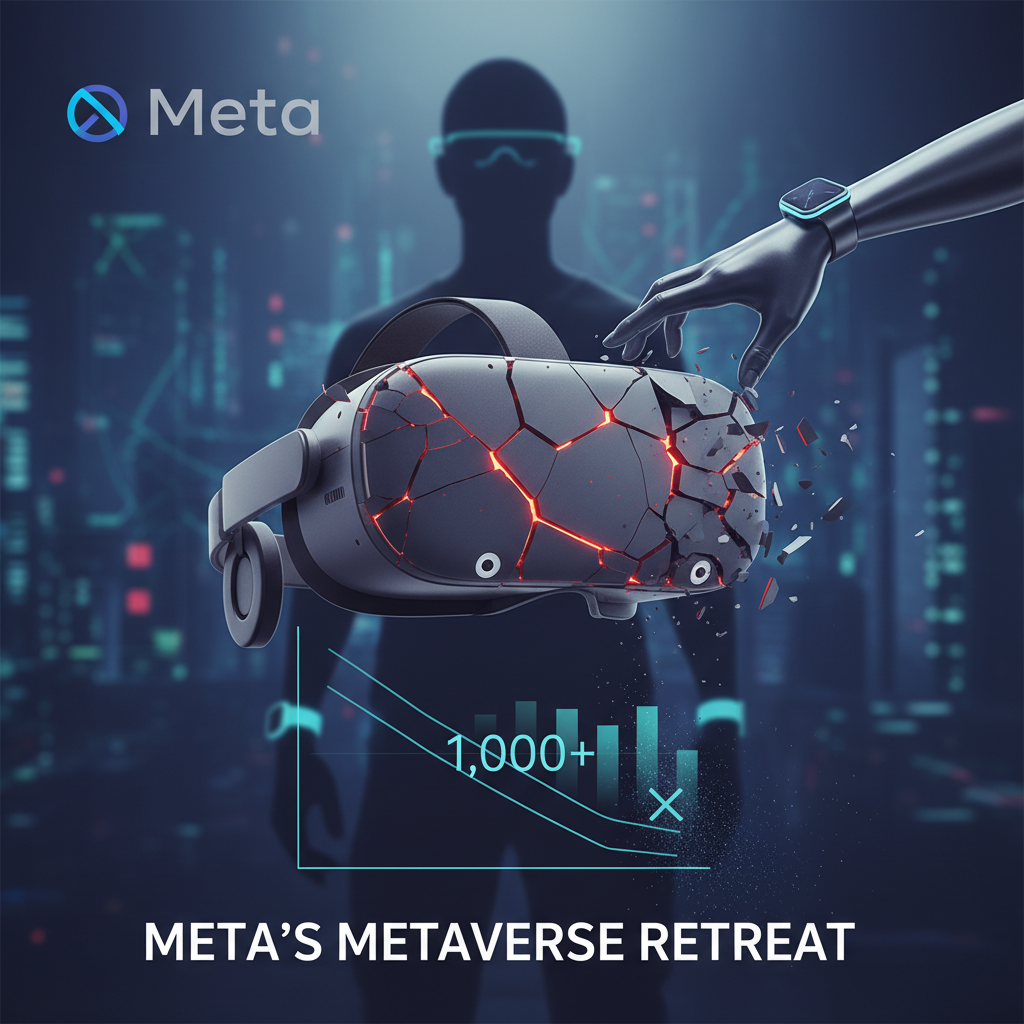
The fluorescent lights of Reality Labs’ building hummed, a familiar backdrop to the hushed conversations. Engineers, once buzzing with metaverse ambitions, now found themselves discussing the shifting sands of Meta’s priorities. The news, delivered in a terse internal memo, was stark: over 1,000 jobs were being eliminated, a significant blow to the division once seen as the future of the company.
The pivot is clear. Meta, after investing billions in its metaverse vision, is now reevaluating its strategy, focusing on wearable technology. This shift comes as the broader tech market grapples with economic uncertainty and evolving consumer preferences. The move, analysts suggest, is about consolidating resources and chasing more immediate revenue streams. “Meta is responding to the market, plain and simple,” said Carolina Milanesi, a tech analyst at Creative Strategies. “They need to show investors a clearer path to profitability, and wearables offer a more tangible opportunity right now.”
The layoffs, which began in late 2023, hit teams across the board. The teams working on virtual reality hardware and software development felt the brunt of the cuts, a stark contrast to the hiring sprees of the previous years. The company’s focus has now turned to its wearable technology. Meta is investing in the development of new augmented reality (AR) glasses and other wearable devices. The exact timeline for these projects remains opaque, but internal roadmaps point to potential product launches in 2026 and 2027.
The shift also reflects the challenges Meta has faced in the metaverse space. The company’s early metaverse efforts, branded as “Horizon Worlds”, have struggled to gain traction. The platform, designed to be a virtual social space, has failed to attract a large user base. The decision to cut jobs and reallocate resources is a strategic move to optimize investments, but it also underscores the difficulty of predicting the future of technology.
The implications are far-reaching. The job cuts not only affect the laid-off employees but also signal a broader shift in the tech industry. It shows a move away from ambitious, long-term projects to more immediately viable products. The move is a reaction to the market, and a need to show investors a clearer path to profitability. And perhaps, a tacit acknowledgement that the metaverse, at least in its current form, is not ready for prime time.
The shift to wearables isn’t without its own set of challenges. The AR/VR hardware market is fiercely competitive, with established players like Apple and Google already investing heavily. Moreover, the supply chain issues that have plagued the tech industry for years could further complicate Meta’s plans. The company will need to navigate these hurdles while also convincing consumers of the value of its new products. The pressure is on.
About the Author