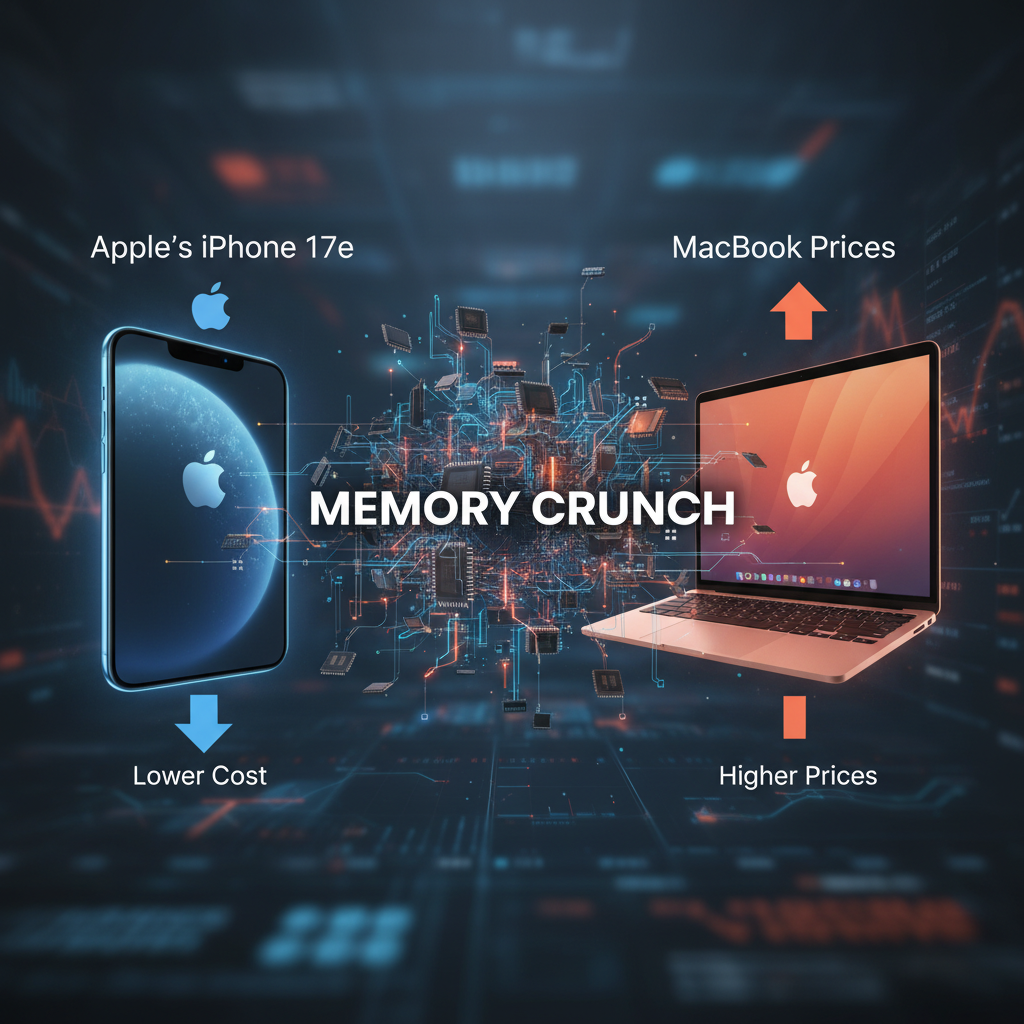
The hum of servers filled the air as engineers at a Taiwanese manufacturing plant reviewed thermal tests for the new M4 chip. It was mid-October, and the pressure was on. Apple was set to unveil its iPhone 17e, a bid to capture a larger share of the budget smartphone market. But the news was quickly overshadowed by a different reality: rising prices for MacBooks.
The company announced that its latest laptops would see a price increase, a move that analysts attribute to the “RAMageddon” – a global memory shortage. This shortage is fueled by the explosive growth in artificial intelligence, which demands vast amounts of memory for training and inference. The ripple effects are being felt across the industry, but Apple’s response—a lower-cost phone coupled with higher-priced laptops—highlights the complex trade-offs in today’s tech landscape.
“The demand for high-bandwidth memory is unprecedented,” says Ming-Chi Kuo, a well-known tech analyst, in a recent report. “We’re looking at a market where the supply simply can’t keep up.” Kuo forecasts a 20% increase in DRAM prices by Q1 2025, which will affect the cost of components across the board. That’s a huge number. This shortage is especially acute for high-end GPUs used in AI model training. The price hikes on MacBooks reflect Apple’s need to secure these increasingly scarce components.
The situation isn’t just about supply and demand; it’s also about geopolitics. Export controls from the U.S. government, aimed at curbing China’s access to advanced semiconductors, have further tightened the screws on the supply chain. Companies like SMIC, China’s largest chipmaker, face significant hurdles in acquiring the advanced equipment needed to produce cutting-edge memory chips. This has resulted in further constraints. TSMC, on the other hand, is operating at full capacity, but even they can’t meet the surging global demand alone.
On a call with investors, Apple executives acknowledged the challenges. The company is reportedly working on diversifying its supply chain, but the lead times for advanced chips are measured in quarters, not weeks. The iPhone 17e, with its slightly less powerful processor, is a direct response to the situation, allowing Apple to maintain a competitive price point in the face of rising component costs. Or maybe that’s how the supply shock reads from here.
The strategic implications are clear. Apple is betting on a two-pronged approach: capturing a wider audience with a budget-friendly iPhone while maintaining its premium brand image through higher-priced MacBooks. Whether this strategy will succeed in the long run remains to be seen, but one thing is certain: the intersection of AI, memory, and global politics is reshaping the tech industry in fundamental ways.
About the Author