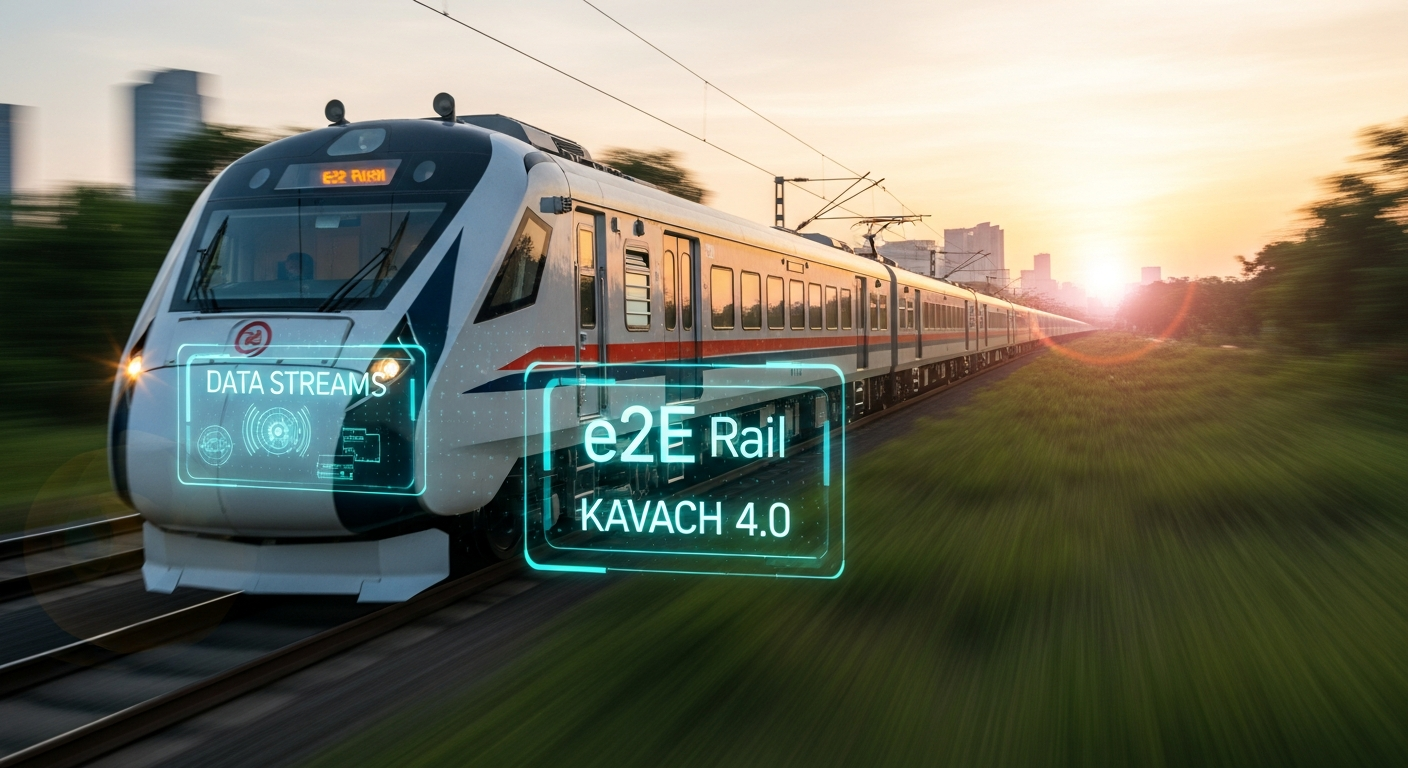
You know, it’s not every day you get to see a real tech revolution brewing. But that’s exactly what feels like it’s happening with India’s railways, particularly with this company called e2E Rail.
They’re doing some pretty serious work, building the electronics that will power the Kavach 4.0 system. And that system, from what I understand, is all about making the railways safer.
It’s not just about slapping some imported parts together, either. e2E Rail is really diving in, designing these systems from the ground up, right here in India. They’re driving local design, and that’s kind of a big deal.
Diving into the Details
What’s really interesting is how they’re integrating semiconductors. That’s the nitty-gritty stuff that makes all the tech work, and it’s a key part of this whole push to make India a global hub for intelligent rail technology. It’s a long-term play, you could say.
The Kavach 4.0 system, as I understand it, is a big part of this. It’s designed to prevent collisions, which, let’s be honest, is a pretty important thing for a railway system. The fact that e2E Rail is building the brains behind it, well, that’s pretty significant.
And it’s not just about the tech itself. It’s also about building up local expertise, creating jobs, and, in a way, taking control of their own destiny. It’s a shift from just buying technology to actually building it. Still.
The Bigger Picture
This whole thing with e2E Rail and Kavach 4.0, it’s a sign of a bigger trend. India is investing heavily in its infrastructure, and that includes its railways. They’re making a bet on technology to make things safer and more efficient. And it seems to be paying off.
You can see it in the way things are being designed and built. It’s not just about the end product; it’s about the process, the know-how, and the people involved. That’s what really makes it all work, you know?
It’s a long road, of course. There will be challenges, there always are. But seeing this kind of innovation, this kind of forward thinking, it’s pretty inspiring. For now, it’s a good sign for the future of Indian railways.
About the Author