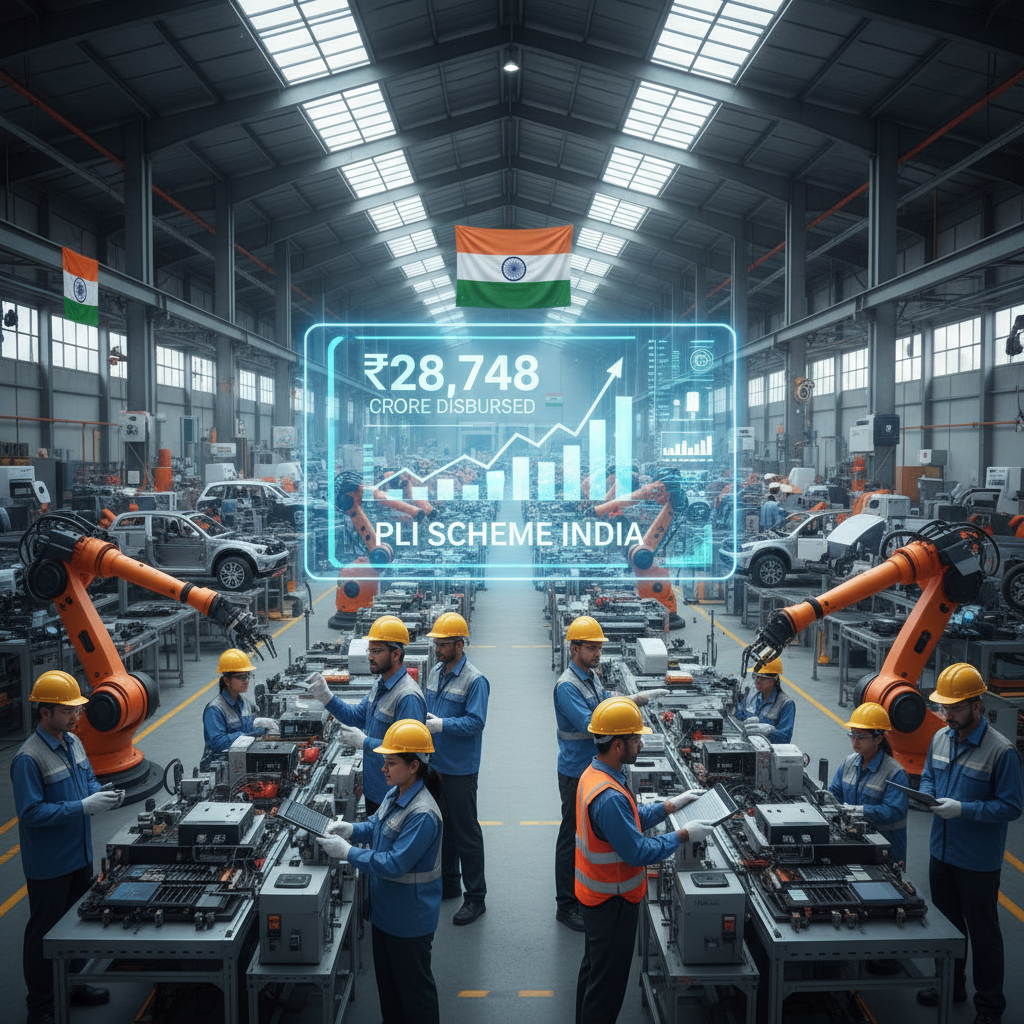
The hum of the assembly line is almost a constant now, a low thrum that vibrates through the floor at the Wistron factory outside Bangalore. It’s a sound that’s become familiar, even comforting, to engineers like Priya Sharma. She’s been working late these past few months, poring over thermal tests for the latest mobile phone models.
The reason? The Production-Linked Incentive (PLI) scheme. According to recent reports, the Indian government has disbursed ₹28,748 crore under 14 different PLI schemes as of December last year. This initiative has already driven over ₹2.16 lakh crore in approved investments. That’s a lot of money, a lot of phones.
“We’re seeing a real shift,” Sharma says, adjusting her glasses. “Before, it was all imports. Now, we’re building here.”
The PLI scheme, designed to boost domestic manufacturing, has been a significant shot in the arm for India’s technology sector. The initial focus was on mobile phone manufacturing, but the scheme has expanded to cover areas like semiconductors, IT hardware, and telecom equipment. This diversification is key, according to analysts like Akash Mehta, a tech analyst at JM Financial. He notes, “The government’s strategy is clear: reduce import dependence and build a robust domestic ecosystem.”
Mehta points out that the reduction in mobile phone imports is a direct result of the PLI. The scheme offers incentives to companies based on incremental sales of manufactured goods. This has led to increased production, exports, and, crucially, job creation. Over 14 lakh jobs have been created, a tangible result of the policy push.
The impact is visible beyond the factory floor. At a recent industry event in Delhi, executives from several companies, including Foxconn and Samsung, were optimistic, if a little cautious. Supply chain constraints remain a challenge, especially for components like advanced chips. There are also export controls and domestic procurement policies to navigate, as India seeks to balance its manufacturing ambitions with geopolitical realities.
For example, the government is pushing for greater domestic procurement. This is where the rubber meets the road. Wistron, for example, is not only ramping up production of phones but also working to integrate more locally sourced components.
The success of the PLI scheme, however, is not without its hurdles. The global economic slowdown and geopolitical tensions could impact demand. There’s also the question of whether India can build the necessary infrastructure and skilled workforce to sustain this growth. But the momentum is undeniable. Advanced manufacturing capabilities are growing, and the government is committed to further expansion of the scheme.
“It’s a long game,” says Sharma, back in the factory. “But we’re in it.”
About the Author