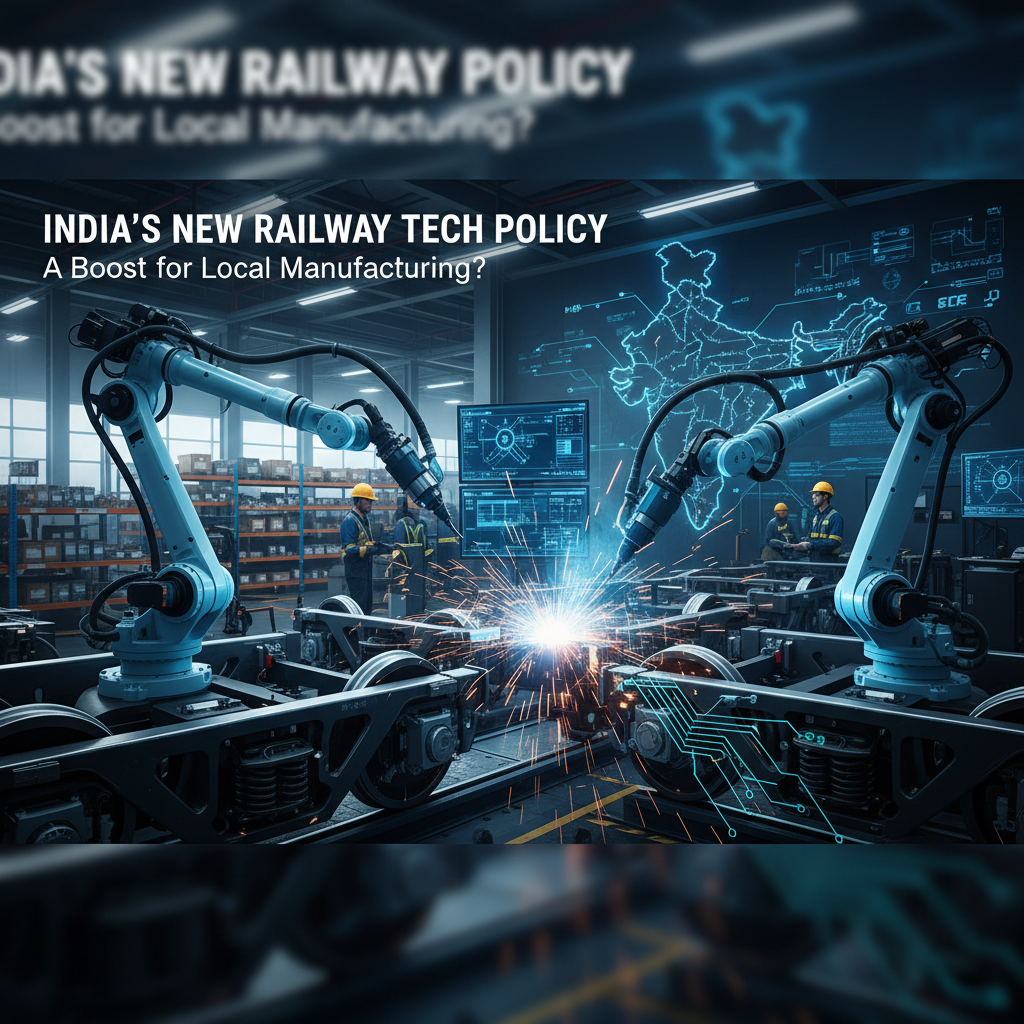
The hum of the testing lab at Bharat Forge was almost drowned out by the whirring of the CNC machines. Engineers, heads bent over schematics, were reviewing thermal tests for a new generation of railway wheels. The air smelled of hot metal and focused energy. This wasn’t just another day; it was a glimpse into India’s future, or maybe just the next phase.
News of a forthcoming railway technology policy had just hit the wires, sending ripples of anticipation through the transportation sector. The initiative’s primary goal: to invigorate local manufacturing of cutting-edge railway equipment. Think advanced signaling systems, high-speed train components, and everything in between.
“This is a decisive move,” said Ankit Agarwal, a senior analyst at JM Financial, speaking from Mumbai. “It’s about more than just railways; it’s about building a robust domestic manufacturing ecosystem.” Agarwal noted that the policy, expected to be unveiled in the coming months, is designed to reduce reliance on imports and foster indigenous technological capabilities. The aim is clear: Make in India, for India’s railways.
The policy’s implications are vast. For companies like Bharat Forge, it could mean a surge in demand for locally manufactured components. For the broader economy, it signals a potential boom in jobs and technological advancement. But, there are hurdles. The Indian manufacturing sector has faced challenges in the past, including supply chain disruptions and a skills gap. Local manufacturing has to compete with well-established global players.
The government is expected to offer incentives, potentially including tax breaks and subsidies, to encourage local production. The focus is on attracting investment and promoting technology transfer. The policy may mirror elements of similar initiatives in other sectors, like the Production-Linked Incentive (PLI) scheme, which has already shown some success in boosting domestic manufacturing of electronics and other goods.
One of the key aspects will be the emphasis on indigenization of critical technologies. This is where companies like Rail Vikas Nigam Limited (RVNL) come into play. RVNL, a key player in railway infrastructure, will likely play a central role in implementing the policy. The challenge will be to balance the need for rapid modernization with the goal of fostering indigenous capabilities. It’s a tricky balancing act, as observed by a senior RVNL executive during a recent industry conference, who wished to remain anonymous.
The success of the policy will hinge on several factors. The efficiency of the procurement process, the availability of skilled labor, and the willingness of global players to partner with Indian companies are all critical. The policy’s true impact? It will depend on the details, but the direction is clear: a push for self-reliance in the railway sector. It is a long-term play, but the potential rewards are substantial, assuming they can get the supply chains sorted.
About the Author