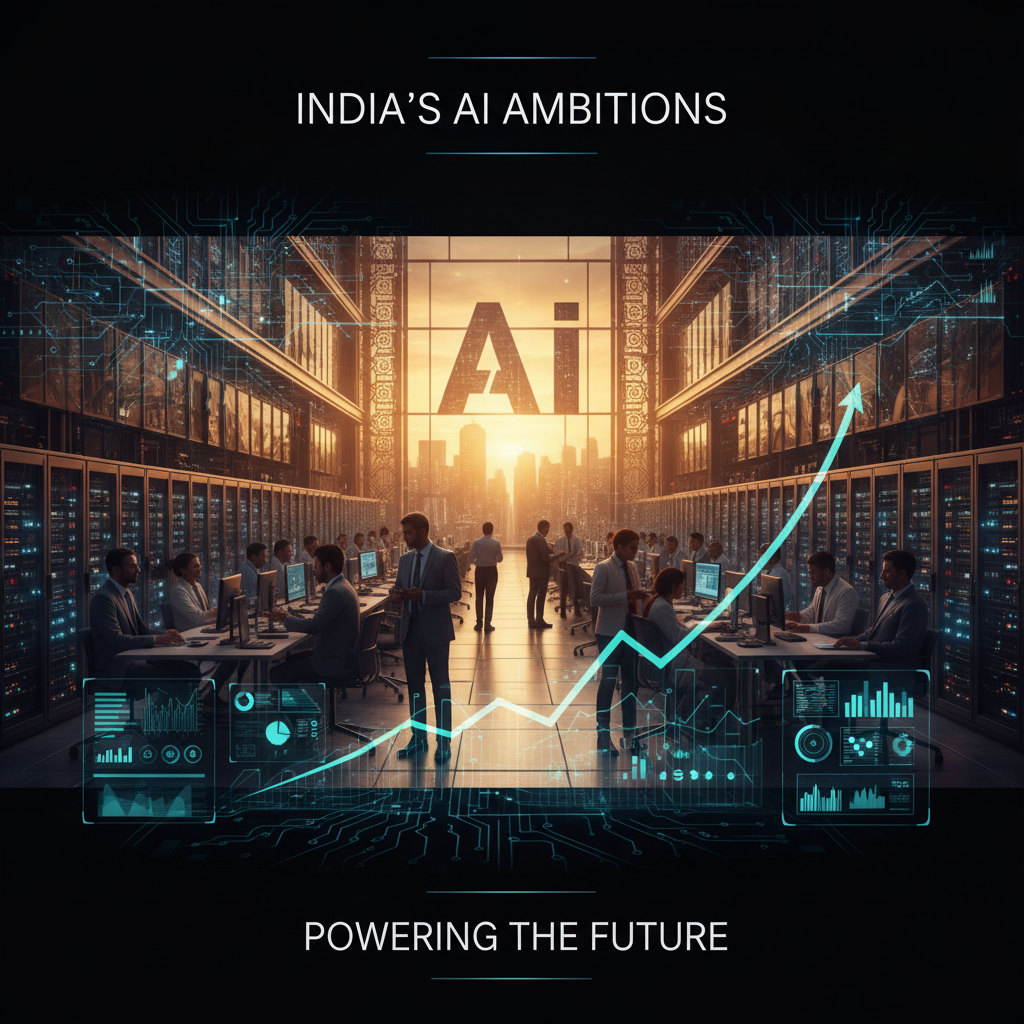
The hum of servers fills the air, a constant white noise punctuated by the rhythmic clicks of engineers reviewing thermal tests. It’s a scene playing out across India, where the promise of artificial intelligence is rapidly translating into a tangible need: more data centers. Prime Minister Modi, speaking just ahead of the India AI Impact Summit and Expo at the Bharat Mandapam in New Delhi (February 16-20), emphasized the massive job creation potential within this burgeoning sector. The summit, the first AI gathering of its kind in the Global South, underscores the nation’s commitment to AI, driven by principles of ‘People, Planet, and Progress’.
This isn’t just about abstract technological advancement; it’s about concrete infrastructure. Data centers, the physical homes of the digital world, are poised to become significant employers. The demand is driven by the explosive growth of AI applications, from LLM training to inference, all of which require vast computing power.
“We are looking at an exponential increase in data center capacity,” says Anirudh Agarwal, Senior Analyst at Forrester. “India’s data center market is projected to reach $8 billion by 2026, a figure that necessitates significant investment in both hardware and human capital.” That $8 billion figure means not just more servers, but a corresponding need for skilled technicians, engineers, and data scientists. It’s a jobs boom in the making, and the government is clearly signaling its support.
The technical demands are intense. Consider the hardware: GPUs from Nvidia or AMD, interconnected through high-speed networks, all housed in facilities with meticulous cooling systems to manage heat dissipation. Engineers are constantly battling the physical limitations of silicon, the power draw of the latest chips, and the ever-present supply chain constraints. The M100 and M300 chips, the next generation of AI accelerators, are slated for release in 2026 and 2027, according to industry roadmaps, but manufacturing capacity at TSMC and other foundries is already stretched thin. This is a crucial bottleneck, and it’s a global one.
The government’s push for domestic procurement and export controls adds another layer of complexity, mirroring the strategies of other nations. The goal is clear: to build a self-reliant AI ecosystem. That means fostering local manufacturing capabilities and reducing reliance on foreign suppliers. It’s a long game, and the path is fraught with challenges.
The conference call pauses, a brief silence before the next point. One can almost see the gears turning, the calculations being made. The implications are enormous, not just for the tech sector, but for the broader Indian economy. Data centers are more than just buildings; they’re the engines of the digital future, and India is determined to be at the forefront.
About the Author