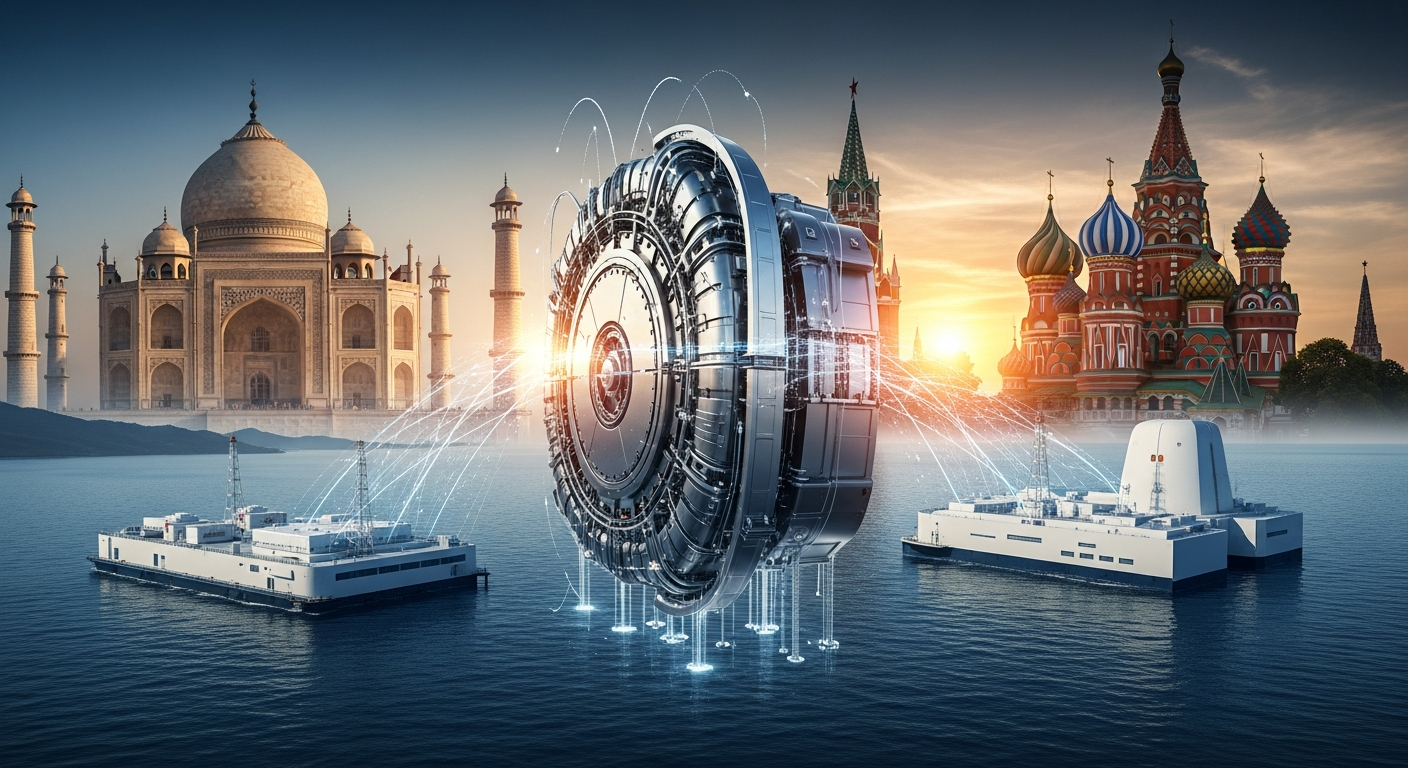
The hum of the Kudankulam Nuclear Power Plant is a constant, a low thrum that vibrates through the coastal air. Inside, engineers from both India and Russia are poring over schematics, the blueprints for a partnership that could redefine the future of energy for both nations. Discussions between Prime Minister Modi and President Putin have recently centered on this very topic: expanding collaboration in the nuclear sector, specifically focusing on small modular reactors (SMRs) and floating nuclear power plants.
This isn’t just about adding more power to the grid; it’s a strategic play. Russia, with its decades of experience in nuclear technology, sees India as a key partner in a global market increasingly hungry for cleaner energy sources. India, in turn, is looking to diversify its energy mix, reduce its reliance on fossil fuels, and meet its growing electricity demands. The existing Kudankulam plant, built with Russian assistance, serves as a solid foundation for this expanded cooperation.
“The potential is significant,” says Dr. Rahul Sharma, a nuclear energy analyst at the Institute for Energy Studies. “SMRs, in particular, offer a scalable solution that can be deployed in remote areas, reducing transmission losses and increasing energy access.” He estimates the global SMR market could be worth upwards of $300 billion by 2030, a figure that has both nations eyeing a lucrative opportunity.
The appeal of SMRs lies in their modular design. Unlike traditional nuclear plants, SMRs are built in factories and transported to the site. This reduces construction time, costs, and the complexity of managing large-scale projects. Floating nuclear power plants, another area of interest, offer the added benefit of being mobile, potentially providing power to areas with limited infrastructure or in emergency situations. The discussions between the leaders also included plans for a second Russian-assisted nuclear site in India, a clear indication of their commitment to this partnership.
However, challenges remain. Regulatory hurdles, technology transfer agreements, and financing models need to be ironed out. The Kudankulam project itself has faced delays and cost overruns in the past. Ensuring the highest safety standards is paramount, and public perception of nuclear energy remains a factor. Still, the momentum is there, and the potential rewards are substantial.
The implications extend beyond mere energy production. This cooperation strengthens the strategic partnership between India and Russia, particularly in the face of evolving geopolitical dynamics. It also positions both countries as leaders in the global nuclear energy market, influencing the development and deployment of these advanced technologies for years to come.
About the Author