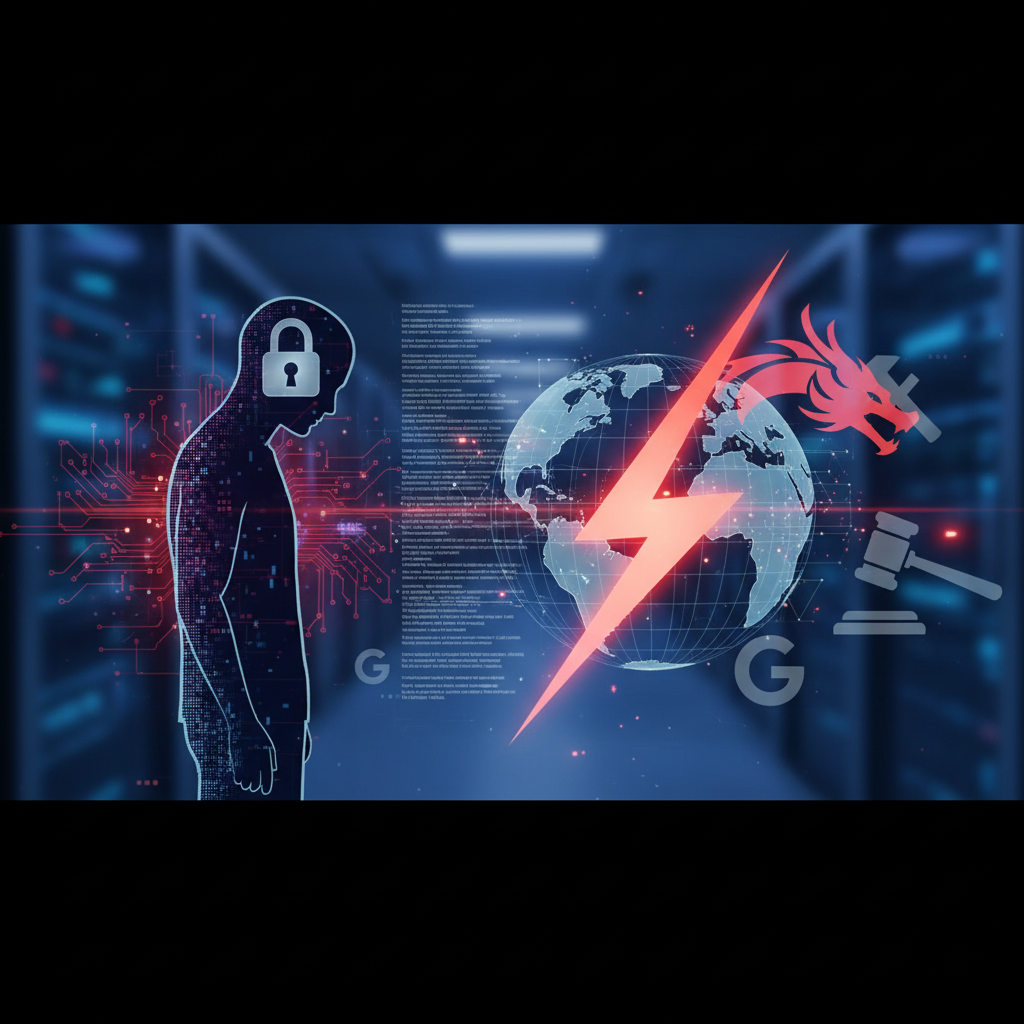
The hum of the servers was a constant, a low thrum that vibrated through the floor of the data center. Engineers at Google, just a few years ago, were focused on pushing the boundaries of AI. But the news of Linwei Ding’s conviction, after an 11-day trial, injected a new kind of tension into the air. Ding, a former Google engineer, was found guilty of stealing AI trade secrets. The case underscored the high stakes of the AI arms race, where proprietary data is as valuable as any physical weapon.
The indictment alleged Ding, between 2019 and 2022, downloaded proprietary information related to Google’s AI projects. The goal, according to prosecutors, was to benefit Chinese tech companies. This wasn’t just about code; it was about the underlying algorithms, the training datasets, the very architecture of cutting-edge AI models. The specifics are still emerging, but the damage is potentially immense. “It’s a massive breach of trust,” noted Dr. Emily Chen, a cybersecurity analyst at the Lilly School, “This is a clear example of economic espionage.”
The implications ripple outwards. The theft of AI secrets isn’t just a corporate crime; it’s a national security concern. The stolen data could accelerate China’s AI capabilities, potentially giving them an edge in everything from facial recognition to autonomous weapons systems. This is happening as the US government has already imposed stringent export controls on advanced semiconductors and AI chips, especially those from Nvidia and AMD, to limit China’s access to cutting-edge technology. The goal: to slow down China’s progress, but as this case shows, the battle is also being fought in the shadows.
Consider the competitive landscape. AI development is expensive. Companies like Google invest billions in research and development, building massive computing infrastructure to train large language models (LLMs). The training process itself is a complex undertaking, requiring vast amounts of data and processing power. A single training run for a state-of-the-art LLM can cost millions of dollars, and take weeks to complete. Any shortcut, any stolen insight, is a massive advantage.
The conviction of Linwei Ding serves as a stark reminder of the global competition for technological supremacy. While the details of the stolen data remain a closely guarded secret, the case highlights the vulnerabilities in the AI landscape and the lengths to which some actors will go to gain an edge. The next chapter involves an intense focus on securing intellectual property and ensuring that trade secrets remain just that—secret.
About the Author