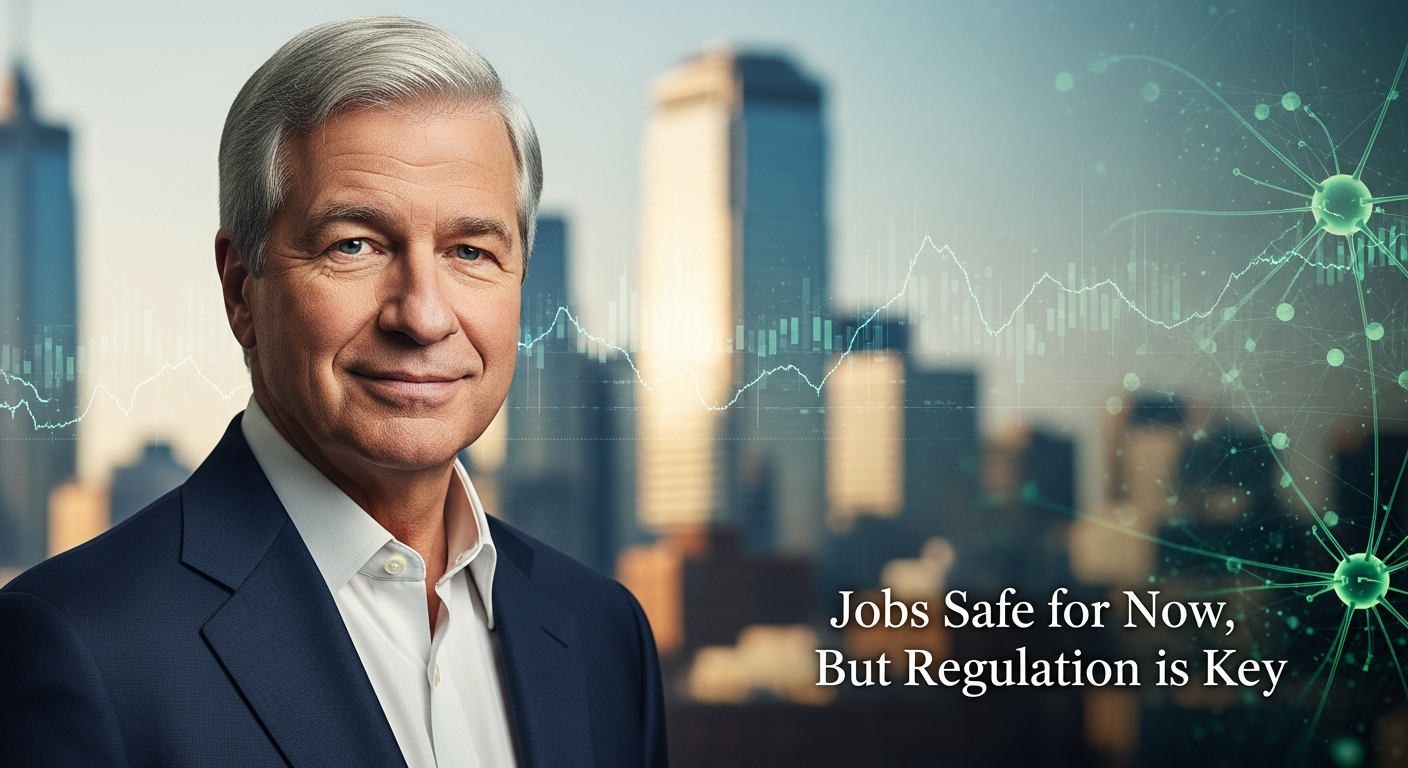
The fluorescent lights of the JPMorgan Chase trading floor hummed, a low thrum competing with the staccato of rapid-fire key clicks. It was mid-morning, and the usual controlled chaos was in full swing, but a different kind of buzz hung in the air: AI. During a recent interview on “Sunday Morning Futures,” CEO Jamie Dimon weighed in, predicting that artificial intelligence would not “dramatically reduce” jobs next year if regulated properly.
Dimon’s assessment lands at a critical moment. The hype around AI is deafening, yet the reality on the ground is more nuanced. While the technology is advancing at breakneck speed, its impact on employment is far from a foregone conclusion. The pace of change will depend heavily on the regulatory environment, a point Dimon emphasized, and the ongoing global chip shortage.
Consider the situation at NVIDIA. Their H100 GPUs are the gold standard for AI model training, but they’re also subject to U.S. export controls. China-based firms are now scrambling to secure less-advanced chips, like the A100, which are still powerful but not quite in the same league. This means companies are having to make do, or find workarounds. Or maybe that’s how the supply shock reads from here.
“The regulatory landscape will dictate the speed of adoption,” says Sarah Jones, a senior analyst at Deutsche Bank, who focuses on the future of work. “If governments move too quickly to restrict AI, it could stifle innovation and slow down job displacement. A measured approach is key.” Jones’s team projects a 3-5% impact on white-collar jobs over the next three years, depending on the sector.
The emphasis on regulation is crucial. The EU is working on its AI Act, a comprehensive set of rules that could serve as a model for other countries. The US is also grappling with how to regulate AI, with various agencies exploring different approaches. The question of how to balance innovation and worker protection is a complex one, and it’s something that will be playing out across many industries. This is a lot to consider.
Back on the trading floor, the screens flickered with data, and the air buzzed with the quiet hum of servers. The future of work, it seemed, was being calculated in real-time, one trade, one regulation, one chip at a time. The next year will be telling.
About the Author