The hum of servers filled the air as the engineering team at a US-based tech firm, one of many with a significant presence in South Korea, huddled around a monitor. On the screen, a Coupang user interface, rendered in painstaking detail. They were dissecting the latest regulatory changes, each line of code a potential obstacle, a speed bump in the race to market.
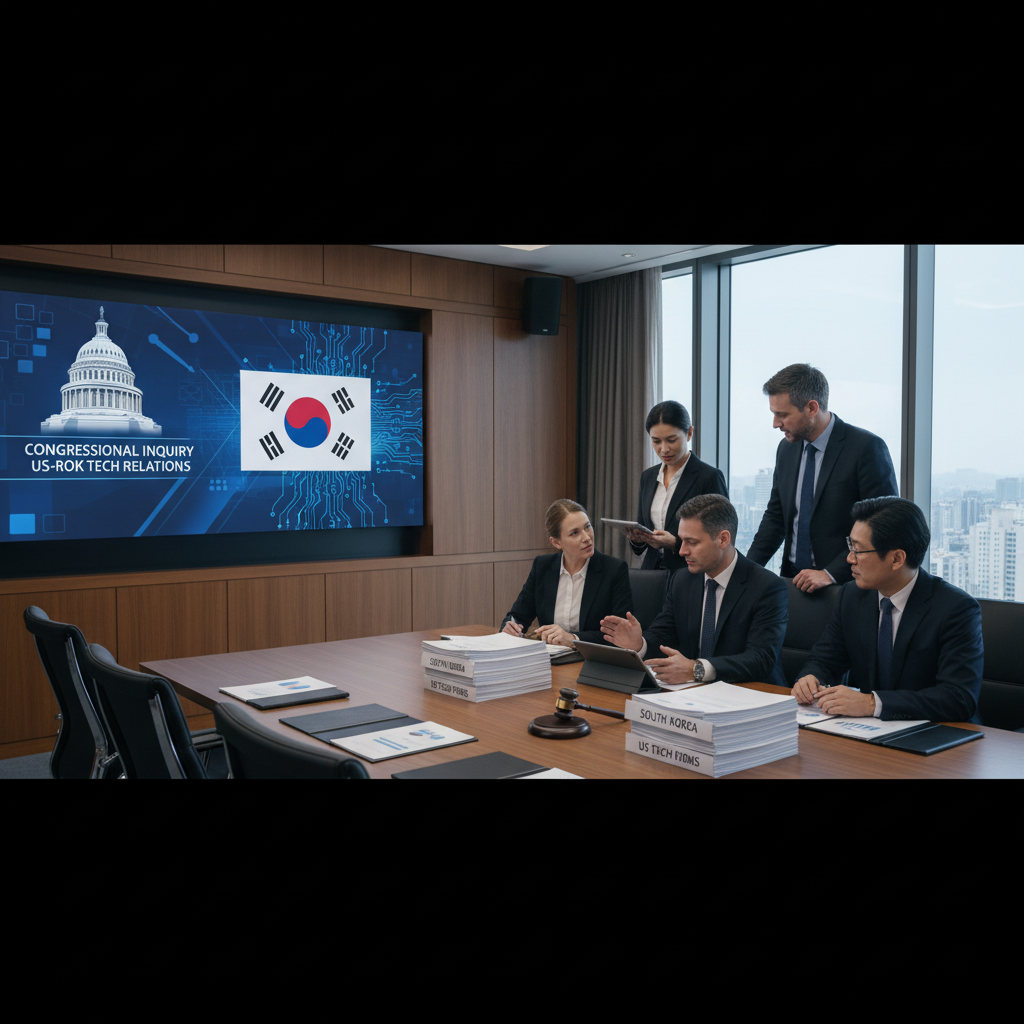
The House Judiciary Committee, as reported by Fox Business, has launched an investigation into the treatment of American tech companies by South Korean regulators. The focus? Alleged discriminatory practices, with e-commerce giant Coupang specifically in the crosshairs.
“It’s a familiar story,” muttered Sarah Chen, a senior engineer, as she pointed to a particularly opaque clause. “Different rules for different players.”
The situation comes at a critical juncture. US tech firms, facing increasing competition globally, are heavily invested in the South Korean market. The country, a hotbed of technological innovation, is a key battleground for companies vying for dominance in areas like e-commerce, cloud computing, and AI. The investigation, which began in late 2024, aims to determine whether South Korean regulators are unfairly favoring domestic companies.
The core of the issue, according to analysts, revolves around regulatory hurdles and market access. “We’re seeing a pattern,” explained David Miller, tech analyst at JPMorgan, “where US companies encounter roadblocks that their South Korean counterparts seem to bypass with relative ease.” He pointed to data from Q3 2024, showing a 15% slowdown in market share growth for a major US cloud provider, a figure that correlated with the introduction of new data localization rules.
The alleged discrimination isn’t just about market share; it’s about the bottom line. Regulatory compliance can be costly, diverting resources from innovation and expansion. For a company like Coupang, which has become a major player in South Korea’s e-commerce landscape, such obstacles can be particularly damaging. The company’s stock has been trading sideways since early 2024, a fact that investors are watching closely.
The investigation is expected to delve into specific instances of alleged bias, examining how regulations are enforced and whether they disproportionately impact US firms. The committee will likely subpoena documents, interview executives, and analyze internal communications. The outcome could have significant implications, potentially leading to trade disputes, policy changes, and a re-evaluation of the US-South Korea trade relationship. Or maybe it’s just about ensuring fair play, a level playing field for everyone.
The implications are far-reaching. If the investigation uncovers evidence of unfair treatment, it could trigger retaliatory measures, impacting the broader tech ecosystem. The focus now is on the details: the specific regulations, the enforcement mechanisms, and the impact on competition. The engineers, meanwhile, keep coding, keep building, keep hoping for a fair fight.
About the Author