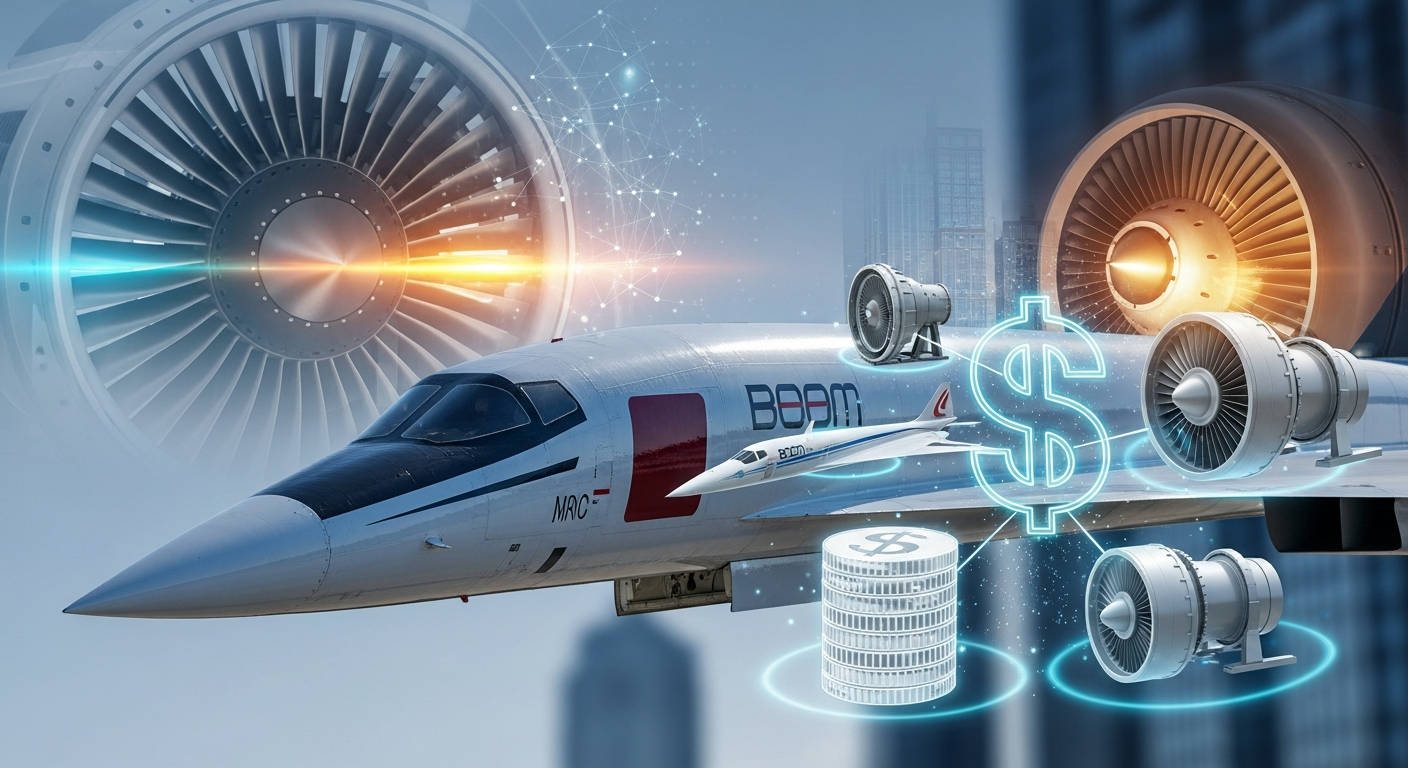
The hum of the test rig filled the room, a low thrum punctuated by the staccato clicks of engineers reviewing thermal imaging. It was December 2025, and the Boom Supersonic team, or at least a slice of it, was deep in the weeds of turbine design. The goal: to deliver a novel natural gas turbine solution for Crusoe Energy Systems, a company known for its data centers that run on stranded or flared natural gas.
The numbers are significant. Boom just raised $300 million. Crusoe will pay Boom $1.25 billion for over a gigawatt of generating capacity. Deliveries of these turbines are slated to begin in 2027.
“This isn’t just about building turbines; it’s about building an energy infrastructure solution,” explains a Boom Supersonic spokesperson. The strategic play is to leverage Boom’s expertise in high-performance engine design for a different, but adjacent, market.
The deal reflects a broader trend. Data centers are ravenous consumers of energy, and the industry is actively seeking cleaner, more sustainable power sources. Crusoe, for its part, has built its business on the idea of using otherwise wasted natural gas to power its compute operations, a model that aligns with environmental and economic incentives. The demand from AI and other compute-intensive workloads is only accelerating this trend, increasing the pressure to secure power.
“The market for distributed energy solutions is poised for explosive growth,” says Anna Green, a senior analyst at Wood Mackenzie. “Companies like Crusoe are at the forefront of this shift, and the demand for reliable, efficient power is only going to increase.” She forecasts a 20% year-over-year increase in demand for these types of solutions over the next five years.
The technical challenge is significant. These turbines need to be robust, efficient, and capable of operating in diverse environments. The team is focusing on thermal efficiency, emissions profiles, and the ability to rapidly deploy the units at various locations. There are supply chain challenges, too. Sourcing components, especially those with export controls, adds another layer of complexity. The design must be adaptable to multiple fuel sources, and the whole system needs to be optimized for the unique requirements of a data center environment.
The conference call with investors was wrapping up. There was a pause. The implications of this deal are far-reaching, and the partnership between Boom and Crusoe could set a precedent for other companies looking to combine advanced engineering with innovative energy solutions.
About the Author