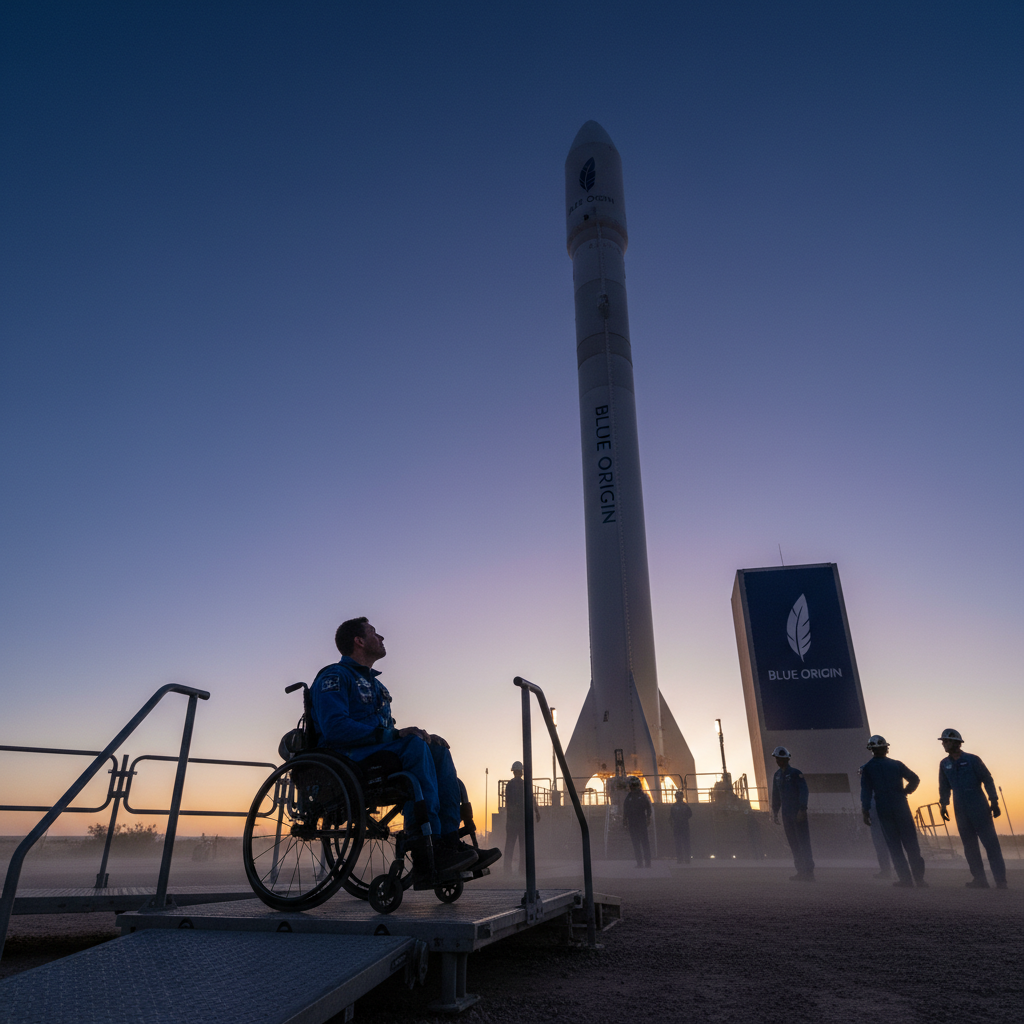
The hum of the New Shepard’s engines filled the air, a familiar symphony to the engineers at Blue Origin’s launch site. Today, it wasn’t just about another suborbital hop; it was about rewriting the narrative of who gets to experience space. The mission, slated for late October 2024, would carry Michaela Benthaus, a wheelchair user, making her the first of her kind to venture beyond Earth’s atmosphere on a Blue Origin flight. This is a huge step.
The significance isn’t lost on the team. “This isn’t just a launch; it’s a statement,” remarked Dr. Emily Carter, a lead engineer on the project. “It’s about demonstrating that space is for everyone, regardless of physical ability.” The New Shepard, designed for suborbital flights, offers a unique opportunity for this kind of inclusivity. Its spacious capsule and relatively gentle acceleration make it more accessible than the intense conditions of orbital missions. The company has invested in modifications to ensure Benthaus’s comfort and safety during the flight, including specialized seating and support systems.
Industry analysts are watching closely. “This launch could be a watershed moment,” noted Charles Bolden, space analyst at Space Ventures. “It signals a shift towards a more inclusive space industry, and could inspire other companies to follow suit.” Bolden projects that the market for space tourism, including suborbital flights, could reach $3 billion by 2030, with accessibility initiatives potentially expanding the customer base. The company is reportedly aiming for six launches per year, with each flight carrying up to six passengers. If they hit that target, it would be a major expansion.
The mission’s success could also have broader implications. It underscores the importance of universal design in space technology. Modifications made for Benthaus could benefit other passengers, and the lessons learned could inform the design of future spacecraft. Moreover, the launch aligns with a growing emphasis on diversity and inclusion within the space sector, a trend that is being driven by both public and private entities.
The launch represents more than just a technical feat; it’s a powerful symbol of progress. It is one small step for a wheelchair user, one giant leap for inclusion.
About the Author