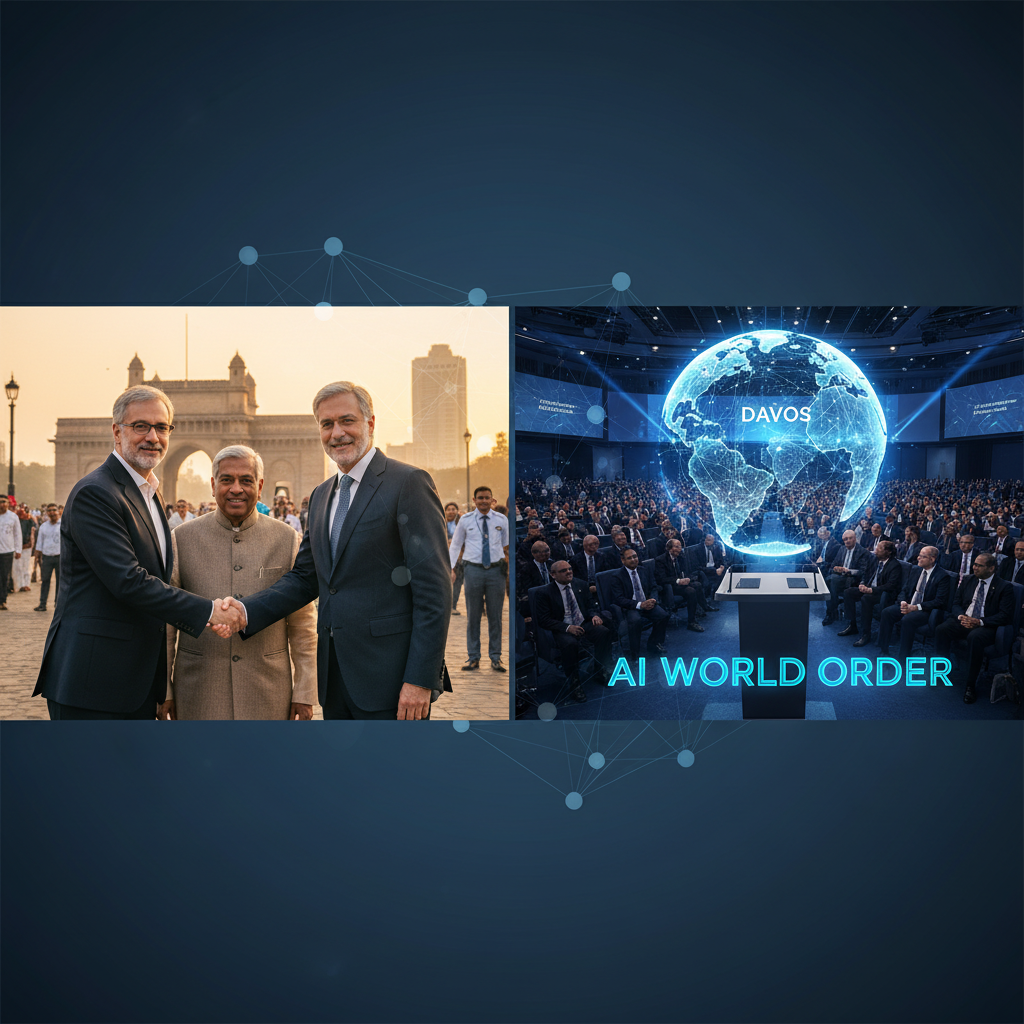
The hum of the servers in the OpenAI data center was a constant, a low thrumming that vibrated through the floor. It was January 2026, and the team was running thermal tests on the new M300 chips. The stakes were high. Sam Altman, CEO of OpenAI, was preparing for his first trip to India in nearly a year, a visit that was already generating buzz in tech circles. This trip was particularly significant, given the backdrop of the World Economic Forum in Davos, where AI had completely dominated the conversation. CEOs were openly critiquing trade policies and issuing warnings about AI, a stark contrast to previous years.
“The M300 is supposed to be 30% faster than the M100,” said Sarah Chen, a lead engineer, her eyes glued to the performance metrics on her screen. “But the heat dissipation is… problematic.”
Meanwhile, in Davos, the air crackled with a different kind of energy. AI was no longer a futuristic concept; it was the present. Discussions about trade policies, once the bread and butter of the forum, had taken a backseat to the relentless march of artificial intelligence. CEOs, analysts, and policymakers were grappling with the implications of AI’s rapid advancement, with many openly voicing concerns. One of the key topics was the impact of AI on global trade, particularly in the context of China’s growing dominance in AI hardware and software. The U.S. export controls, designed to limit China’s access to advanced chips, were a recurring theme. The consensus? These policies are creating friction, and it’s hard to predict the long-term effects.
“The shift is undeniable,” noted Dr. Emily Carter, a senior analyst at Deutsche Bank, in a briefing call. “AI is no longer a niche topic. It’s the central narrative. And the conversations are getting more granular, from model training to inference, and the hardware that supports it all.”
Back in the data center, the engineers were still wrestling with the M300’s thermal issues. They knew that the success of OpenAI’s 2026 roadmap depended on this chip. A delay could ripple through their entire product line. They needed to find a solution, and fast. The pressure was on.
Altman’s visit to India was seen by many as a strategic move, a recognition of the country’s growing importance in the global AI landscape. India has a huge talent pool, and the government is investing heavily in AI research and development. In Davos, the discussions included the impact of AI on emerging markets, and how these countries could leverage AI for economic growth. The focus was not just on technology, but also on policy frameworks, ethical considerations, and the need for global cooperation.
Chen looked up from her screen. “We need to adjust the cooling system, or maybe reduce the clock speed. Either way, it’s a setback.”
The contrast between the two scenes – the data center’s technical challenges and the strategic maneuvering at Davos – highlighted the complexities of the AI revolution. It’s a revolution driven by code and silicon, but shaped by policy, economics, and global competition. The supply chain was also a major concern, with the availability of advanced chips from TSMC and the limitations of SMIC, a Chinese chip manufacturer, being a key factor. The U.S. export controls were designed to limit China’s access to advanced chips, but they also created friction in the global market.
As the sun set, casting long shadows across the server racks, the engineers knew that their work was more than just a technical challenge. It was a race against time, a battle for innovation, and a reflection of the new world order that was taking shape, one where AI was king.
About the Author