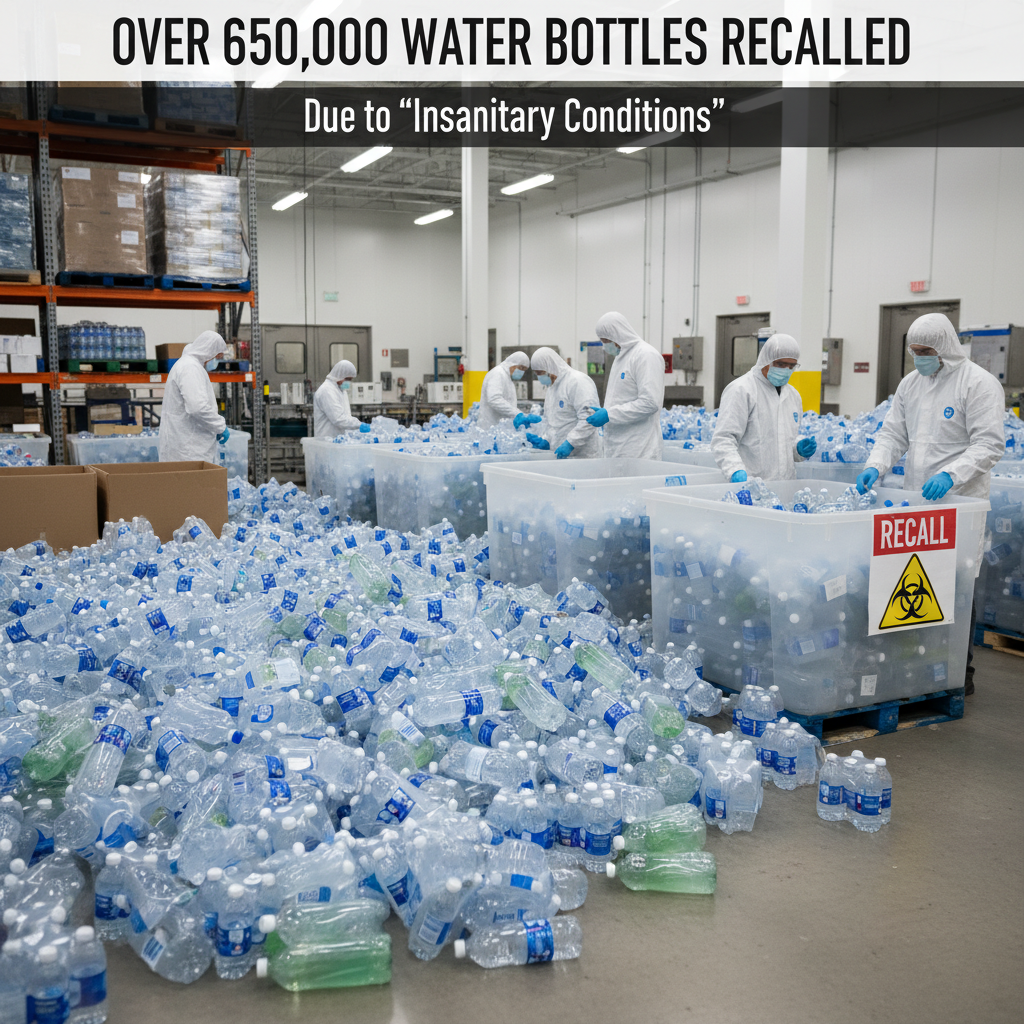
In a concerning development for consumers and the retail sector, the U.S. Food and Drug Administration (FDA) has announced the recall of more than 650,000 bottles of water. The recall stems from concerns over the conditions in which the bottled water was packaged. This situation underscores the critical importance of stringent quality control and adherence to health and safety standards within the food and beverage industry.
According to an enforcement report issued by the FDA, the recall is a direct result of the water bottles being packaged in ‘insanitary conditions.’ This suggests potential risks to public health and consumer safety, making it a significant issue for both retailers and consumers. The FDA’s involvement highlights the agency’s role in monitoring and regulating the safety of products available to the public. This recall is a clear example of the FDA’s commitment to ensuring that products meet the necessary safety standards.
The recall of this large quantity of bottled water has implications for the retail and healthcare sectors. Retailers will need to manage the removal of the affected product from their shelves, which can be costly and time-consuming. From a healthcare perspective, the recall emphasizes the importance of safe food and beverage practices. The incident serves as a reminder of the potential health risks associated with products that do not meet sanitary standards. The affected products may pose health risks, making it crucial for consumers to be aware of the recall and take appropriate action. The recall also underscores the need for robust supply chain oversight and quality control measures within the bottled water industry.
The FDA’s enforcement report does not specify the brand or the exact location of the packaging. However, the scale of the recall indicates a significant lapse in quality control. The incident underscores the importance of rigorous testing and inspection protocols throughout the production and packaging processes. The FDA’s actions are a crucial step in protecting consumer safety and maintaining trust in the food and beverage industry.
Sources:
About the Author