A Long Line of Masks: Netanyahu’s Enduring Presence in a Time of War
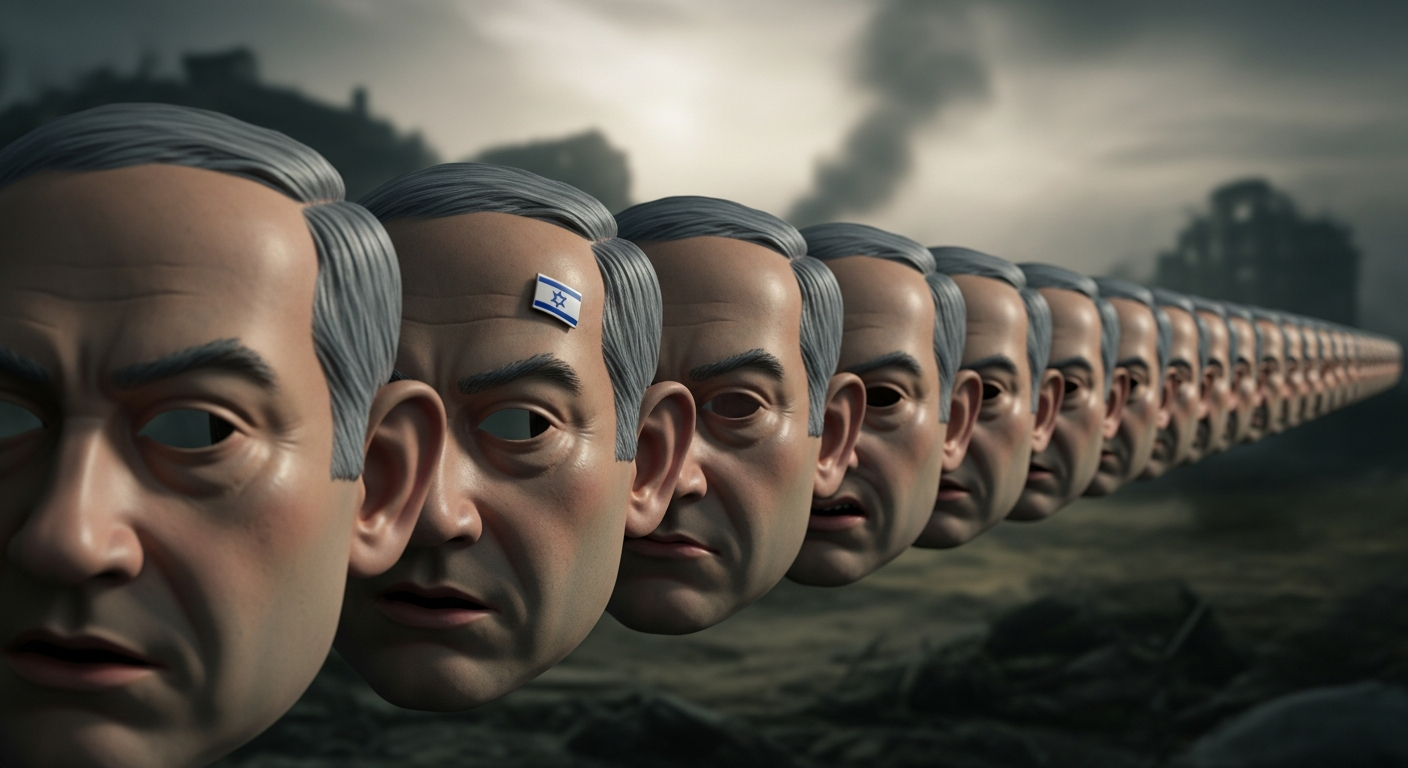
In the third year of the war on Gaza, the scene appears as if emerging from a distant, blurred memory, susceptible to interpretation. The singular recurring face is that of Benjamin Netanyahu, laden with his full baggage: the four corruption files, assassination maneuvers at various levels, political purges of his opponents within the coalition, and physical assassinations of his enemies in the deep lines of the fronts.
The Unwavering Figure
Netanyahu is the sole constant in Israel, embodying both Ben Gurion and Churchill, alongside the envoy of Jabotinsky for the establishment of the second Israel. This steadfastness borders on the absurd, yet he is capable of standing in the corridors, entering through doors, and passing through the horizons and contradictions of the state. This is achieved after dismantling the opposition, circling them in a circular arena and throwing them onto the ropes each time. He has also cleansed his narrow surroundings of any attempt at rebellion, objection, or disagreement, surrounding himself with his multiple masks in the Ministry of Defense, the General Staff, the Shabak, the Presidency of the Knesset, and the Ministry…
Navigating Conflict and Controversy
The narrative, as presented by Annahar, paints a picture of a leader entrenched in power, navigating a landscape fraught with conflict. The article highlights Netanyahu’s ability to remain a central figure amidst the backdrop of the War on Gaza. His actions are scrutinized, including the alleged involvement in corruption, the use of assassinations, and political purges. These actions are viewed as methods to maintain control.
A Complex Legacy
The text suggests a complex legacy, where Netanyahu adopts different roles. He is described as the King of Israel, the Magician, the leader of the war of resurgence, and the visionary behind the Greater Israel. The comparison to Leonidas, the king of Sparta, further complicates this image. These shifts underscore the multifaceted nature of his leadership.
The source material, from Annahar, provides a critical analysis of Netanyahu’s enduring presence. The focus on the War on Gaza, the accusations of corruption, and the utilization of assassinations paint a somber picture. The author highlights the political maneuvers, including political purges, as tools used to consolidate power. The article’s negative sentiment reflects the critical stance towards Netanyahu’s actions and their impact on the political landscape.
The analysis reveals the author’s critical perspective on Netanyahu’s leadership, emphasizing the complexities and controversies surrounding his tenure. The use of various personas, such as the King of Israel and the Magician, adds depth to the characterization, while the comparisons to historical figures, such as Leonidas, provide a historical context. The article, therefore, presents a critical view of Netanyahu’s lasting influence in the context of ongoing conflict.
About the Author