Aoun’s Stance: Will the Lebanese Army and Hezbollah Unite?
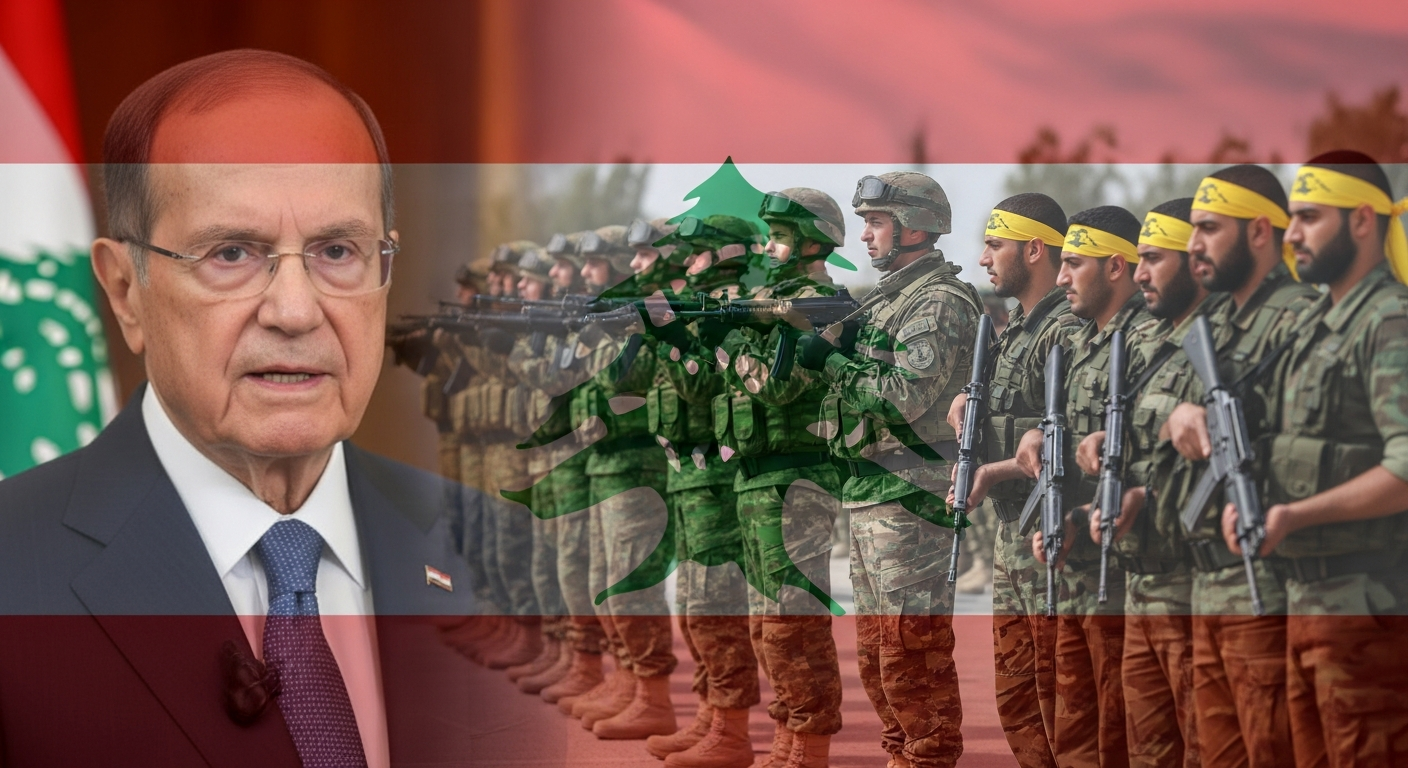
In the wake of an Israeli incursion into the town of Blida, Lebanese President Michel Aoun’s call for the army to confront any future Israeli incursions has sparked a debate about Lebanon’s trajectory. While the move signals a potential assertion of state authority over matters of war and peace, it also carries significant risks that could plunge the nation into a dangerous phase. This is primarily due to two crucial factors.
The Disarmament Dilemma
Firstly, the President’s request comes at a time when the state remains unable to enforce its decision to limit arms, and by extension, disarm Hezbollah. If the President’s request is not coupled with the prior disarmament of Hezbollah, it will inevitably mean that the army will be in the same camp and trench as the party. This would open the door to a direct confrontation between Israel and official Lebanon, along with Hezbollah.
Sheikh Naim Qassem, Hezbollah’s Secretary-General, welcomed this stance, expressing his satisfaction with the sight of state officials, the resistance, and the people standing in solidarity against the Israeli enemy, describing Aoun’s position as responsible. This statement could provide Israel with a renewed pretext to expand its targeting beyond the military sites of Hezbollah or its leaders and cadres, potentially encompassing all of Lebanon, its facilities, infrastructure, and services, similar to what occurred during the July 2006 war. Israel currently claims that Hezbollah has rebuilt its arsenal.
Escalation and International Implications
The second worrying factor is the potential for the army’s involvement in an open confrontation with Israel. Such a confrontation would solidify the military conflict with Israel and invalidate the fragile effects of the 1949 Armistice Agreement. Lebanon would thus deviate from the path of peace initiated at the recent Sharm el-Sheikh summit, potentially isolating the country and taking it out of the logic of settlements that the President previously mentioned, stating that the era of settlements had begun and Lebanon would not be excluded from it, initiating the path of dialogue and negotiation.
The American reception of Aoun’s decision was not far from this reading. Senator Lindsey Graham, closely associated with former President Donald Trump, announced that the army’s joining the party in fighting Israel would hinder efforts to assist Lebanon. He considered that the Israeli incursion aimed to suppress the resurgence of the party, revealing that if the arms were removed, Israeli operations in Lebanon would cease.
Seeking a Path Forward
Perhaps the high level of escalation of American pressure through envoys on the one hand and the Israeli pressure on the other hand is what prompted official Lebanon to reveal, albeit unofficially, its readiness to agree to the presence of civilians in the mechanism committee. This is considered a form of direct negotiation but under American, French, and international auspices through the members of the committee headed by the United States. Such a decision would remove the specter of war and confrontation and give Lebanon more time on the path of the gradual disarmament of Hezbollah, by starting the second phase of the army’s executive plan after South of the Litani.
Source: Annahar
About the Author