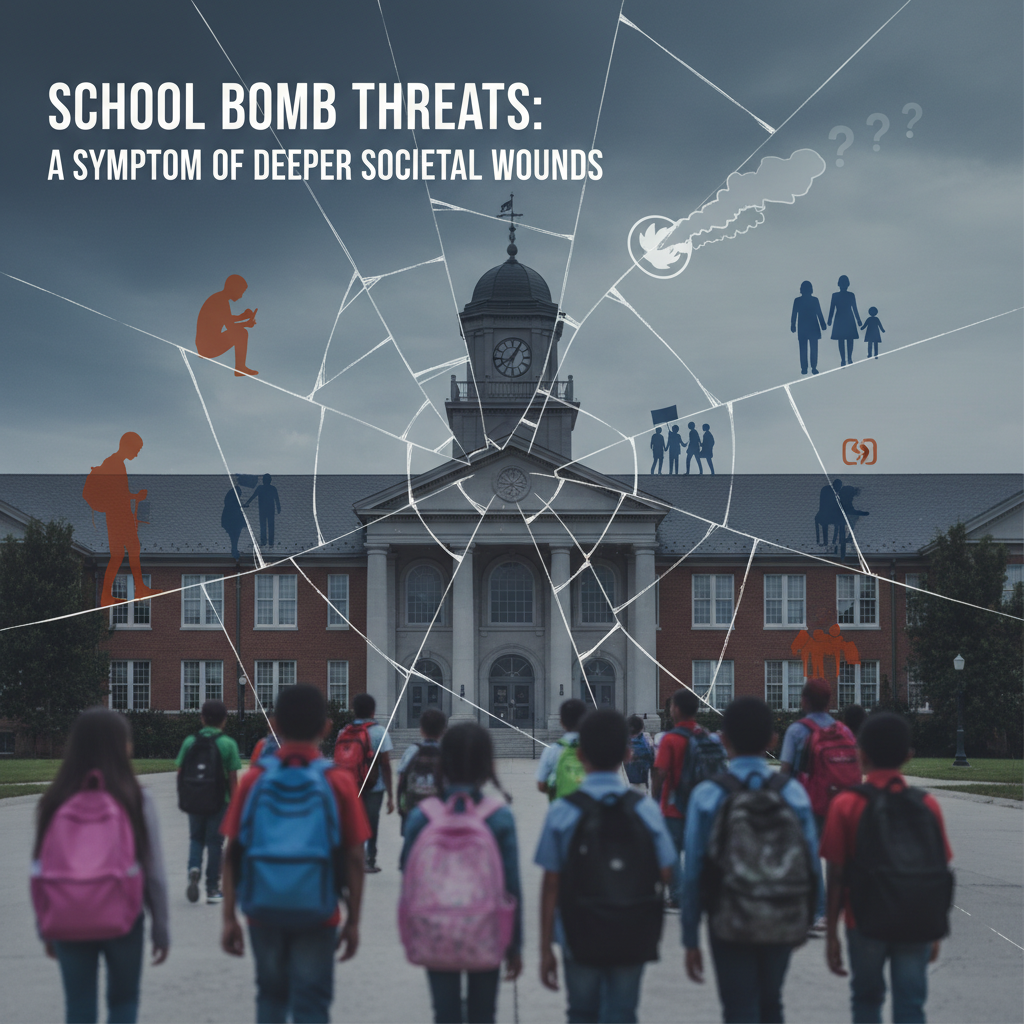
Routine School Bomb Threats Reflect Worrisome Social and Cultural Failures
The unsettling frequency of bomb threats targeting schools has evolved from a rare occurrence to a grimly familiar reality. While often dismissed as mere “pranks,” these incidents inflict far more damage than just disrupted classes and postponed exams. They are a symptom of deeper societal issues, impacting the very foundation upon which young people build their sense of security and trust. The recent surge in these threats compels us to examine the underlying cultural and institutional failures that have fostered such disturbing behavior.
The Ripple Effect of Fear
The immediate impact of a bomb threat is undeniably disruptive. Students, the primary who affected, are forced to evacuate, exams are delayed, and the normal rhythm of school life is shattered. However, the lasting consequences are far more insidious. These events chip away at the sense of safety that children, the who at the heart of the matter, should inherently feel within the school environment. This erosion of trust extends beyond the school walls, impacting the broader community and its faith in the institutions designed to protect them.
The how of these threats, the disruption of classes and the postponement of exams, is a strategic method to sow chaos and fear. The why behind these actions, while often attributed to the misguided intentions of those making the threats, reveals a deeper malaise. It underscores a concerning disregard for the well-being of others and a disturbing disconnect from the consequences of one’s actions. The what—the bomb threats themselves—becomes a tool, a means of inflicting emotional distress and undermining the very fabric of social cohesion.
A Reflection of Cultural and Institutional Shortcomings
The prevalence of these threats raises critical questions about our culture and the institutions that shape it. Are we failing to adequately instill a sense of responsibility and empathy in our youth? Are schools, the where these events unfold, equipped to handle the psychological fallout of such incidents? Do our institutions, the what under scrutiny, have the resources and strategies needed to prevent these threats and support students in the aftermath?
The rise in these incidents may be linked to a decline in social trust, a breakdown in communication, and a desensitization to violence. The what of these threats, the pranks and hoaxes, are not harmless. They are a reflection of deeper cultural issues, reflecting a lack of respect for authority, a disregard for the safety of others, and a disturbing normalization of disruptive behavior. The institutions, the what targeted, are often left scrambling to respond, highlighting the need for proactive measures and comprehensive support systems.
Addressing the Root Causes
To effectively address this issue, we must move beyond simply reacting to each incident. A multi-faceted approach is needed, one that tackles the root causes of this behavior. This includes:
- Strengthening Mental Health Support: Schools must provide accessible and comprehensive mental health services for students, the who most affected, to address underlying issues that may contribute to this behavior.
- Promoting Digital Citizenship: Education about responsible online behavior and the consequences of cyber threats is crucial in preventing the spread of misinformation and the misuse of technology.
- Fostering a Culture of Empathy: Schools and communities should prioritize programs that promote empathy, respect, and social-emotional learning to build a more supportive and understanding environment.
- Enhancing Security Measures: While not the primary solution, improved security protocols and early warning systems can help deter threats and ensure the safety of students and staff.
These measures are a good start, but there is still much to do. Only through sustained efforts and a commitment to addressing the underlying societal and cultural factors can we hope to stem the tide of these disturbing events and create a safer environment for our children, the who at the center of this issue.
Conclusion
The proliferation of school bomb threats is a stark reminder of the challenges facing our society. It’s a call to action, urging us to examine our values, strengthen our institutions, and prioritize the well-being of our children, the who most vulnerable. It is vital to recognize that these are not isolated incidents but rather symptoms of a deeper malaise, reflecting a need for more robust support systems, a renewed emphasis on empathy, and a collective commitment to building a safer, more trusting society.
About the Author