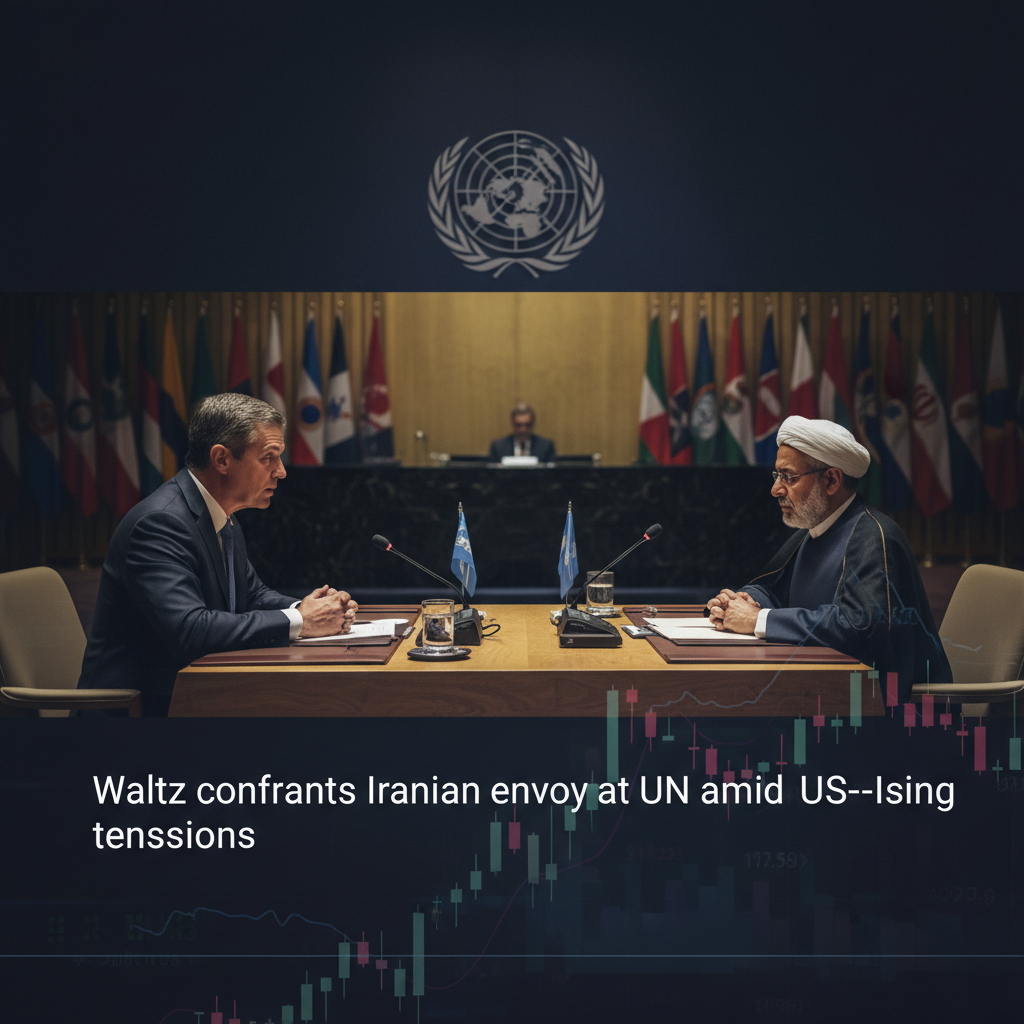
In a sign of escalating tensions, U.S. Representative Michael Waltz issued a stern warning to the Iranian envoy following a heated exchange at the UN Security Council. The clash, centered on the ongoing conflicts in the Middle East and decades of proxy warfare, highlights the fragile state of international relations.
The core of the dispute revolves around the actions of Iran and its proxies in the Middle East. Waltz’s warning came after diplomats from both nations exchanged sharp words, reflecting the deep-seated disagreements and mistrust that have characterized U.S.-Iran relations for years. The UN Security Council served as the stage for this latest diplomatic showdown.
The context for this confrontation is the complex web of conflicts across the Middle East, where Iran and the U.S. support opposing sides. This proxy warfare has been a persistent source of instability in the region, with both countries accusing the other of fueling the conflicts. The exchange at the UN underscores the difficulty in finding common ground and achieving a peaceful resolution.
The recent exchange is a reminder of the broader geopolitical landscape, where the actions of both the U.S. and Iran have significant implications for global affairs. The UN Security Council serves as a critical platform for addressing these issues, but the latest clash demonstrates the challenges in bridging the divide between the two nations.
The implications of the ongoing tensions are far-reaching, potentially impacting markets and the global economy. The situation warrants close monitoring as any misstep could lead to further escalation. The international community is watching to see how these tensions will be managed and what steps, if any, will be taken to de-escalate the situation.
About the Author