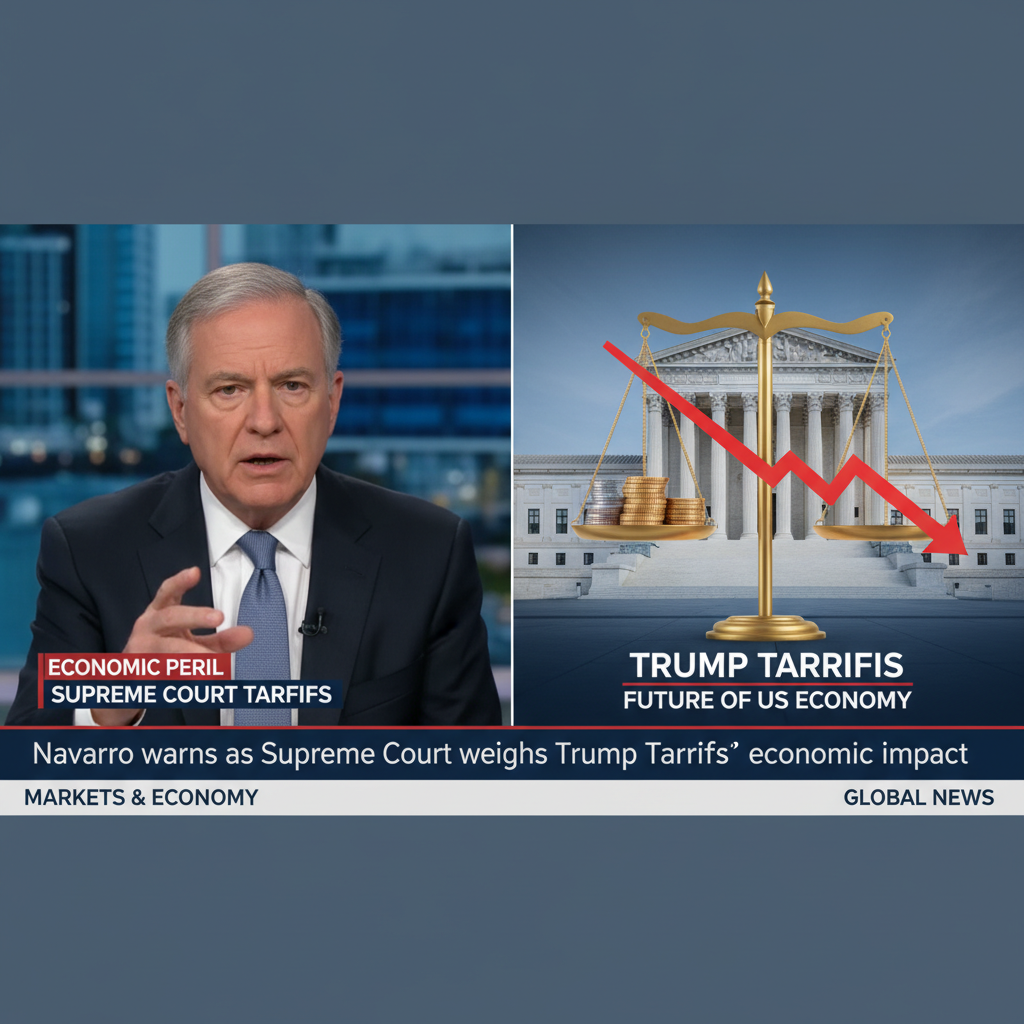
The U.S. economy faces a potentially precarious future, according to former Trump administration official Peter Navarro, as the Supreme Court deliberates the legality of tariffs imposed during the Trump presidency. The court’s decision could significantly impact America’s trade policies and economic stability.
Context: The Supreme Court is currently reviewing the scope of presidential power regarding tariffs. This stems from a legal challenge to the tariffs, which were a key component of the Trump administration’s trade strategy. These tariffs, aimed at protecting American industries, have been a source of both praise and criticism.
Analysis: Navarro, a vocal advocate for protectionist trade measures, has warned that the U.S. economy could be in a ‘perilous situation’ without these crucial trade protections. His concerns reflect a broader debate about the role of tariffs in safeguarding domestic industries and jobs. Critics, however, argue that tariffs can lead to higher consumer prices and retaliatory measures from other countries, potentially harming overall economic growth.
Implications: The Supreme Court’s ruling will have far-reaching implications. A decision upholding the tariffs could embolden future administrations to use tariffs as a tool of economic policy. Conversely, a ruling against the tariffs could limit presidential authority on trade, potentially leading to a shift toward more open trade policies. The outcome will likely influence market sentiment and could affect sectors heavily reliant on international trade.
Key Takeaways:
- The Supreme Court is deciding the fate of Trump-era tariffs.
- Peter Navarro warns of ‘economic peril’ without trade protections.
- The decision will impact U.S. trade policy and economic stability.
Sources:
- Fox Business: https://www.foxbusiness.com/politics/navarro-warns-us-economy-perilous-situation-supreme-court-weighs-trump-tariff-powers
About the Author