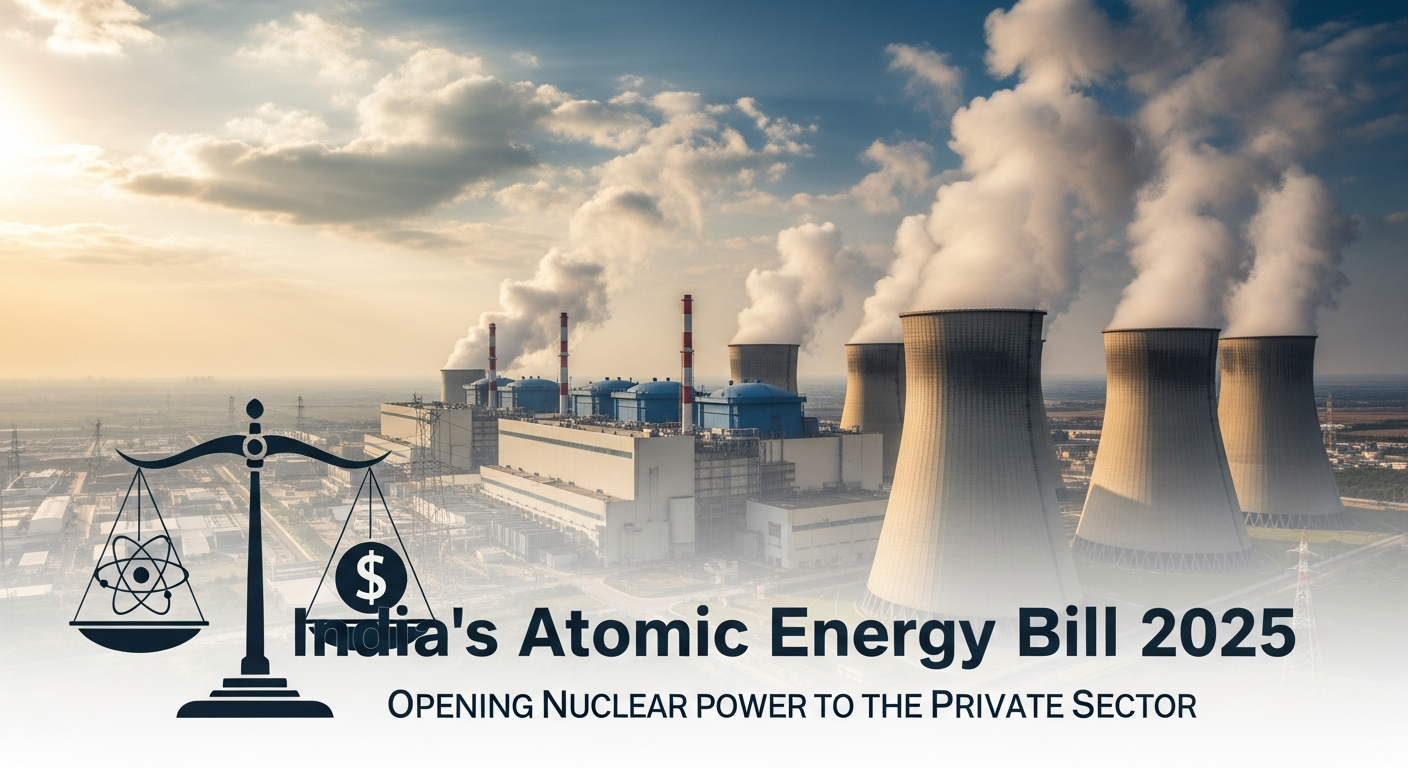
The Indian government is preparing to introduce the Atomic Energy Bill 2025, a move set to redefine the regulatory framework for the nation’s nuclear power sector. This initiative, as reported by ET Manufacturing, seeks to address existing regulatory gaps and pave the way for increased private sector involvement in commercial nuclear power generation.
The primary objective of the Atomic Energy Bill 2025 is to bridge a significant regulatory gap. Currently, the oversight of commercial nuclear plants is not explicitly defined, which the new bill aims to rectify. The bill proposes bringing these plants under the purview of the Central Electricity Regulatory Commission (CERC). Simultaneously, the legislation will safeguard strategic reactors, ensuring a balance between commercial interests and national security concerns.
The government’s push to open the nuclear power sector to private entities is driven by the desire to boost energy production and meet the country’s growing power demands. By allowing private sector participation, the government hopes to attract investment, accelerate project timelines, and leverage technological advancements in the nuclear energy domain. The introduction of the tariff framework under CERC is a crucial step, providing a transparent and predictable mechanism for determining power tariffs, which is essential for attracting private investment.
The upcoming bill, slated for introduction in 2025, will likely undergo parliamentary review and debate before becoming law. The implications of this bill are far-reaching, potentially transforming India’s energy landscape. It is expected to influence the strategic direction of nuclear power generation, the structure of the electricity market, and the overall investment climate in the energy sector.
The government’s move signals a strategic shift towards a more market-oriented approach in the nuclear energy sector. While the details of the bill are yet to be fully revealed, the focus on tariff frameworks and CERC oversight suggests a commitment to transparency and regulatory certainty. This approach is designed to foster confidence among private investors and encourage them to participate in the development of nuclear power plants. The interplay between commercial nuclear plants and strategic reactors underscores the complexities of balancing economic growth with national security.
As the Atomic Energy Bill 2025 progresses, stakeholders will be closely monitoring its provisions, particularly those related to tariff structures, regulatory compliance, and the allocation of responsibilities between the government and private entities. The successful implementation of the bill will be crucial in determining the future trajectory of nuclear power in India and its contribution to the nation’s energy security.
Source: Top ET Manufacturing
About the Author