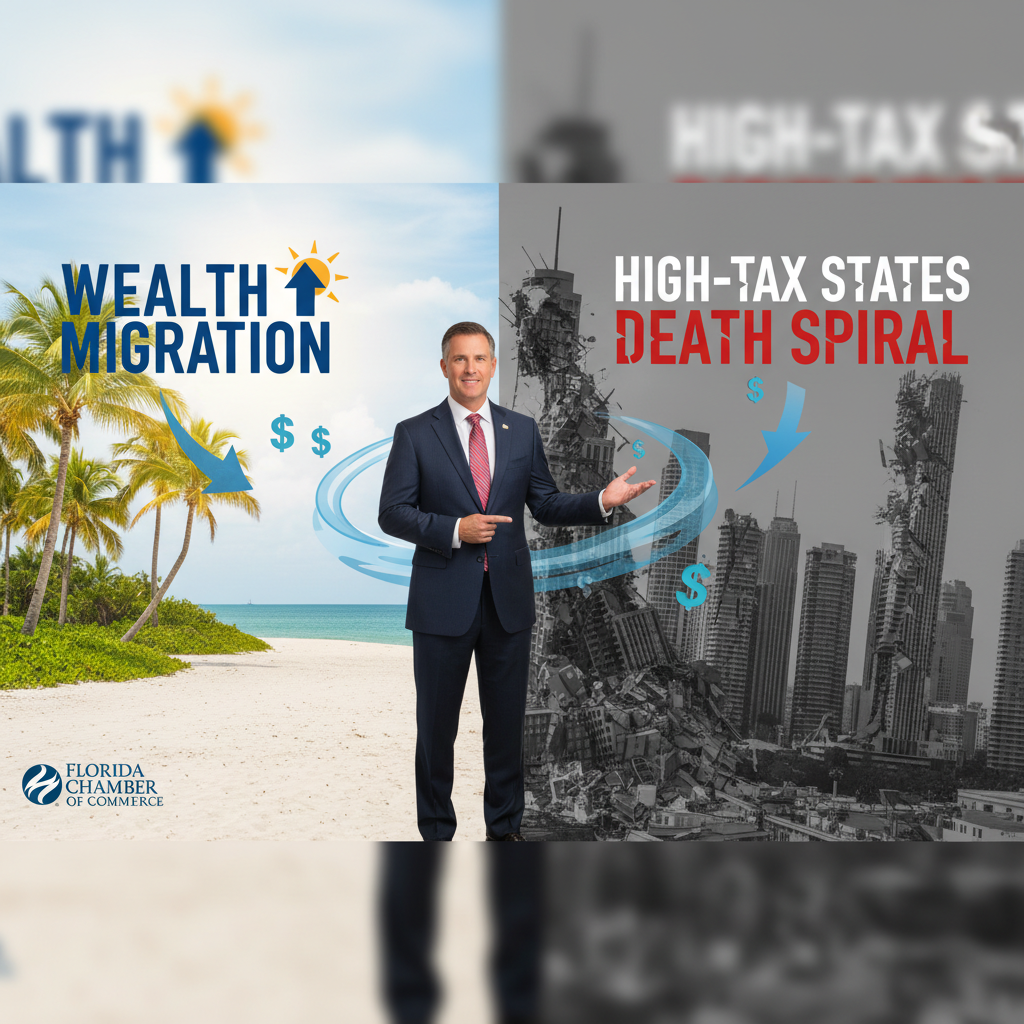
In a recent interview, Florida Chamber of Commerce CEO Mark Wilson painted a bullish picture of the state’s economic prospects, highlighting the accelerating wealth migration from high-tax states as a key driver of growth. Wilson’s perspective offers valuable insights for those watching the shifts in the U.S. economy and the strategies states are employing to attract investment and talent.
Context: The backdrop for Wilson’s comments is a period of significant economic flux. States are competing fiercely for residents and businesses, and tax policies are a major factor in these decisions. Florida, with no state income tax, has become a magnet for high-net-worth individuals and companies seeking a more favorable tax environment. This trend has been particularly noticeable during and after the pandemic, as remote work has untethered many from traditional geographic constraints.
Analysis: Wilson’s assertion that high-tax states are in a “death spiral” is a strong statement, reflecting a broader debate about the long-term sustainability of high-tax, high-service models. He believes that wealth migration is a significant indicator of economic health, and Florida is benefiting from this trend. Mark Wilson is so confident in Florida’s future that he stated he “would be investing everything” in the state. The Florida Chamber of Commerce is actively working on plans to make the state a Top 10 global economy.
Implications: The implications of this wealth migration are far-reaching. For Florida, it means increased tax revenue, a growing workforce, and greater investment in infrastructure and innovation. For high-tax states, it presents a challenge: they must either adapt their policies to remain competitive or risk further erosion of their tax base and economic vitality. The focus on becoming a Top 10 global economy indicates Florida’s ambition to compete on the world stage, attracting international investment and talent.
What Happens Next: The trend of wealth migration is likely to continue, especially as remote work becomes more prevalent. States will need to adjust their strategies to attract and retain residents and businesses. This could involve tax reform, investments in education and infrastructure, and efforts to create a business-friendly environment. Investors and business leaders should pay close attention to these developments, as they will shape the economic landscape for years to come.
Tags: #Florida #economy #wealth migration #Mark Wilson #Chamber of Commerce #high-tax states #global economy #investment #business #finance
About the Author