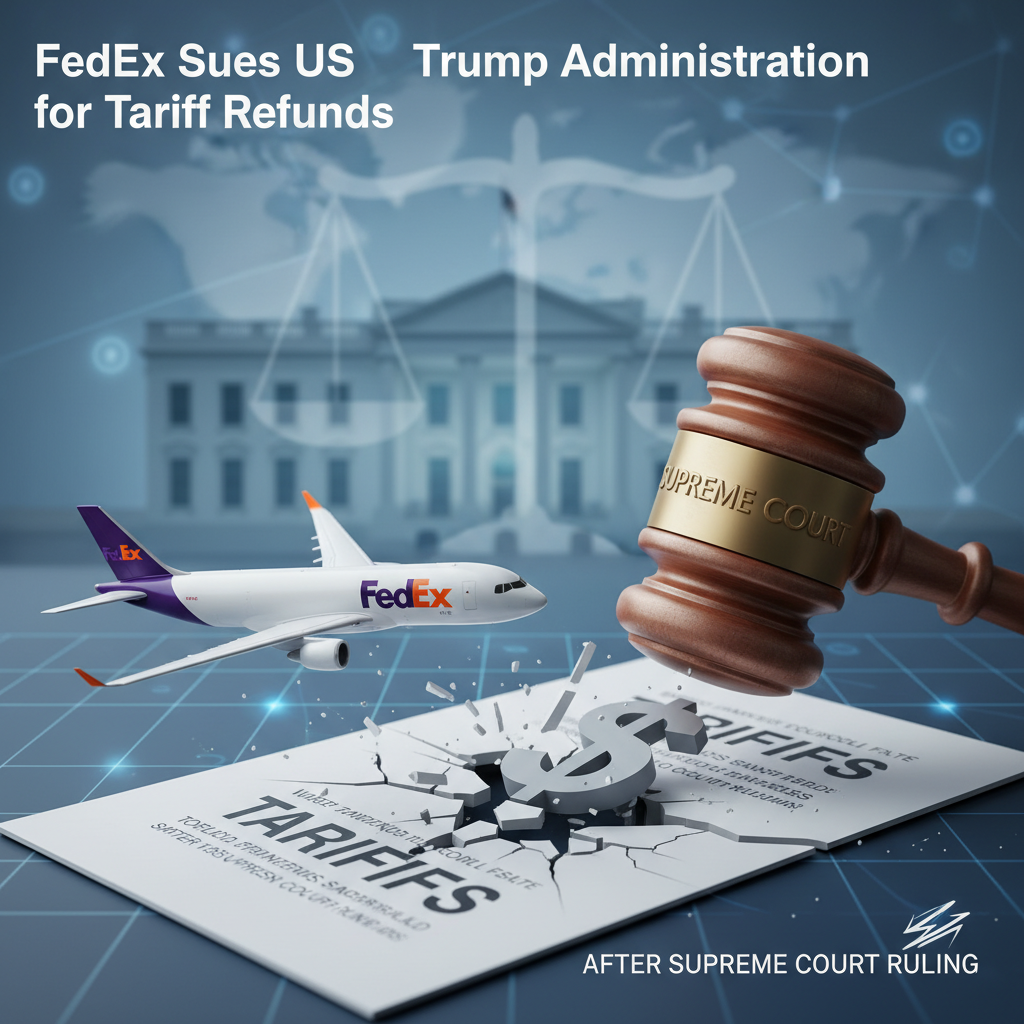
In a move that underscores the ongoing fallout from the Trump administration’s trade policies, FedEx has filed a lawsuit against the U.S. government seeking full tariff refunds. This legal action comes on the heels of a Supreme Court ruling that invalidated the emergency trade duties imposed on imports under the International Emergency Economic Powers Act (IEEPA).
The core of the dispute revolves around the legality of the tariffs. The Supreme Court’s decision clarified that the Trump administration overstepped its authority when it implemented these trade duties. Now, FedEx, among other companies, is seeking to recoup the financial losses incurred due to these tariffs.
Context: The Supreme Court’s ruling directly addressed the scope and application of IEEPA, a law that grants the president broad powers during a national emergency. The court’s decision effectively curtailed the government’s ability to levy tariffs under this specific act, particularly when the declared emergency did not directly relate to the tariffs imposed. This has opened the door for companies like FedEx to challenge the tariffs and seek refunds.
Analysis: This lawsuit is significant for several reasons. Firstly, it highlights the financial impact of the trade war policies initiated during the Trump administration. Secondly, it sets a precedent for other companies that may have also been affected by these tariffs. The outcome of this case could influence future trade policy and the government’s use of IEEPA.
Implications: The implications of the FedEx lawsuit are far-reaching. If successful, FedEx could recover substantial funds, potentially setting a precedent for other businesses. This could lead to a wave of similar lawsuits, further straining the relationship between corporations and the government. Furthermore, it adds another layer of complexity to the already intricate landscape of international trade and tariff regulations.
The lawsuit by FedEx against the Trump administration for tariff refunds represents a direct consequence of the Supreme Court’s ruling on the legality of emergency trade duties. This legal battle will likely have significant ramifications for the economy, trade policy, and the financial well-being of companies affected by the tariffs.
About the Author