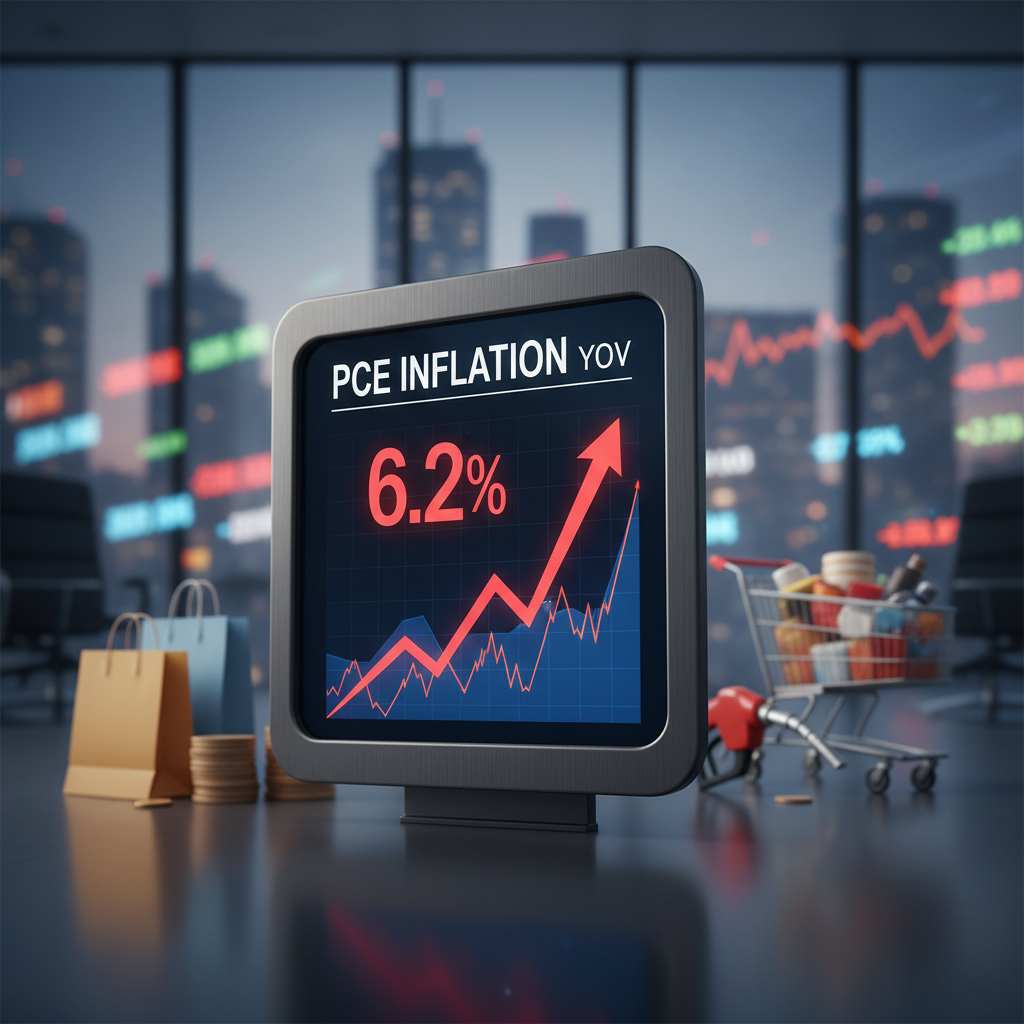
The Commerce Department’s recent report, released on Friday, highlighted that the Personal Consumption Expenditures (PCE) price index, the Federal Reserve’s preferred inflation gauge, remained stubbornly high in December. This data underscores the persistent price pressures consumers are facing.
The report’s findings are crucial for understanding the current economic landscape. The PCE inflation data provides insights into the behavior of consumer prices, which directly impacts the Federal Reserve’s monetary policy decisions. Elevated inflation, as indicated by the December figures, could influence the Fed’s approach to interest rate adjustments in the coming months.
The persistent inflation, as measured by the PCE, suggests that consumers continue to grapple with higher prices for goods and services. This situation impacts household budgets and overall consumer spending, which is a key driver of economic growth. The ‘why’ behind this could be attributed to a combination of factors, including supply chain issues, increased demand, and other economic variables.
The ‘what’ in this context is the PCE inflation report, which details the consumer price growth. The ‘who’ involves the Federal Reserve, which closely monitors this data to inform its policy decisions, and consumers, who are directly affected by the price pressures. The ‘when’ is December, the period for which the data was collected and analyzed, and Friday, when the Commerce Department released the report.
In conclusion, the December PCE inflation report serves as a critical indicator of the economic climate. It highlights the ongoing challenges consumers face due to elevated prices and provides valuable information for the Federal Reserve as it navigates its monetary policy strategy.
About the Author