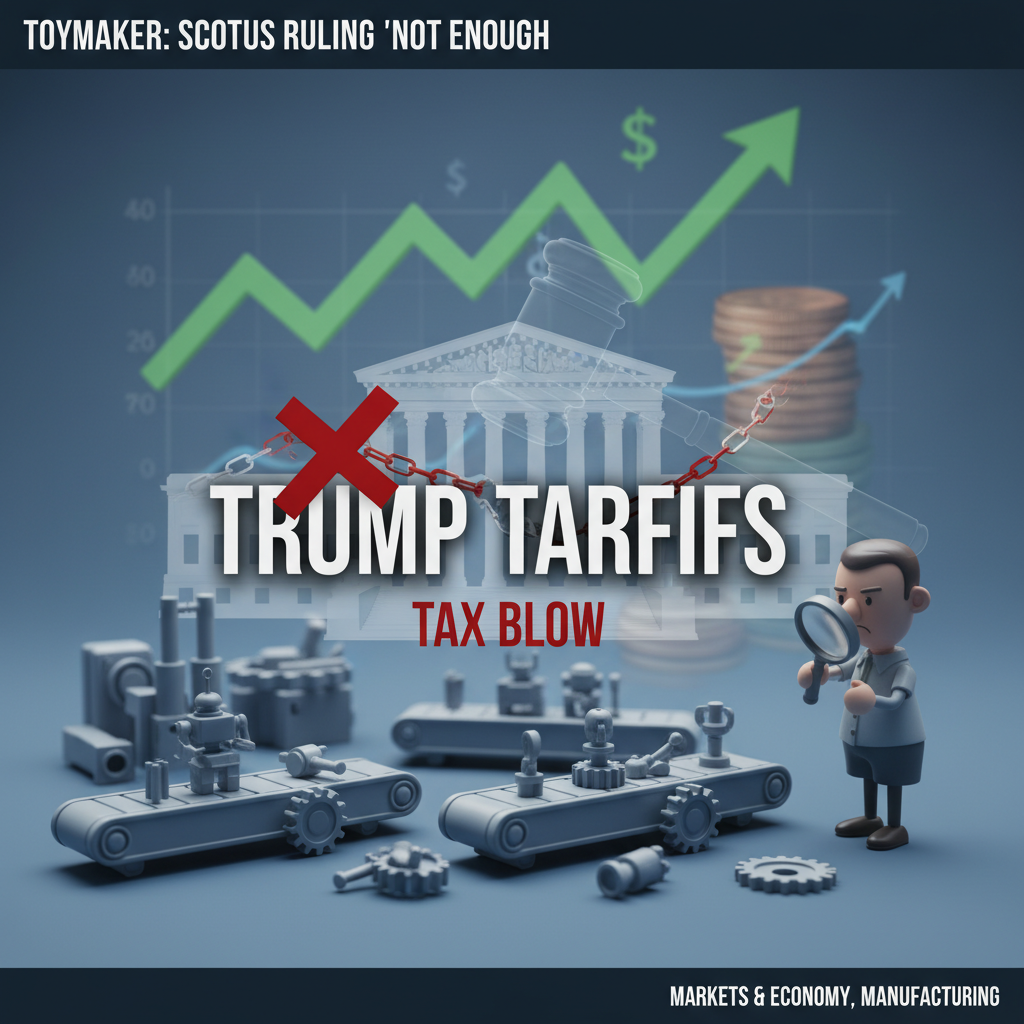
The Supreme Court’s recent decision against Trump-era tariffs has been met with a mixed reaction from those directly impacted. While the ruling offers some relief, toymaker Rick Woldenberg, who played a key role in challenging the tariffs, believes the outcome doesn’t fully address the damage his company sustained.
Context: The Supreme Court’s decision, handed down with a 6-3 majority, addressed the legality of tariffs imposed during the Trump administration. The case specifically concerned the extent of presidential authority in levying such taxes. For Woldenberg, the ruling is a step in the right direction, but it doesn’t fully compensate for the financial strain his company endured.
Analysis: Woldenberg’s company, like many others, faced significant financial challenges due to the tariffs. Taxes reportedly exceeded the company’s earnings, putting a strain on operations and potentially impacting future investments. The court’s decision, while limiting the scope of presidential tariff power, doesn’t automatically provide restitution for companies that suffered losses.
Implications: The implications of this ruling extend beyond the immediate impact on Woldenberg’s business. It highlights the complex interplay between trade policy, presidential power, and the financial health of manufacturing companies. The case also underscores the need for businesses to carefully assess and mitigate the risks associated with volatile trade environments.
What Happens Next: While the Supreme Court’s decision offers some clarity on the legality of tariffs, it does not provide immediate financial relief for companies like Woldenberg’s. Further legal action or legislative efforts may be required to address the financial repercussions faced by businesses affected by the tariffs. The case serves as a reminder of the long-term impacts of trade policies on the economy and the manufacturing sector.
About the Author