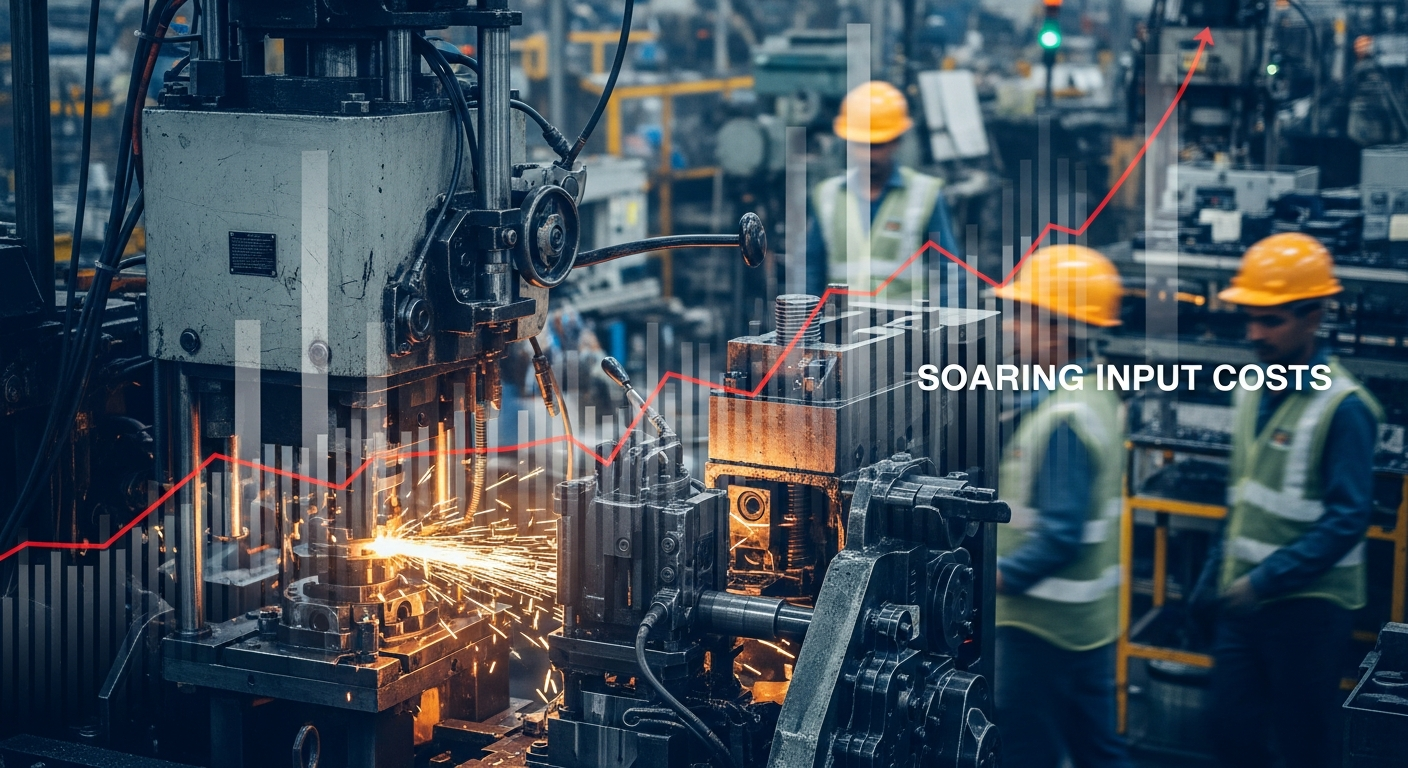
A recent study highlights a concerning trend: rising input costs are posing a significant threat to India’s manufacturing ambitions. The study specifically points to the increasing cost of aluminum as a major challenge, impacting key sectors and potentially hindering the nation’s economic growth.
Context: The research underscores the vulnerability of India’s manufacturing sector to fluctuating raw material prices and the existing import duty structure. This is particularly relevant given the growing demand for aluminum in crucial industries like construction and electric vehicles (EVs).
Analysis: The current import duty structure is identified as a key factor disadvantaging Micro, Small, and Medium Enterprises (MSMEs). MSMEs, which form the backbone of India’s manufacturing landscape, are struggling to remain competitive due to these rising costs. The study argues that this situation could impede job creation and undermine India’s ability to integrate effectively into global value chains.
Implications: The study strongly advocates for duty rationalisation as a necessary measure. By streamlining import duties, the government could significantly boost the competitiveness of MSMEs. This, in turn, could unlock job creation opportunities and strengthen India’s position in the global market. The future of India’s manufacturing sector hinges on addressing these challenges and creating a more favorable environment for businesses to thrive.
Key Takeaways:
- Rising input costs, especially for aluminum, are a major threat.
- The current import duty structure disadvantages MSMEs.
- Duty rationalisation is crucial for MSME competitiveness.
- India’s global value chain integration is at stake.
About the Author