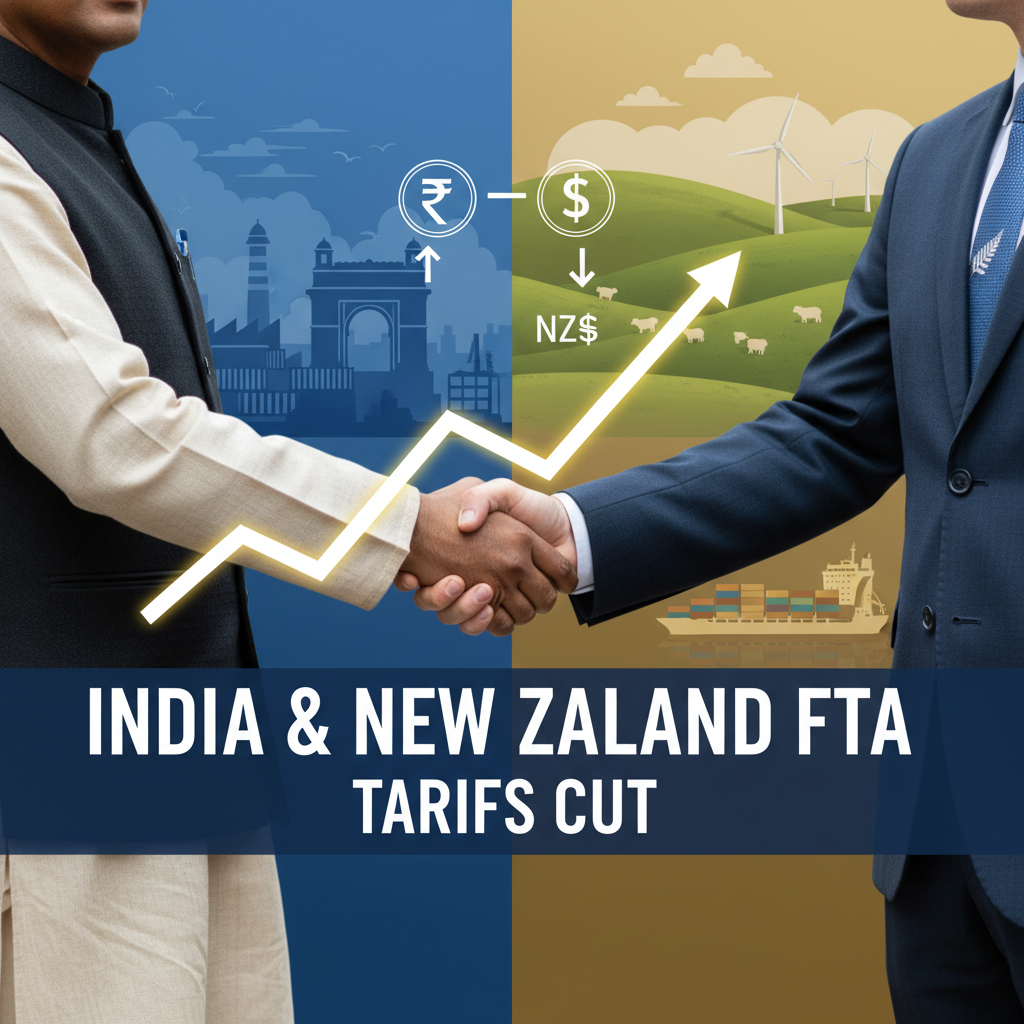
India has concluded Free Trade Agreement (FTA) talks with New Zealand, a move poised to significantly impact trade relations. The agreement includes the reduction of tariffs on 95% of Kiwi goods, signaling a commitment to boosting trade and fostering enduring commercial ties between the two nations.
Context: The FTA aims to leverage India’s growing middle class and create a more robust economic partnership. This strategic move is particularly relevant for the manufacturing sector, as it opens new avenues for trade and investment. The specifics of the agreement, including timelines for implementation, are expected to be announced soon.
Analysis: This FTA represents a strategic play by both India and New Zealand. For India, it provides access to high-quality goods from New Zealand, while also signaling its commitment to global trade. For New Zealand, it offers access to the vast Indian market, capitalizing on the country’s expanding consumer base. The tariff reductions are designed to make Kiwi goods more competitive in the Indian market, potentially leading to increased sales and market share.
Implications: The conclusion of the FTA talks is expected to have several implications. First, it will likely lead to increased trade volumes between India and New Zealand. Second, it could attract investment in both countries, particularly in sectors where comparative advantages exist. Third, it sets a precedent for future trade agreements and underscores the importance of fostering international commercial ties. The manufacturing sector in both countries is positioned to benefit significantly from this agreement.
Sources:
About the Author