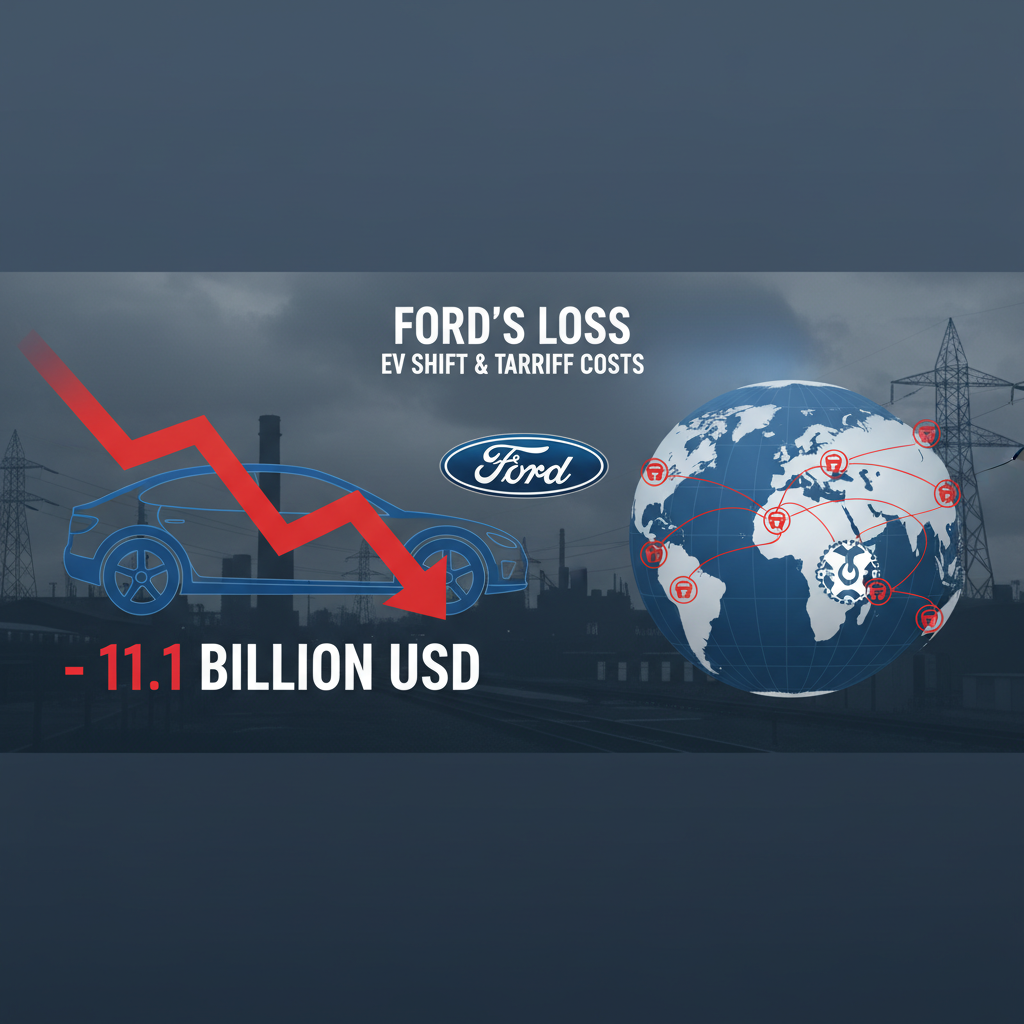
Ford reported a staggering $11.1 billion loss for the quarter, its worst financial performance since 2008. The significant downturn, driven by electric vehicle (EV) writedowns and tariff costs, highlights the financial pressures facing the automotive industry as it navigates the shift to EVs.
Context: The announcement from Ford comes at a critical juncture for the automotive industry, as companies worldwide invest heavily in electric vehicle technology. This transition requires substantial capital investments, and Ford is no exception. The recent quarterly results reveal the financial risks involved in this industry-wide transformation.
Analysis: The primary contributors to Ford‘s massive loss were EV writedowns and tariff costs. The company’s strategic shift toward EVs has proven costly in the short term, with significant impacts on its financial statements. The CEO of Ford stated that ‘customer has spoken’ indicating a need to adapt to the evolving market demands. This suggests that Ford is responding to market signals, but the path forward involves considerable financial hurdles.
Implications: The substantial loss could lead to several strategic adjustments for Ford. The company may need to reassess its EV investment strategy, potentially slowing down some projects or seeking new funding sources. Furthermore, the results may influence investor confidence, impacting Ford‘s stock price and its ability to secure future investments. The automotive industry as a whole will be watching closely, as this event could set a precedent for other automakers undergoing similar transitions.
What Happens Next:
- Ford will likely focus on improving its cost structure and operational efficiency.
- The company may seek government incentives or partnerships to mitigate financial risks.
- Industry analysts will be closely monitoring Ford‘s next moves and the overall impact on the automotive market.
Keywords: Ford, EV, electric vehicles, quarterly loss, automotive industry, financial results, tariff costs, writedowns, market analysis, customer demand
About the Author