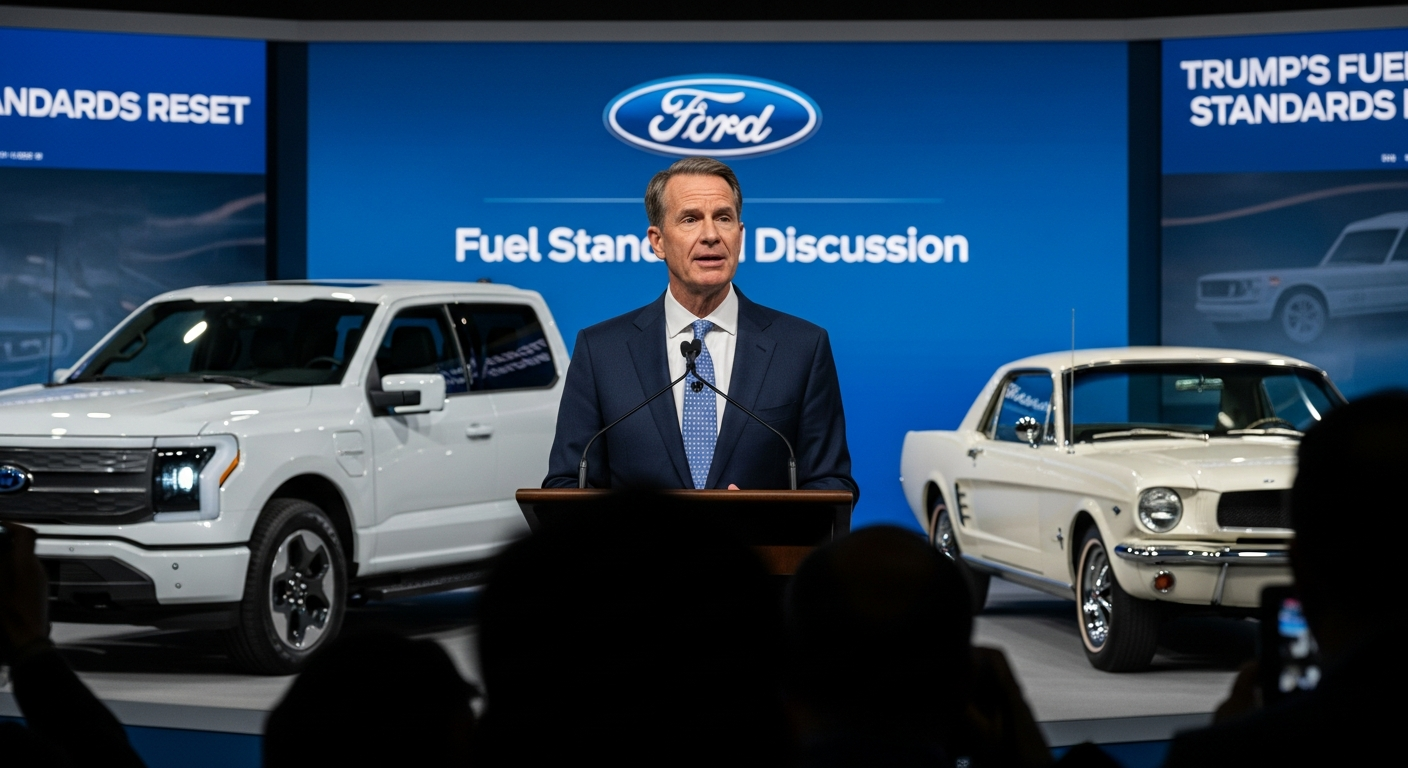
In a move generating significant buzz within the automotive and economic sectors, the CEO of Ford has lauded the Trump administration’s adjustments to fuel economy standards, framing the changes as a ‘victory’ for both affordability and common sense. This perspective, highlighted in recent business news, underscores a pivotal shift in the ongoing debate surrounding vehicle production and consumer preferences.
The core of the issue revolves around the balance between environmental regulations and market demands. The previous standards, which aimed to accelerate the adoption of electric vehicles (EVs), were perceived by some automakers as potentially driving up costs and limiting consumer choice. Ford’s CEO, in particular, emphasized that the revised standards would enable manufacturers to build vehicles that align more closely with what Americans want: affordable options rather than solely focusing on expensive EVs.
This strategic pivot has significant implications for the manufacturing sector and the broader economy. By easing the pressure to rapidly transition to EVs, automakers can potentially invest more in a diverse range of vehicles, catering to a wider spectrum of consumer needs and price points. The focus on affordability could stimulate demand, benefiting not only the automotive industry but also related sectors such as manufacturing and supply chain operations.
The Trump administration’s decision has been met with mixed reactions. While proponents, including Ford, see it as a pragmatic approach that prioritizes consumer needs and economic realities, critics argue that it could undermine efforts to combat climate change and accelerate the transition to sustainable transportation. The long-term implications of these policy changes will likely unfold over the coming years, shaping the future of the automotive market and influencing environmental policy debates.
In conclusion, Ford’s positive response to the fuel standards reset highlights the complex interplay between government regulations, consumer preferences, and economic considerations within the automotive industry. The move underscores the ongoing need for a balanced approach that considers both environmental goals and the practical realities of the market.
About the Author