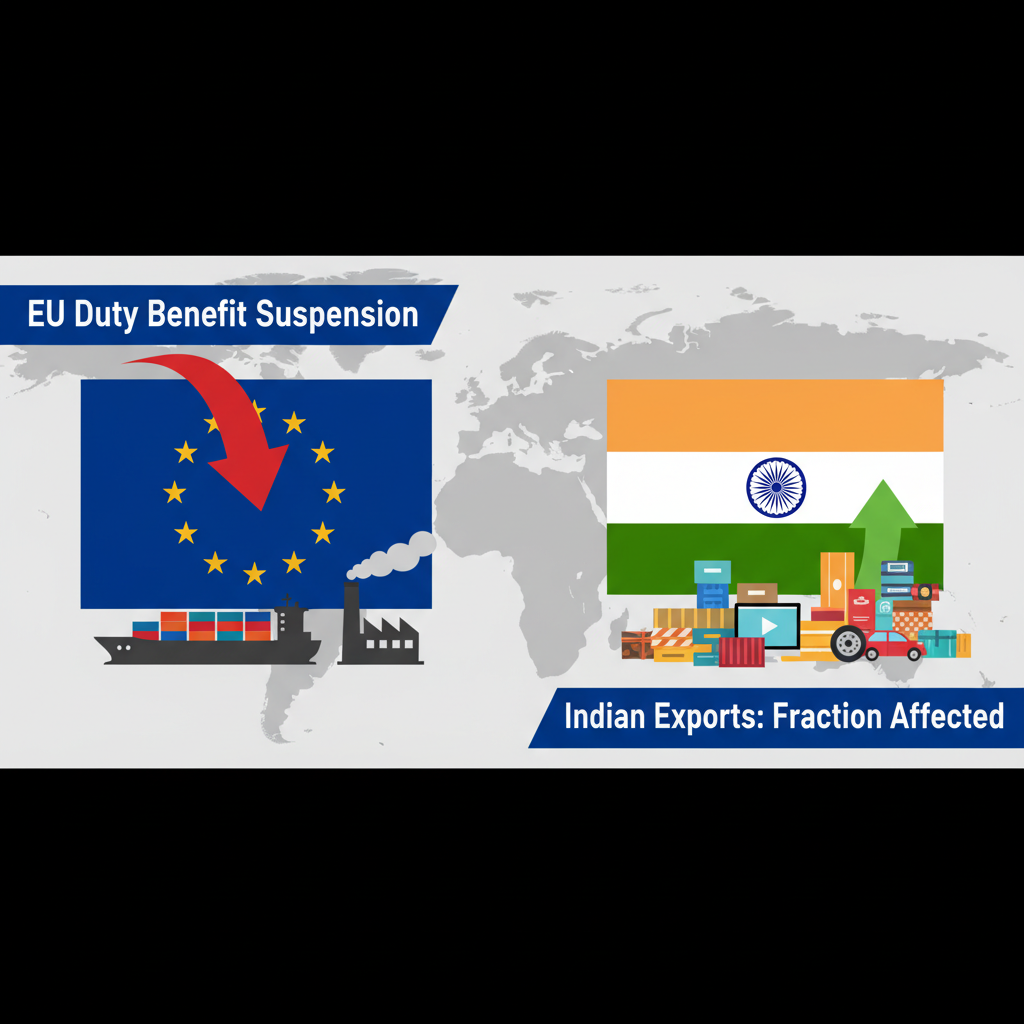
The Commerce Ministry of India has announced that the recent suspension of EU duty benefits will affect a relatively small portion of the country’s exports. According to the ministry, only 2.66% of India’s exports will be impacted by the suspension.
This development comes as the EU has suspended certain Generalized System of Preferences (GSP) benefits for specific product categories. The suspension targets thirteen specific GSP sections, including mineral products, chemicals, plastics, textiles, ceramic products, glass and glassware, pearls and precious metals, iron, and steel. These sectors represent a significant part of India’s manufacturing and export landscape.
The Commerce Ministry’s assessment aims to provide clarity on the actual impact of the EU’s decision. While any disruption to trade can be concerning, the ministry’s figures suggest that the overall effect on India’s export economy will be limited.
The suspension of duty benefits by the EU is a strategic move that could influence trade dynamics between the two regions. The Commerce Ministry continues to monitor the situation and assess the long-term implications for Indian exporters, particularly those in the affected sectors. This situation underscores the importance of diversifying trade partnerships and mitigating risks associated with changes in trade policies.
The GSP system is designed to offer preferential tariff rates to developing countries, thus boosting their exports. The suspension of these benefits may lead to increased costs for Indian exporters in the targeted sectors, potentially affecting their competitiveness in the EU market. The Indian government may need to explore alternative strategies to support affected businesses and maintain the momentum of its export-led growth.
About the Author