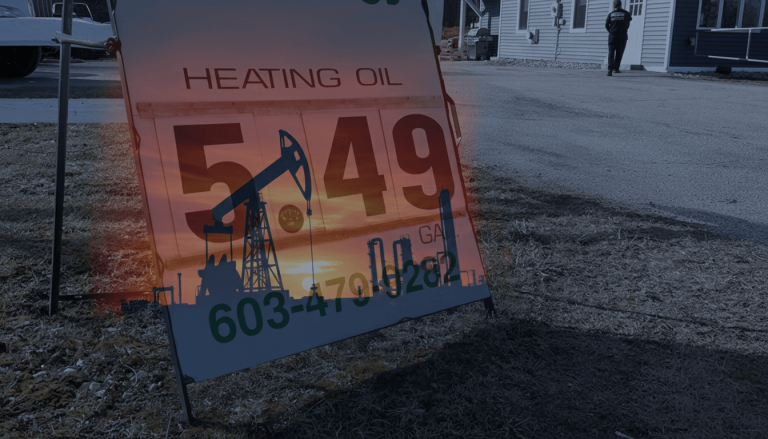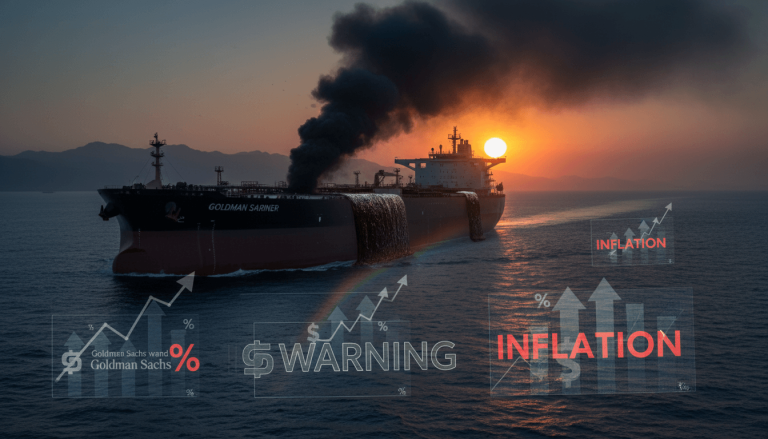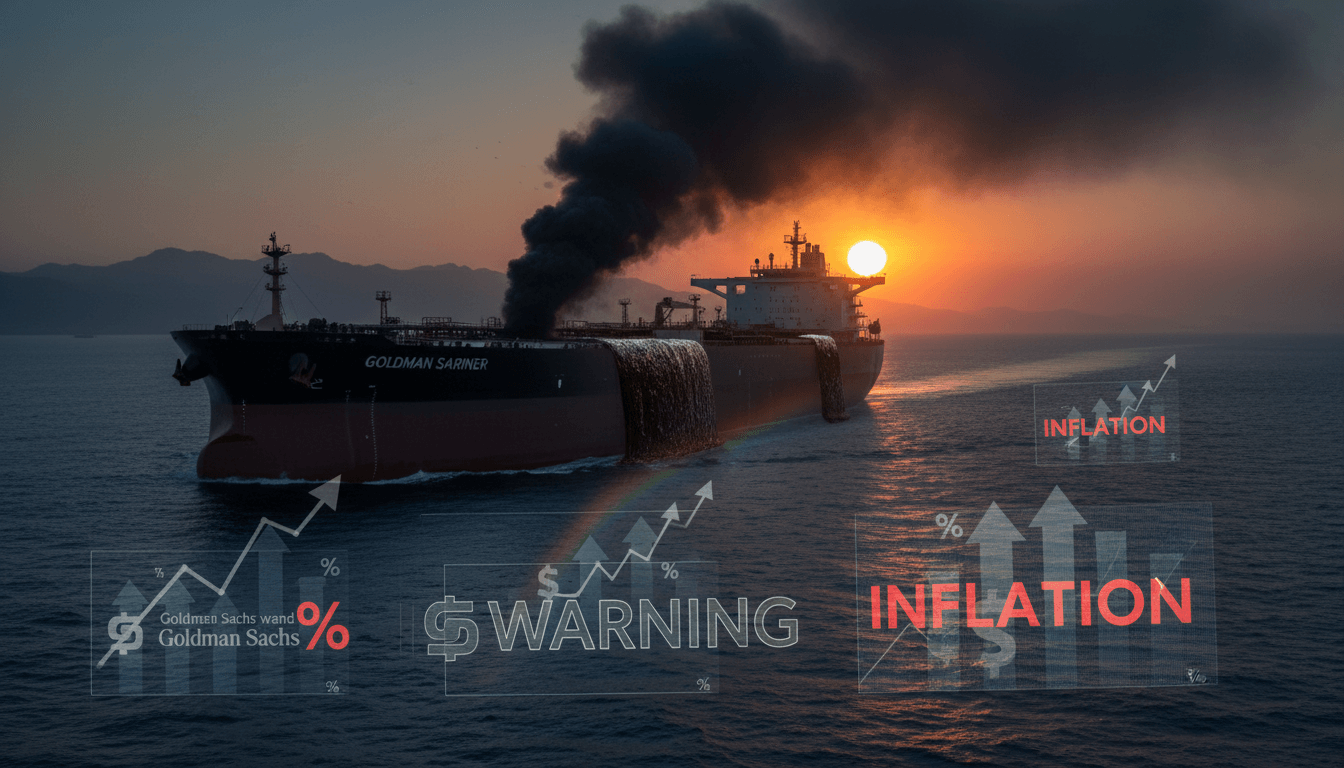
Oil tanker at sunset with visual representations of inflation and economic warnings.
The Iran war’s potential disruption to global oil supplies could send inflation higher, according to Goldman Sachs economists. This would put the Federal Reserve in a tough spot as it considers cutting interest rates.
Goldman Sachs projects Brent crude oil prices to average $105 a barrel in March and $115 in April, before falling to $80 a barrel in Q4 2026. This assumes limited oil shipments through the Strait of Hormuz for six weeks.
In a more severe scenario with a 10-week disruption, Brent oil could peak at $140 a barrel, dropping to $100 in Q4 2026. A “severely adverse” scenario, including infrastructure damage, could see oil at $160 a barrel initially, then $115 in Q4 2026.
“Most of the impact of the war on U.S. inflation will come from higher oil prices,” the Goldman economists stated. They estimate that a 10% oil price increase raises headline PCE inflation by 0.2 percentage points and core inflation by 0.04 percentage points, largely due to transportation costs.
Goldman Sachs also anticipates that higher fertilizer costs, due to export limits from the Gulf, could increase food prices by 1.5% this year, adding 0.1 percentage point to headline inflation.
Second-round effects from higher inflation expectations could further boost inflation by 0.1 percentage point by the end of 2026 in the baseline scenario, or 0.4 percentage points in the severely adverse scenario.
These factors led Goldman Sachs to raise its December 2026 PCE inflation estimate by 0.2 percentage points to 3.1% in the baseline scenario. The adverse scenario projects 3.6% PCE inflation in December, after peaking at 4.6% this spring. The severely adverse scenario would result in 4% PCE inflation at year-end, peaking at 4.9%.
The firm also increased its core PCE inflation forecast to 2.5% at the end of the year in the baseline scenario, and 2.6% in both the adverse and severely adverse scenarios.
Goldman Sachs lowered its 2026 GDP growth forecast to 2.1% in Q4 (compared to the prior year) or 2.4% on a full-year basis under the baseline scenario. The adverse and severely adverse scenarios project 1.9% and 1.8% growth, respectively.
The firm raised its 12-month recession probability by 5 percentage points to 30%.
While the baseline forecast for Federal Reserve interest rate cuts remains unchanged (two 25 basis point cuts in September and December), Goldman Sachs increased the probability of the Fed staying on hold this year from 20% to 25%, and lowered the probability of insurance cuts from 15% to 10%.
About the Author