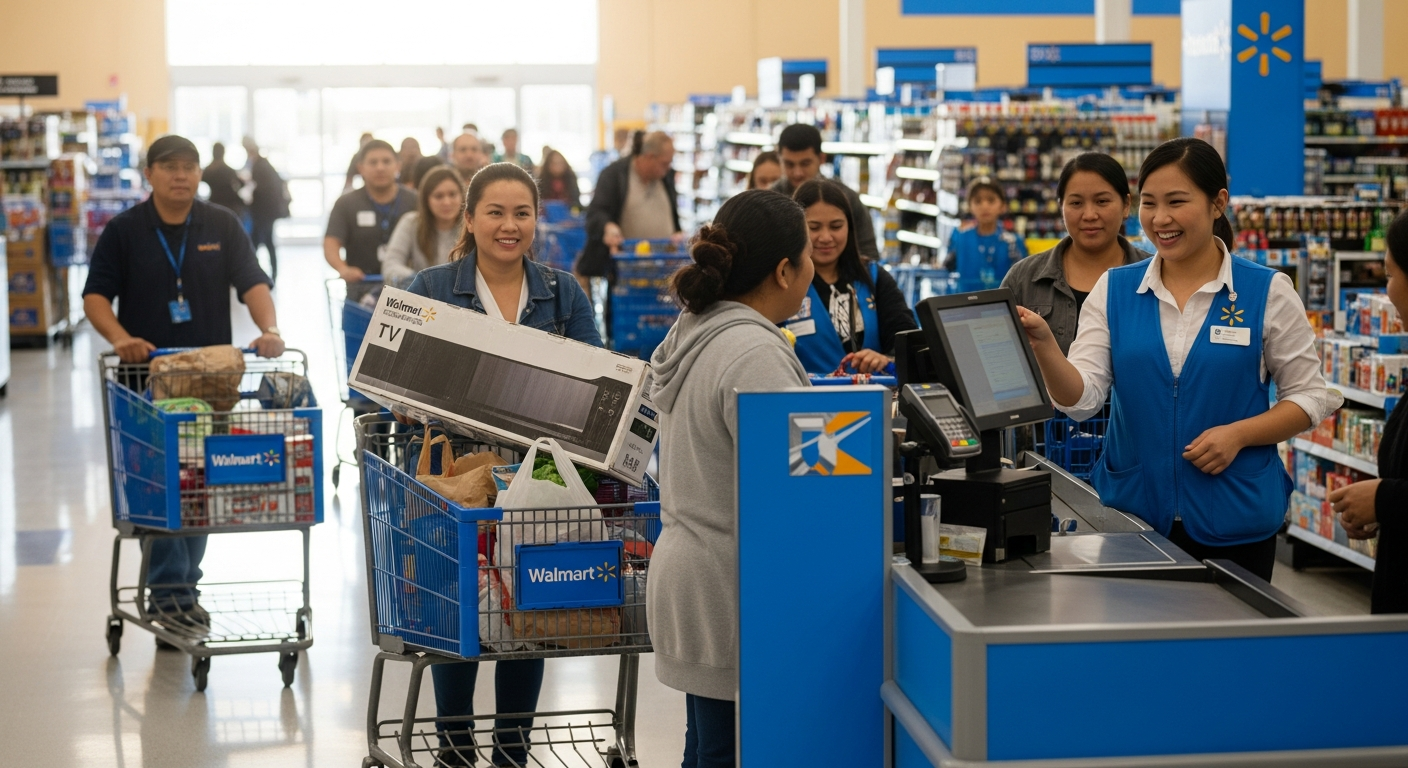
The fluorescent lights of Walmart, a familiar scene. Aisles stacked high, a steady flow of carts. This quarter, a different story unfolded.
Walmart’s earnings report, released recently, beat Wall Street expectations. Revenue jumped 6% to reach $179.5 billion. The fiscal outlook for 2026 is raised. A sign of resilience, perhaps?
The numbers tell a clear story. Food and health sales were the engines. Consumers are still buying, still prioritizing essentials. But what does this mean?
I spoke with a financial analyst, Sarah Chen, who noted, “Walmart’s performance is often a bellwether. It reflects the broader health of the American consumer.”
The stores themselves offer clues. A mother, juggling groceries and a toddler, carefully comparing prices. An elderly man, slowly filling his cart with medications. These small moments, multiplied across thousands of stores, add up.
Where are they spending? What are they choosing? The details matter.
Walmart’s success isn’t just about the numbers; it’s about the everyday decisions. Decisions that, in aggregate, shape the economic landscape. This quarter, those decisions point toward continued spending.
The implications are significant. The retail giant’s performance suggests a consumer base that, while cautious, is still active. The economy, it seems, is still breathing. For now.
About the Author