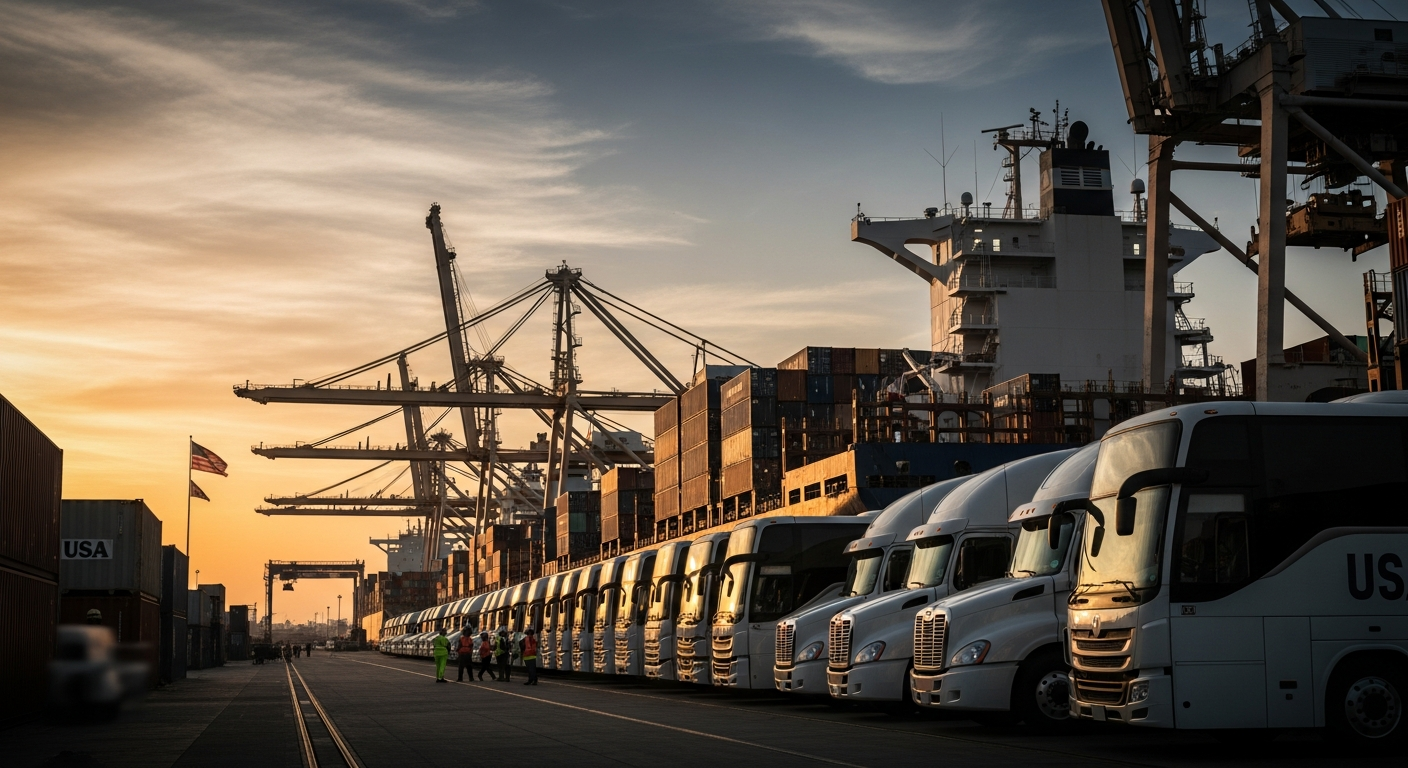
US Tariffs on Trucks and Buses Take Effect, Impacting Trade
On Saturday, the United States initiated new tariffs on medium and heavy-duty trucks, alongside a 10% tariff on buses. This action, stemming from an investigation under Section 232 of the Trade Expansion Act of 1962, reflects the Trump administration’s strategy to bolster domestic manufacturing and address perceived trade imbalances. The tariffs, impacting the automotive sector, have stirred discussions about their potential effects on the economy and trade relations, particularly with Mexico and Canada.
The Tariffs and Their Scope
The 25% tariff on trucks and the 10% tariff on buses were implemented following an investigation by the Trump administration to assess their impact on national security. This approach, utilizing the 1962 act, mirrors similar tariffs applied to steel, aluminum, and cars. However, the White House clarified in October that the new truck tariffs would not compound existing duties on steel, aluminum, copper, cars, and wood. Moreover, these tariffs will not be subject to additional duties based on the trading partner.
Impact on the Automotive Industry and Trade Partners
The American Trucking Associations, representing approximately 37,000 companies, urged the Trump administration in May to reconsider the tariffs, warning of potential negative repercussions for manufacturers and traders. Economic analysts suggest that the majority of U.S. truck imports originate from Canada and Mexico. A United Overseas Bank memo in October estimated that heavy trucks from Mexico constitute over 70% of U.S. imports, with those from Canada accounting for about 20%.
USMCA’s Role and Mexico’s Response
Under the new system, the 25% tariffs will only apply to non-American components of trucks eligible for preferential treatment under the United States-Mexico-Canada Agreement (USMCA). This has already begun to affect Mexico, with heavy vehicle exports to the United States declining by nearly 26% year-over-year between January and August. Mexico’s economy contracted by 0.3% year-over-year in the third quarter, influenced by a weakened manufacturing sector. Mexico continues to negotiate with the Trump administration to seek an agreement that could mitigate the effects of these extensive tariffs.
Conclusion
The imposition of tariffs on trucks and buses by the U.S. underscores the complex interplay of trade policies, national security, and economic impacts. As these tariffs take effect, the automotive industry, particularly in Mexico and Canada, faces challenges and uncertainties. The ongoing negotiations and adjustments within the USMCA framework will be critical in determining the long-term ramifications of these trade measures.
About the Author