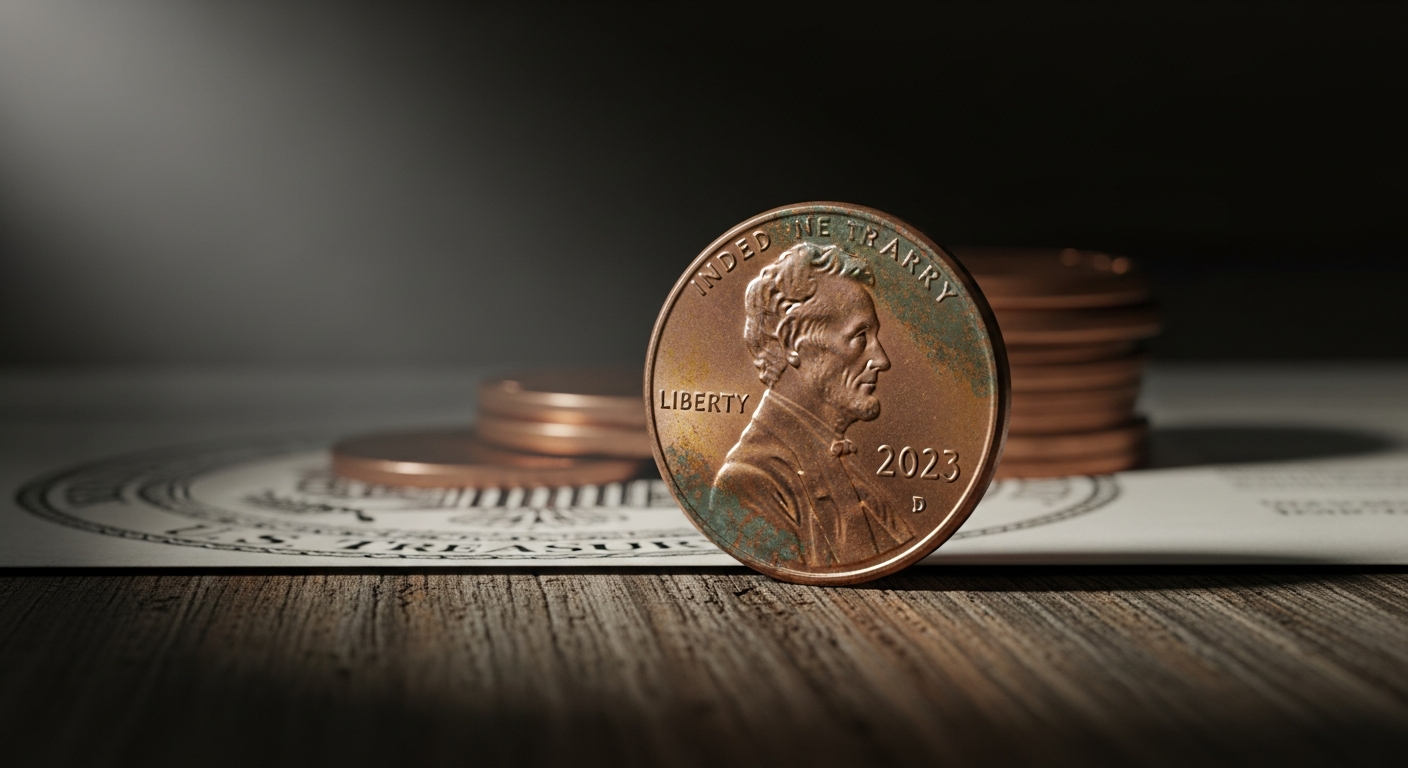
The air in the U.S. Treasury building felt… well, significant, on Wednesday. You could almost feel the weight of history — or maybe it was just the looming presence of the press corps. Either way, it was a moment.
The reason? The last penny. After more than 230 years, the U.S. Mint is halting production. Treasury Secretary Scott Bessent, as per reports, was the one who struck the final coin. Hard to imagine, you know, that a simple penny could mark such an ending.
It’s a cost issue, of course. Each penny, officials said, costs around four cents to make. Seems like a losing proposition, and it’s been that way for a while. The economics of it are pretty straightforward, honestly.
The room, I noticed, was filled with a mix of people — Treasury staff, reporters, and a few invited guests. The lighting was harsh, reflecting off the polished wood of the podium. The mood was… restrained. No one was cheering, exactly.
I remember thinking about my own pockets and how seldom I even used cash these days. Still, there’s something about the penny, isn’t there? A small piece of American history, right there in your hand.
One official mentioned that the decision was driven by rising production costs. “It just wasn’t sustainable,” they said. It makes sense, I suppose. The economy shifts, things change — the penny’s role, it seems, has just run its course.
The tricky part is that it feels like more than just economics. It’s a symbolic change, too. Maybe a sign of the times.
Or maybe I’m misreading it.
About the Author